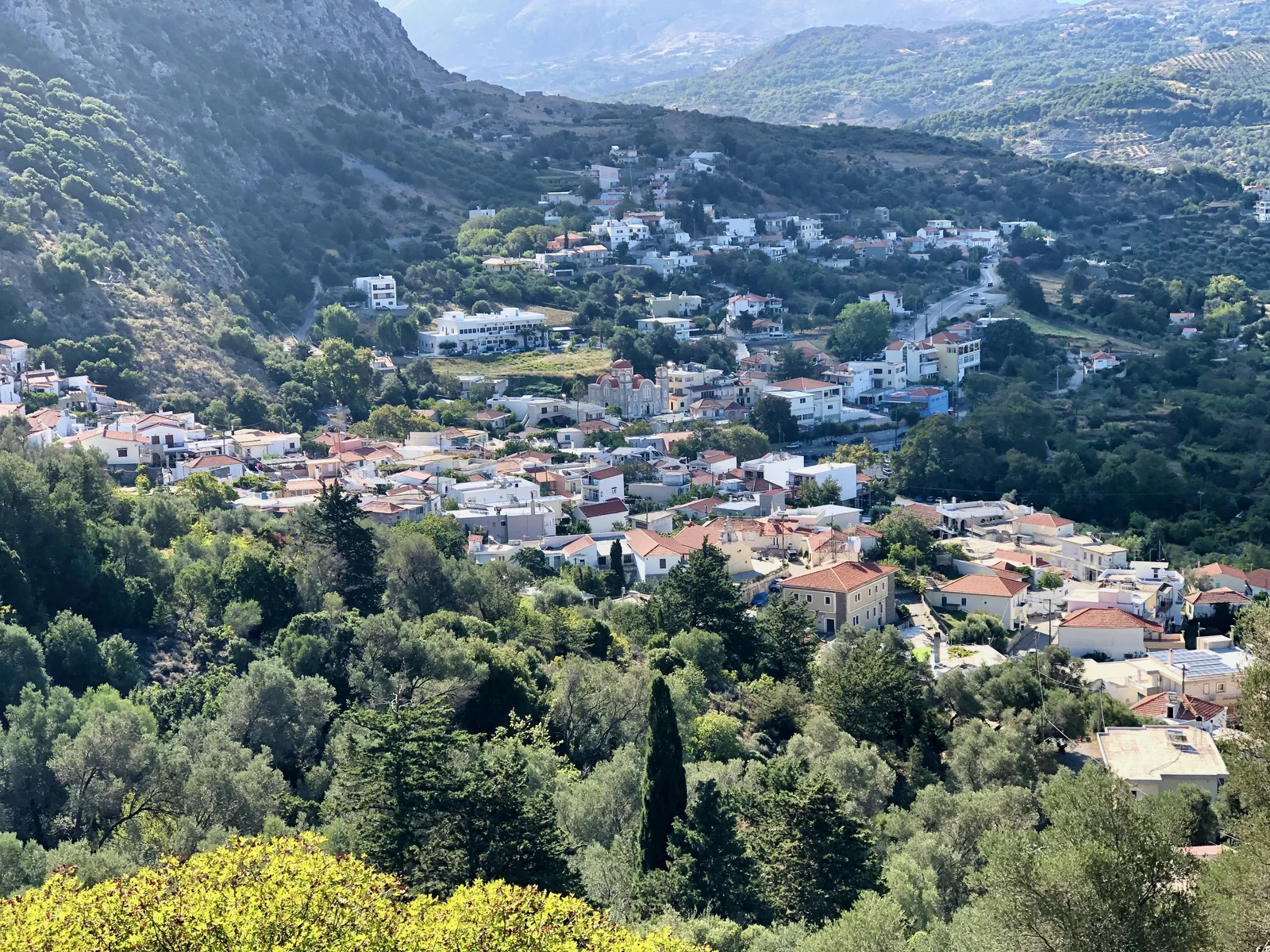
Spili is often treated as somewhere to stop between the north coast and the beaches of southern Rethymno. That is true, but incomplete.
The village works because it offers a real pause: water running from the lion-head fountain, shade around the square, lanes climbing away from the road and the ordinary rhythm of a small administrative centre. You do not need a long list of attractions. You need enough time to step out of the car and let the journey change.

By Argyris Skordilis, owner and host · Updated
The Region of Crete’s tourist map describes Spili’s best-known landmark as a fountain with 25 lion-head spouts and continuously running water. The stone lions give the village its recognisable image, while the sound and the coolness explain why people pause here rather than simply passing through.
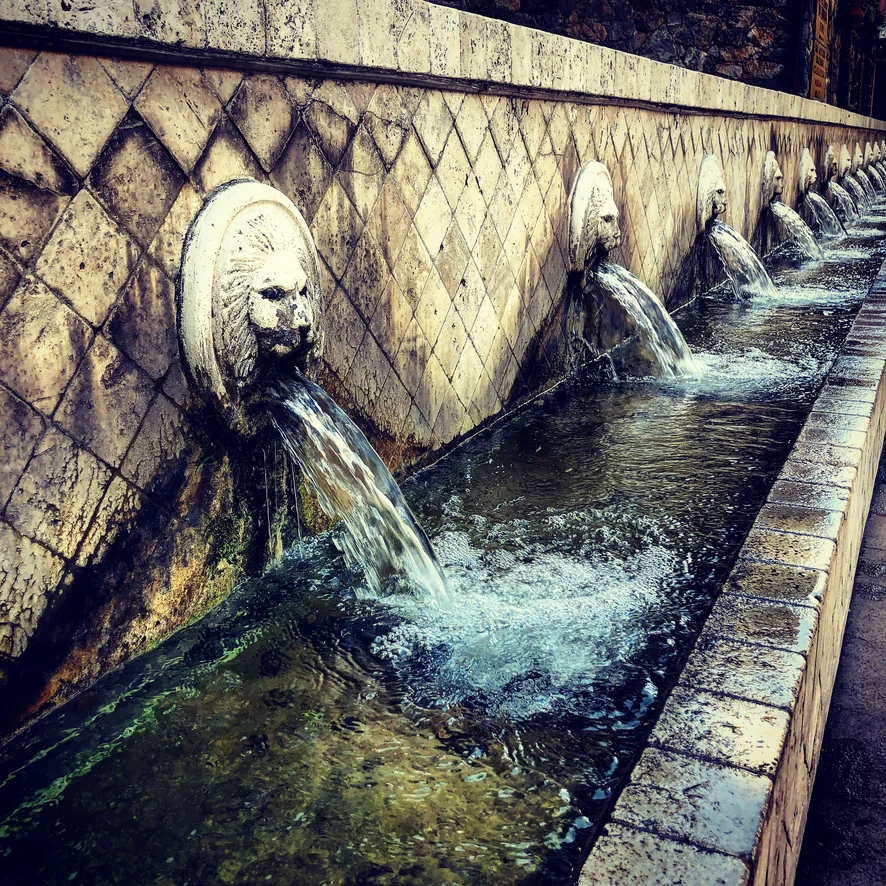
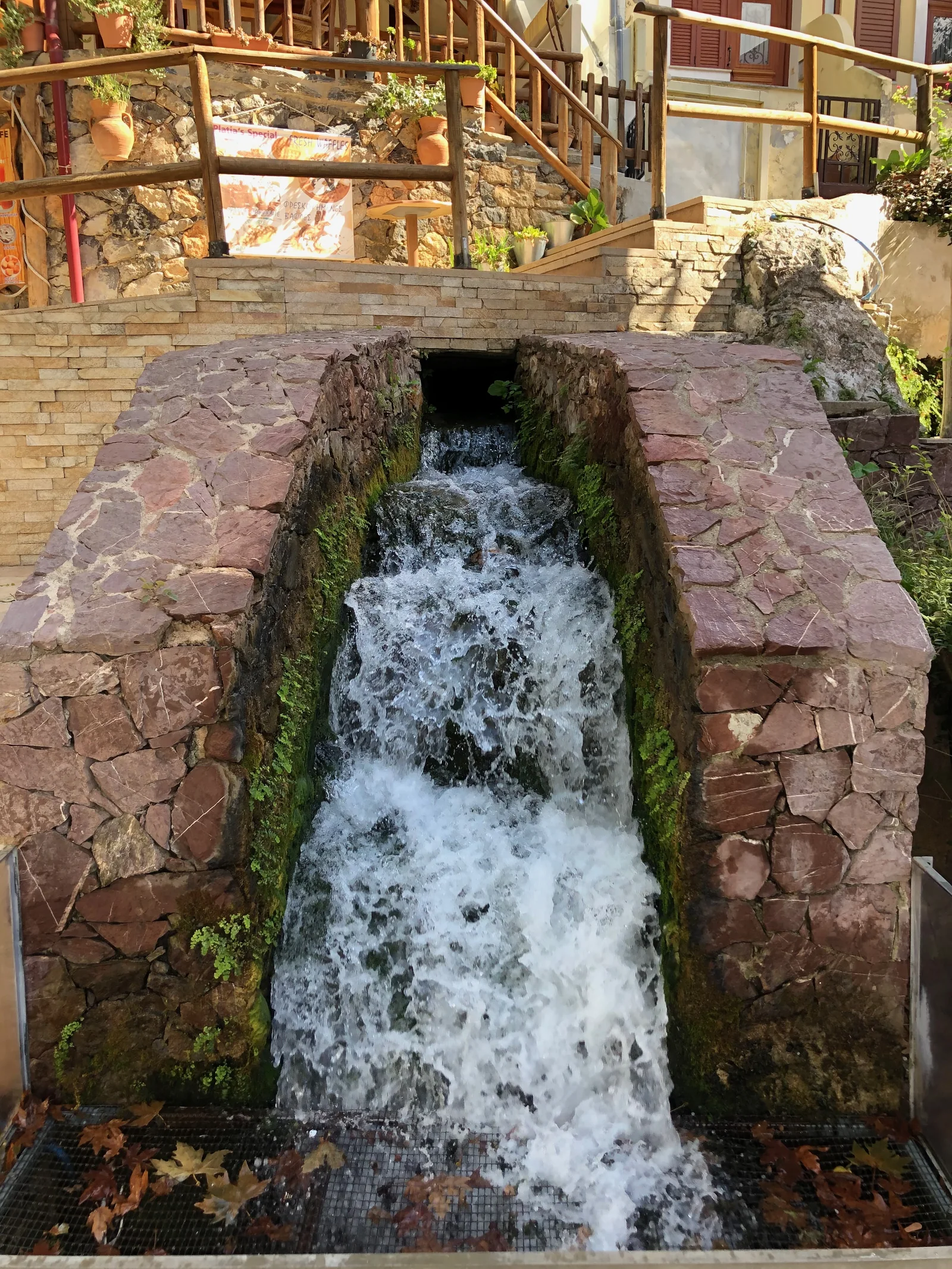
The square around it is called Plateia Kefalovrisi, the spring square, and the fountain is usually described as Venetian. We have not found an official dating, so we leave it there rather than repeat a century we cannot support. You will also see other numbers of lion heads quoted online; the Region of Crete says 25, and counting them is a decent way to keep a child occupied for five minutes.
Take the photograph, then move aside. The fountain is a shared public place, not a private backdrop: keep access clear for residents and other visitors, and avoid blocking the square while a group arranges the same picture.
Older travel descriptions invite visitors to drink straight from the spring, and plenty of people do fill their bottles here. We are not going to promise you it is certified: water quality and public-health advice need current local confirmation, and a flowing historic fountain is not proof in itself. Follow the signage at the fountain, and if it matters for a small child, ask in the village first.
Spili becomes more interesting when the fountain stops being the entire visit. Walk uphill through the nearby lanes and notice the gardens, the stonework, the small churches and the way the houses sit above the commercial centre. The village is lived in, so keep private entrances clear and treat the quiet lanes as neighbourhoods rather than an open-air set.
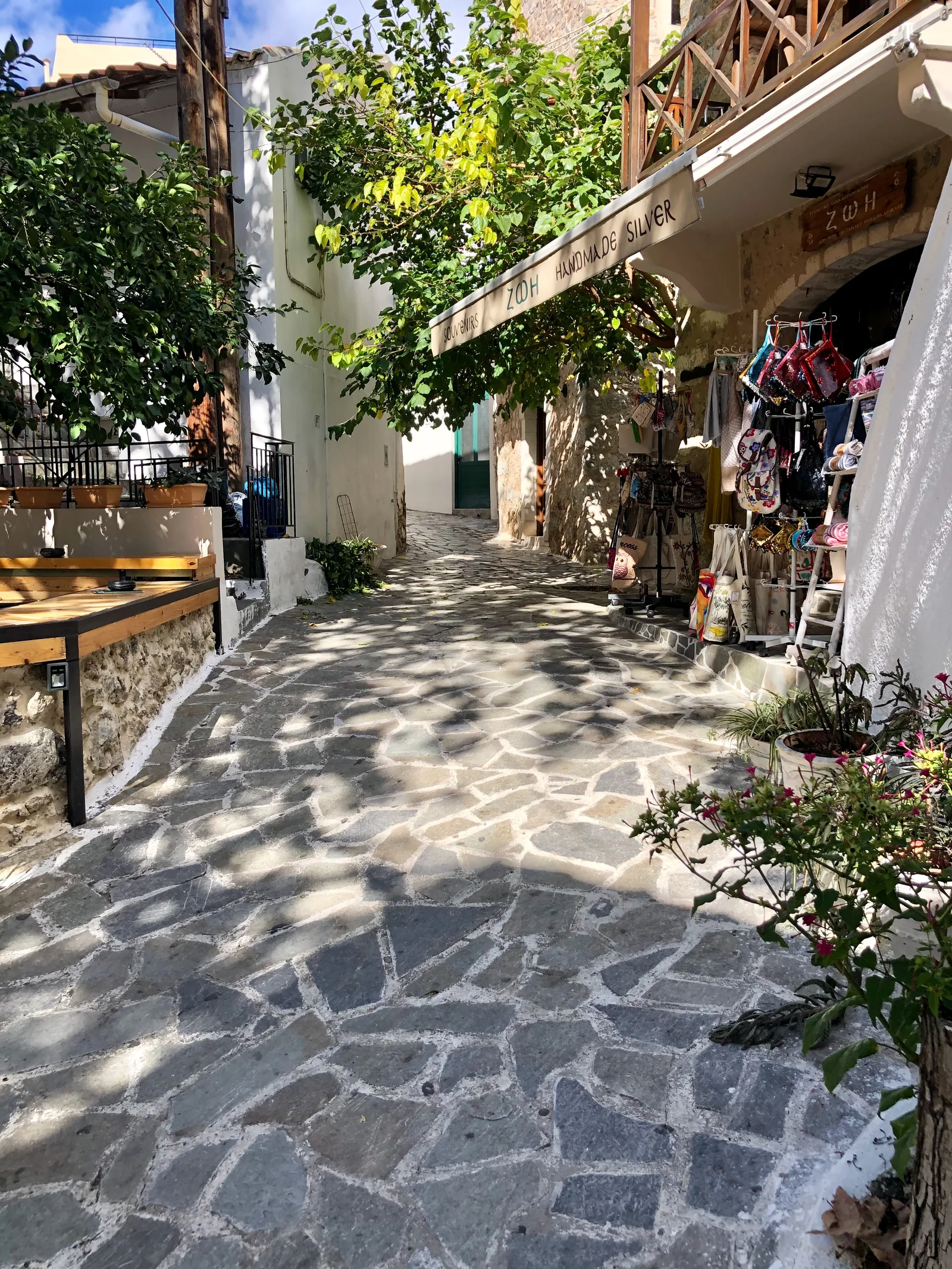
You do not need a route. Twenty or thirty minutes of curiosity is enough to see the change from road stop to village. If the heat, the gradients or the uneven surfaces are uncomfortable, stay near the square and let the visit stay simple.
Spili is the administrative centre of the Municipality of Agios Vasileios and serves the surrounding area, as the municipality’s own public information confirms. That means pharmacies, cafés, food shops and everyday services exist alongside the landmark — and that opening patterns follow local life rather than a visitor schedule.
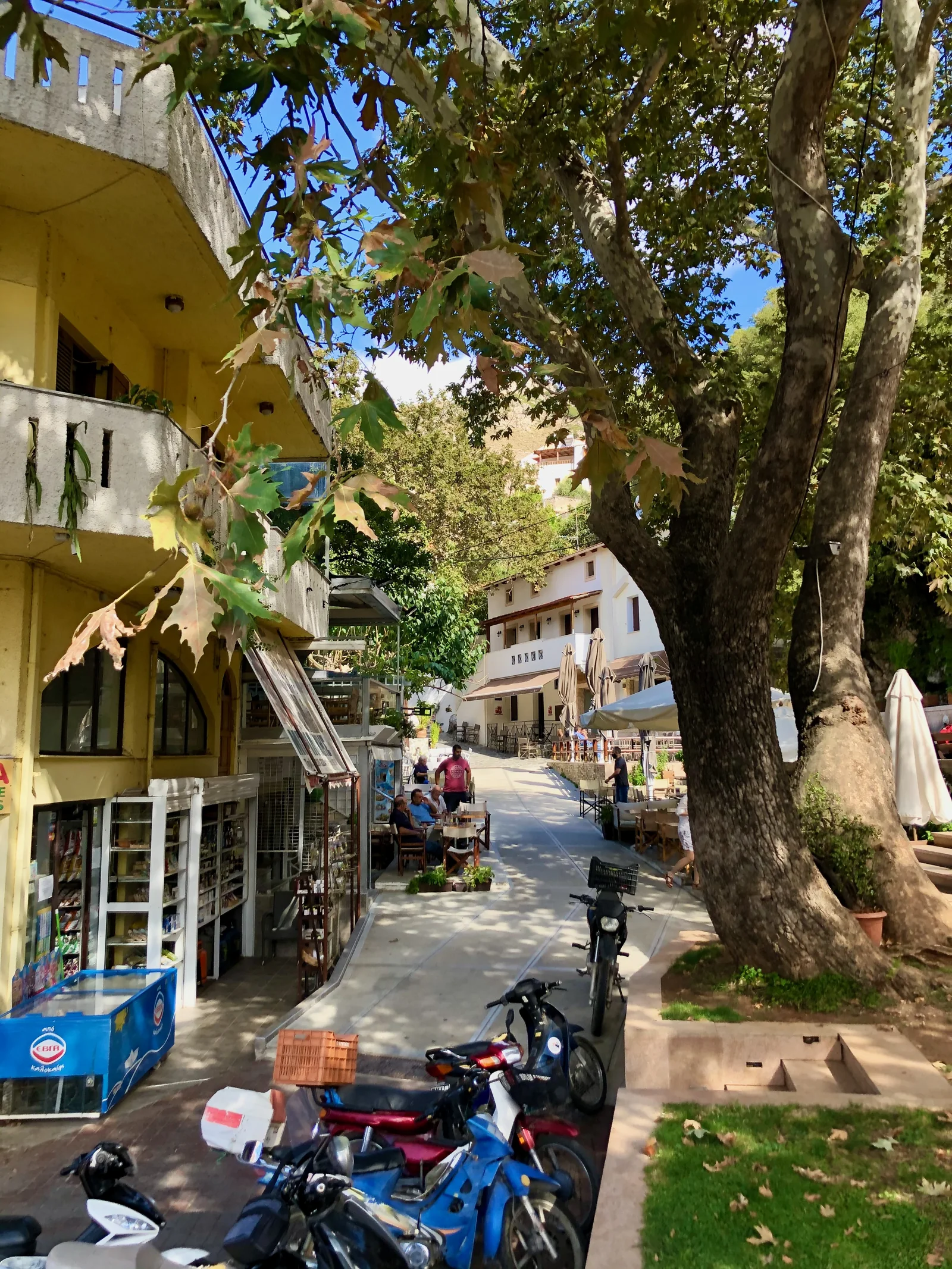
For a villa stay this matters more than another paragraph about authentic cuisine: Spili is where you stop on the way south to buy bread, have a coffee, pick up something you forgot and let everyone stretch. We do not name restaurants here, because village businesses change faster than a guide can keep up. Choose from what is visibly operating, or check a particular place through its own channel when a meal matters. When you buy something described as local, ask where it was produced rather than assuming that everything on a village shelf comes from the next valley. It is a useful question, and a respectful one.
| Kind of stop | Allow |
|---|---|
| The fountain and photographs | 20–30 minutes |
| Fountain, a short walk and a coffee | 60–90 minutes |
| Fountain, village walk and lunch | 1½ to 2½ hours |
| Spili with one other stop nearby | Half a day |
Allow about 60–90 minutes for the fountain, a short walk and a pause; 20–30 minutes covers a quick stop at the fountain, and 1½ to 2½ hours if you plan to eat. These are our estimates, not official times.
| In Spili | What we know |
|---|---|
| Entry | Free — the village and the fountain are not a ticketed attraction |
| Parking | Generally along or near the main road; the best spot depends on the size of the car and the day. Do not drive into the narrow upper lanes |
| Everyday services | Spili serves the surrounding area and normally has cafés, food shops and everyday services; individual businesses and opening patterns change |
| Toilets, cash machine | We have not confirmed public toilets or a cash machine; check locally if either is essential. Most visitors use a café |
| The fountain water | Follow current local signage and advice before drinking |
| Walking | A visit centred on the square is shorter and less demanding; the lanes above have slopes, steps and uneven surfaces |
See the fountain, walk beyond the square and stop for coffee or food. Suits a late start, mixed-age groups, or anyone who wants one easy inland destination rather than a full day.
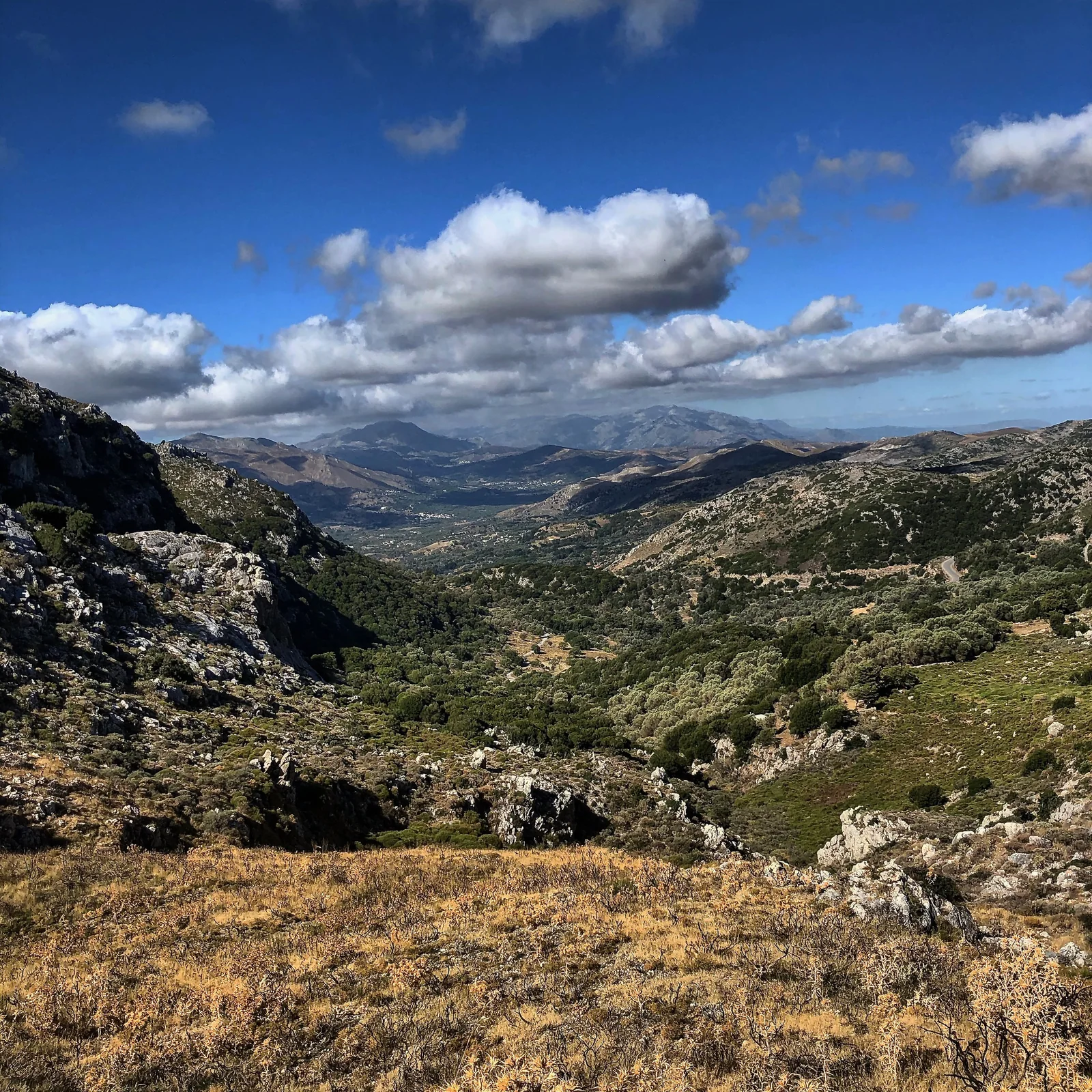
Choose this when Preveli is the reason for the day. A short morning in Spili, then either the Monastery of Preveli or Preveli Beach and its palm landscape, and Plakias at the end for food or a walk. The monastery and the beach are different experiences with different access demands; do not assume both suit every group.
The easier beach-led version. Stop in Spili, choose one principal beach — Damnoni for a broader, generally more straightforward beach day, or Ammoudi for a smaller cove — and use Plakias for food, shopping or a final walk.
Choose Schinaria as the main beach when the group wants a smaller cove and clear water for swimming or snorkelling. Then Plakias for food or a walk before the drive home. Check the current wind, sea and road conditions, and take the final approach slowly.
The rule that keeps the day pleasant: combine Spili with one principal south-coast destination, and add Plakias as a practical last stop — not three beaches to complete a checklist. South Rethymno Beaches compares the beaches themselves.
Spili does not belong in an Arkadi-based heritage day. It serves a different intention — a south-bound pause or a short inland visit — and works better kept separate from Arkadi and Ancient Eleutherna.
| Group | How Spili usually works |
|---|---|
| Anyone driving south | The natural place to stop: shade, water, a coffee, and the drive afterwards feels shorter. |
| Couples | An hour in the square and the lanes above it, without a plan. |
| Families | Children like the lions and the running water; it is a short, easy stop between longer drives. |
| Older guests | Fine if the visit stays around the square; the lanes climb. |
Think twice if you are expecting a managed attraction or a long list of things to do.
Any time of day works, but the square is at its best in the morning or late afternoon, when the shade is deep and the village is going about its own business. If you would rather have a quiet pause, we favour those hours — group arrivals vary and nobody can promise you an empty square. In light rain Spili still works for a coffee or a meal; the upper lanes are the part to skip when the stone is wet.
Outbound or on the way back? On a beach day, stop on the way down: it leaves more of the day for the coast, and nobody is tired yet. Check the current wind and sea before you leave, because the south coast can be blown out from early morning. Keep Spili for the return only if the plan is an early beach and a late lunch — not with a car full of sunburnt children who want to be home.
Children take to Spili easily: running water, lions to count, shade, and an ice cream. Two things to watch — the main road runs past the village, so hold small hands near the parking, and the lanes above the square climb. A pushchair may be manageable around the central area, while slopes, kerbs and uneven surfaces make the upper lanes less practical.
For older guests the split is the same: the fountain and the square are the easy part, the upper lanes are not, and nobody needs to walk the whole village to have seen Spili. A bench, a coffee and the sound of the water is the visit.
Skip it when the day is already long — Preveli with a walk to the beach, for instance, and a drive back over the mountains. Skip it too when the group has had enough of getting in and out of the car: one good stop beats three rushed ones. And if the gorge road is closed for wind or works, the whole south-bound plan changes, so check the current status before you set off rather than discovering it on the road.
The central square is the easiest part of the visit, but the surrounding lanes include slopes, steps and uneven surfaces, and where you park changes how far you walk. The village as a whole, its churches and individual businesses should not be assumed to be wheelchair accessible without specific current information. Guests with limited mobility may prefer a short visit centred on the fountain and the square; confirm any essential toilet, step-free or parking requirement before travelling. In warm weather, shade and water matter even on a brief stop.
Buses do stop in Spili, but the timetable changes and it is not a practical basis for a flexible south-coast day; check the current KTEL timetable if you want to try. Plan from the villa where you are actually staying and use live navigation: Spili may be the destination, the midpoint or the pause before the coast, and a generic time from Rethymno does not reflect Asteri, Stavromenos, the traffic or the final beach. If several cars are involved, agree a meeting point before you reach the village — the narrow central street is a poor place to organise a group. A car is the practical way to do this; see Do You Need a Car in Crete?
Spili is about 37 km from both of our locations, most of it on the road that climbs south from the national road, so the drive is much the same from either. From Asteri Village — Villa Asteri, Villa Kitron, Villa Myrrini and MAZI for two or three households — you are already inland when you set off. From Stavromenos, Villa Argiris means the north coast is waiting when you come back over the hill. Compare the villas if the choice is still open.

Do not treat Spili as five minutes at the fountain. Sit for a while, walk one or two lanes above the square, then choose one main destination in the south. Preveli deserves to be the purpose of its own day; Damnoni, Ammoudi or Schinaria should be chosen according to the group; Plakias works well for food or a final walk. The mistake is trying to turn every nearby beach into another stop.
Argyris Skordilis · Owner and host, Amazing Villas in Crete · usually replies within 12 hours
Sources: Region of Crete: Spili and the south-bound route; Region of Crete: official tourist map; Municipality of Agios Vasileios: municipal information in Spili. Figures are approximate. The 25 lion-head spouts and Spili’s role on the south-bound route come from the Region of Crete’s official material, and the municipal status from the Municipality of Agios Vasileios, both checked on 5 September 2026. Distances were measured on a road-routing map in September 2026 and exclude stops. Road conditions, parking, business operation, public facilities and any water-quality advice change, so check them before you travel.
Facts checked against our four villa pages · Last reviewed by Argyris Skordilis, owner of Amazing Villas in Crete.
Yes, when you want a relaxed inland village, a short outing or a useful break on a south-coast day. It is less suitable if you expect a large managed attraction or a long list of scheduled activities.
Its best-known landmark is the stone fountain with 25 lion-head spouts in the village centre. The shaded square and the lanes around it turn the landmark into a pleasant pause rather than a single photograph.
Current official public-health confirmation that the water is safe to drink was not available when this guide was reviewed. Follow current local signage and advice rather than relying on an older travel article.
Allow about 60–90 minutes for the fountain, a short walk and a coffee. A quick stop at the fountain takes 20–30 minutes, and 1½ to 2½ hours is realistic if you plan to eat.
The Region of Crete describes it as 25 lion-head spouts. You will find other numbers quoted online, which is a good excuse to count them yourself.
Spili serves the surrounding area and normally has cafés, food shops and everyday services, so it is a practical stop on the way south. We have not confirmed public toilets or a cash machine; check locally if either is essential, and most visitors use a café.
The square supports a shorter visit, but the surrounding village includes slopes and potentially uneven surfaces. Confirm any essential parking, toilet or step-free requirement, and do not assume every business or church is accessible.
Yes. The clearest choices are Spili with Preveli and Plakias; Spili with Damnoni or Ammoudi and Plakias; or Spili with Schinaria and Plakias. Choose one principal beach or the Preveli experience, check current wind, sea, road and access conditions, and keep enough time for the drive back.
Parking is generally along or near the main road, close to the square, and the best spot depends on the size of your car and how busy the day is. Do not drive into the narrow upper lanes. If walking distance or step-free access matters, confirm the current arrangement before you travel.
On the way down for a beach day: you reach the sea before the wind and the crowds, and nobody is tired yet. Keep it for the return only if the plan is an early beach and a late lunch.
Yes around the square: running water, shade and lions to count. Hold small hands near the parking, because the main road runs past the village, and expect a pushchair to be awkward in the lanes above the square.
Is Spili your destination, or the pause before the south coast? Tell Argyris your dates and who is travelling, and he will tell you which version works from your villa.
Cookies on this site
We use essential cookies to make the site work. With your permission we also use statistics to improve the site, marketing cookies to measure our advertising, and external media such as Google Maps. You can change your choice at any time. Privacy Policy · Cookie Policy