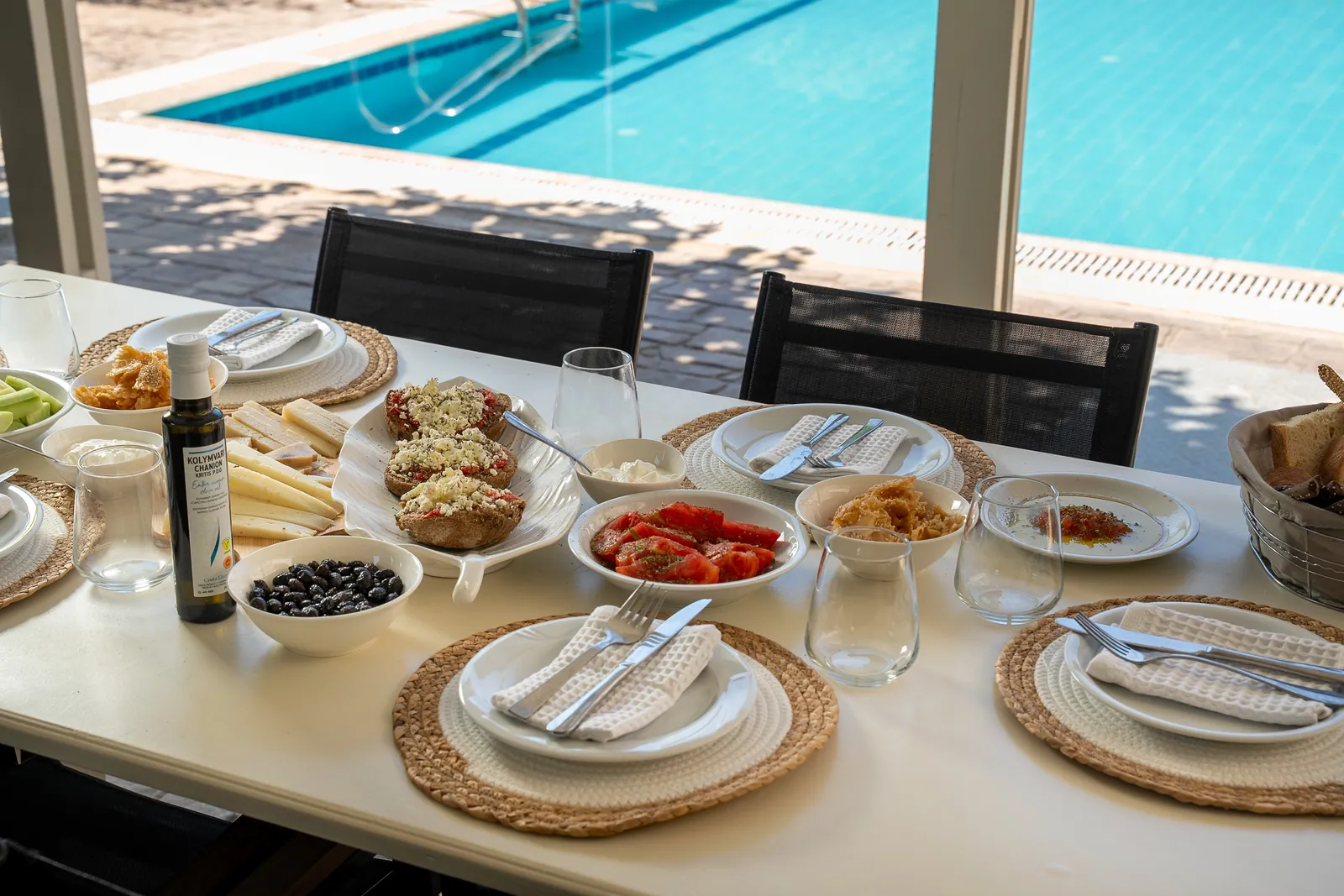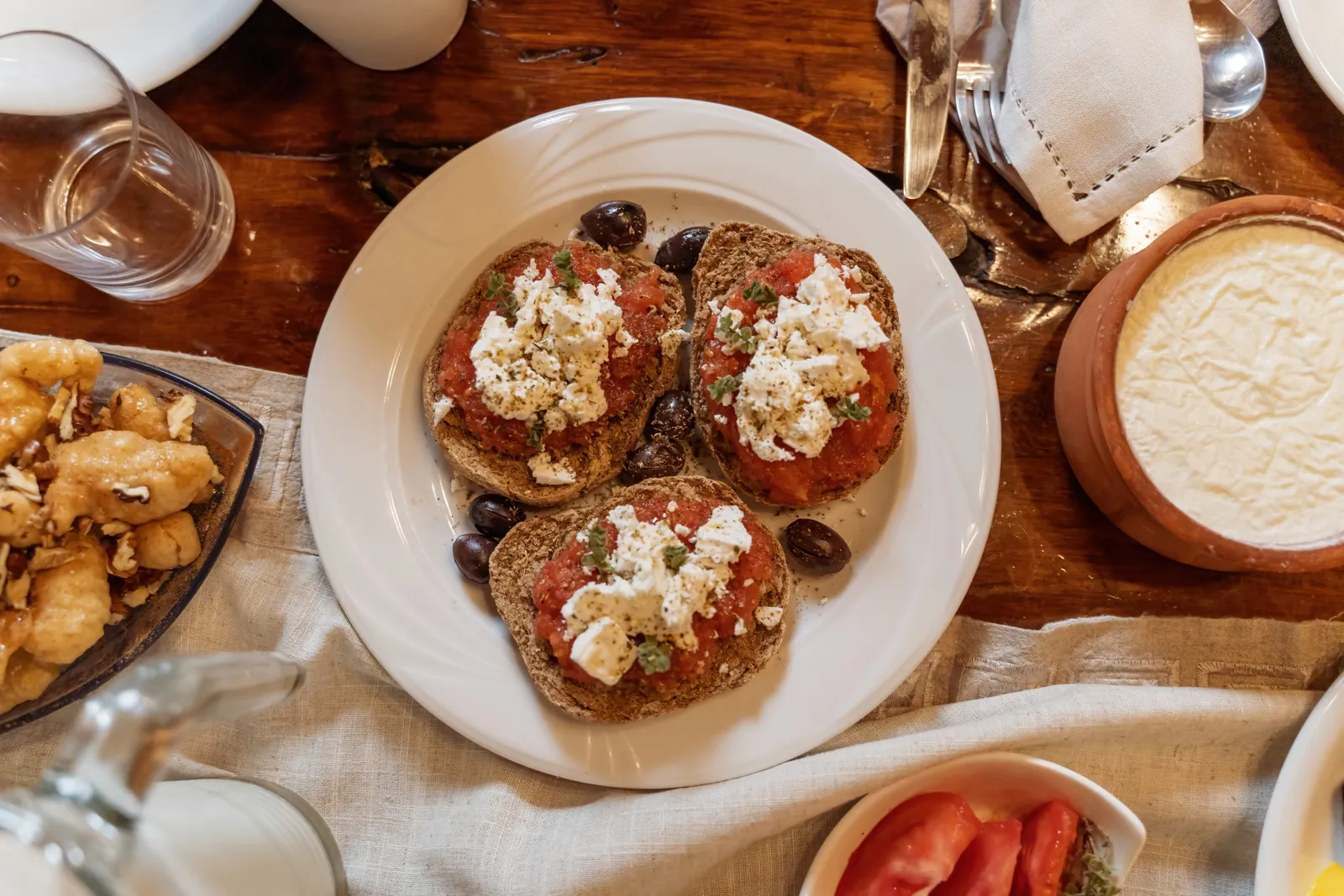
Dakos, Cretan yoghurt and fresh bakes for breakfast at Villa Asteri, prepared by a private chef on request.
Taste Crete · Amazing Villas in Crete

Cretan Food: What to Eat, What to Buy and When

The old advice about Cretan food is a list of ten dishes you must try. It is not very useful, because six of them are only good in the month they belong to, and the other four are on every tourist menu in Greece.

You have a kitchen. This is written for that: what the food actually is, what to buy, and what is worth eating in the week you are here.

What Makes It Cretan and Not Simply Greek

Four things, and once you notice them you see them everywhere.
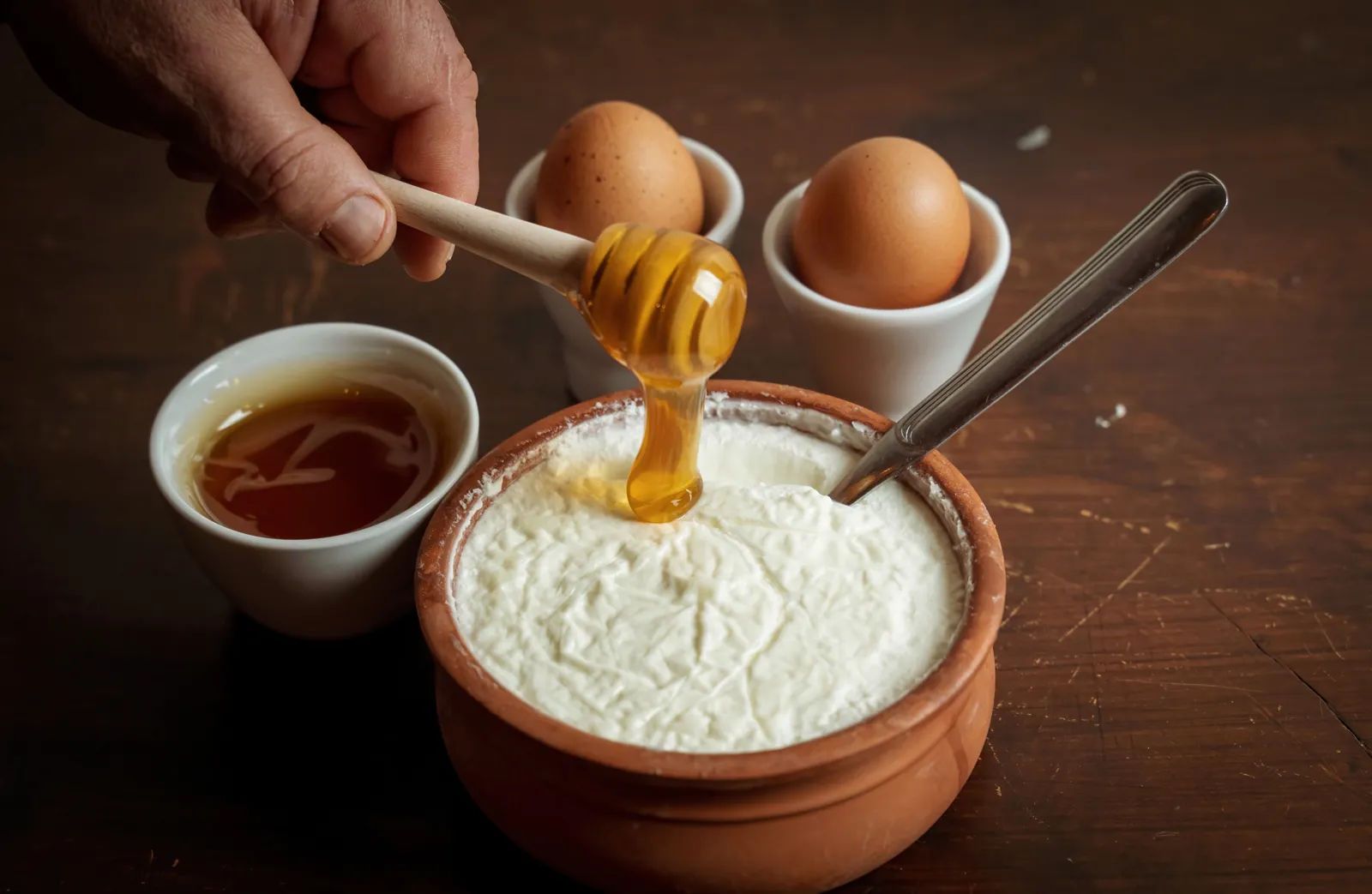
Traditional Cretan yoghurt with thyme honey.
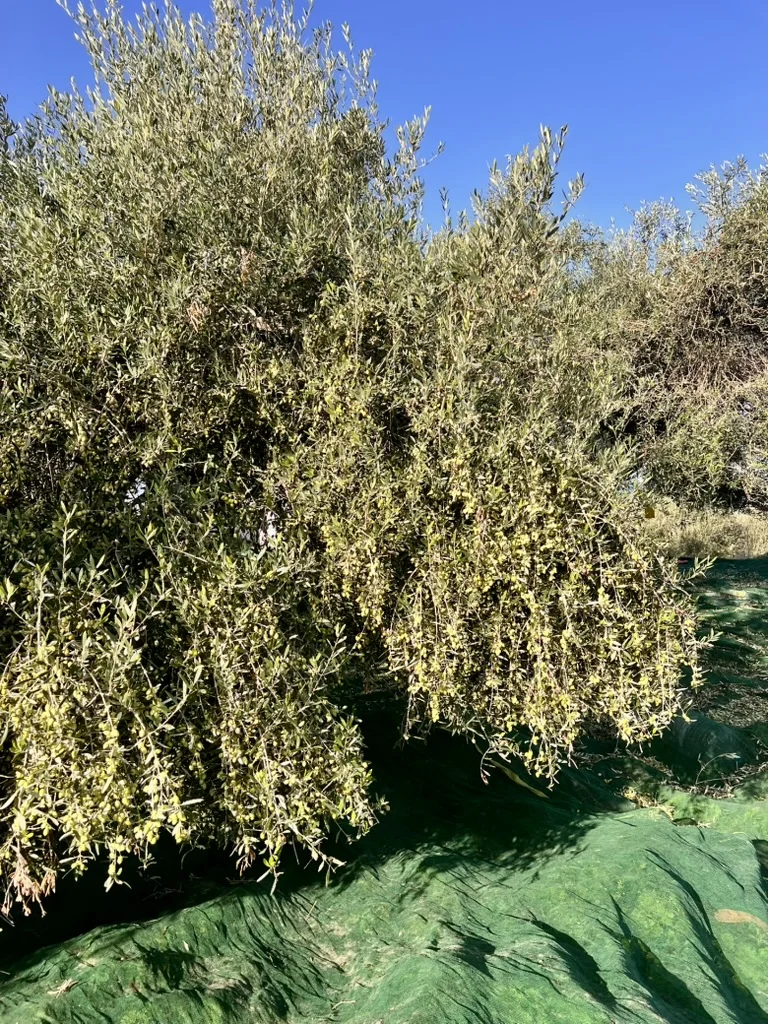
Olive-harvest time: nets spread under a laden tree.
Olive-harvest time: nets spread under a laden tree. Photo: Argyris Skordilis, Amazing Villas in Crete.

Olive oil is the cooking fat, not the garnish. Vegetables are stewed in it, not steamed and then dressed. The quantity surprises visitors the first time they watch someone cook. It is also why the oil in the kitchen matters more here than the oil at home.

Bread is barley and it is dry. Paximadi is baked, sliced and baked again, so it keeps for months. It is not stale bread — it was made to be hard. You wet it, or the tomato does it for you.

Cheese is sheep and goat, rarely cow. The mountains suit sheep and goats, and the cheese follows the animal.

There is far less meat than you expect. Meat was for Sundays, name days and Easter. The everyday table was greens, pulses, snails, cheese, bread and whatever the garden had. This is the part visitors get wrong most often: they arrive looking for lamb and find beans.

What Is Good, Month by Month

This is the part no list of ten dishes can tell you.
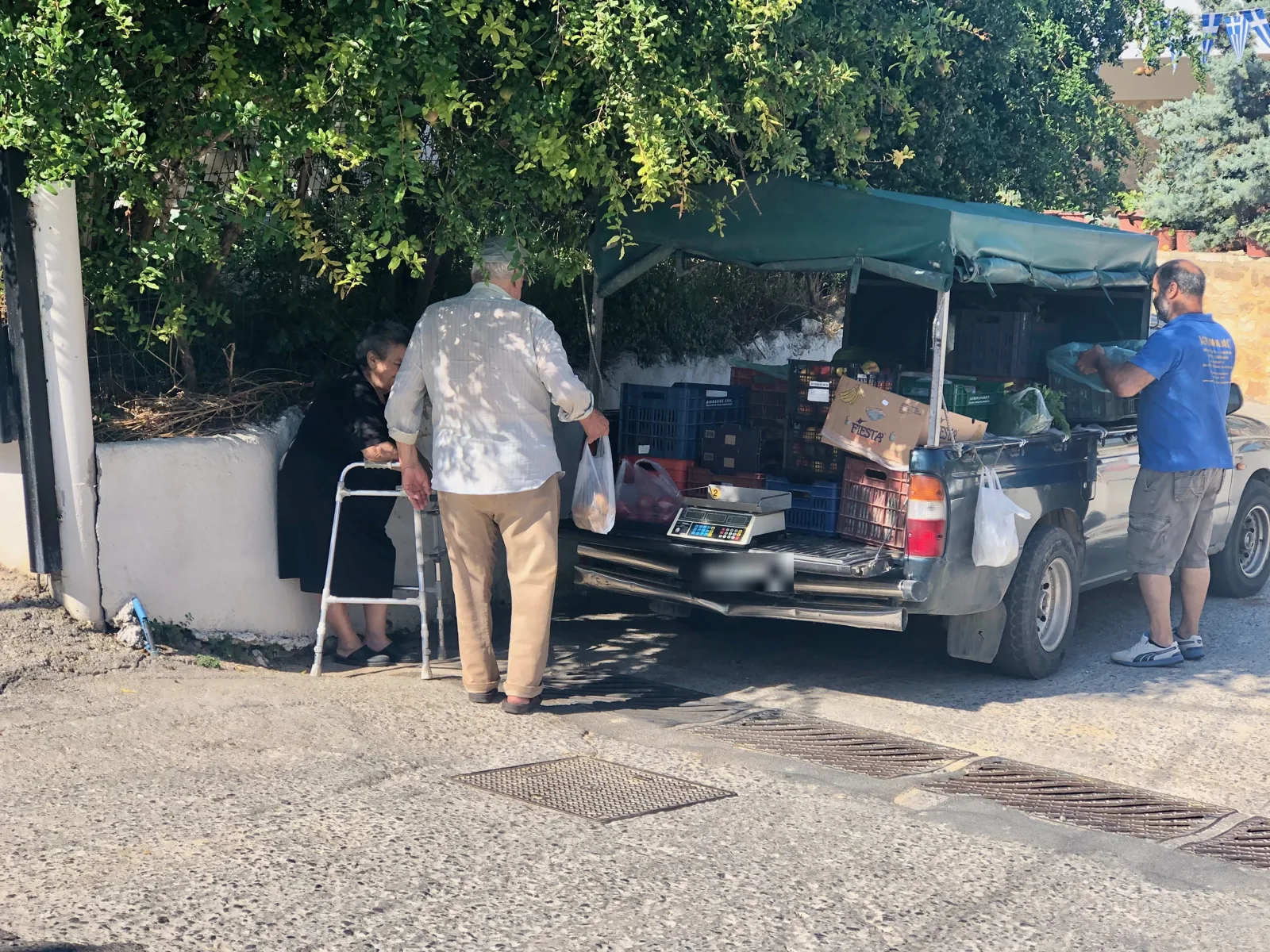
A greengrocer's van selling fruit and vegetables on the village road.
A greengrocer's van selling fruit and vegetables on the village road. Photo: Argyris Skordilis, Amazing Villas in Crete.
Lunch of Cretan dishes on the terrace by the pool at Villa Asteri.
  • November to February. The olive harvest, and the new oil — green, peppery, at its best and never as good again as in these weeks. Wild greens are at their peak. Oranges and mandarins come off the trees around the villas. Snails after the first rains.
  • March and April. Artichokes, broad beans, the last of the greens. Easter, which is the biggest table of the year: antikristo, kalitsounia, tsoureki, red eggs.
  • May and June. Apricots, cherries from the mountains, the first courgettes and their flowers, new potatoes.
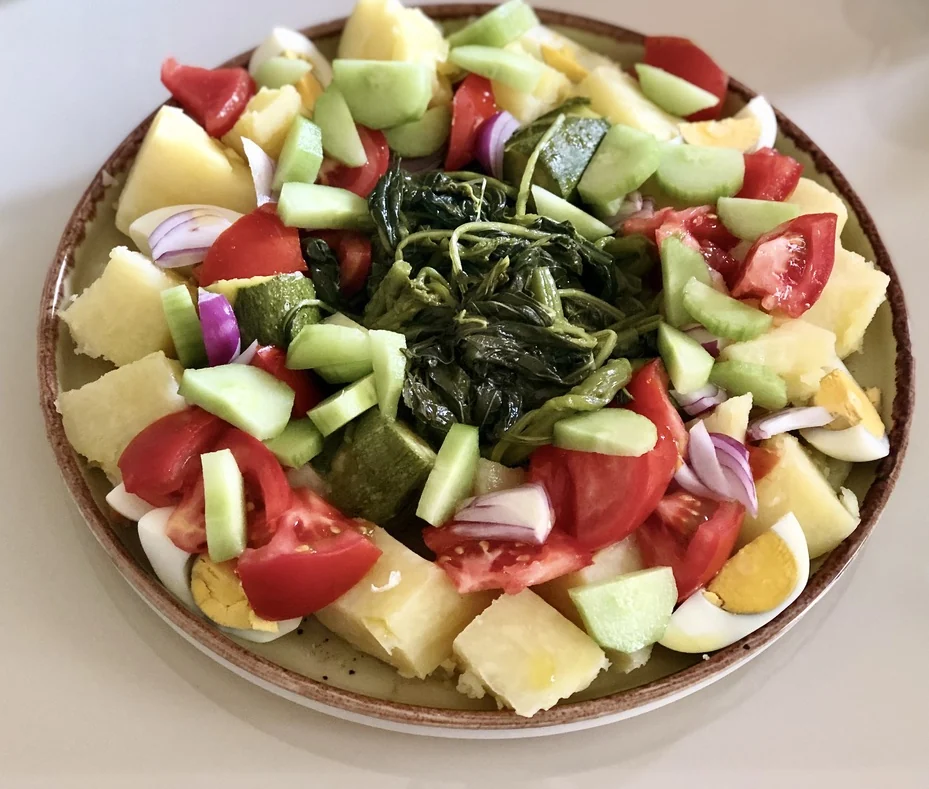
  • July and August. Tomatoes, courgettes, aubergines, peppers, melons, figs — and vlita, which is the summer green and the reason greens are not only a winter thing here. The months when a villa kitchen is easiest, because the cooking mostly stops: boiled potatoes, boiled eggs, tomatoes, cucumber, onion, a little courgette and boiled vlita, with oil and salt. Nobody stands over a stove in August.
  • September and October. Grapes, late figs, the first chestnuts inland, quinces. Tsikoudia distilling begins from late October, and it is a social event as much as a process.

The Dishes You Will Actually Meet

  • Dakos. Barley rusk, grated tomato, mizithra or feta, oregano, a great deal of oil. Cretan food in one plate, and the first thing to make in the villa kitchen — the method is at the foot of this page.
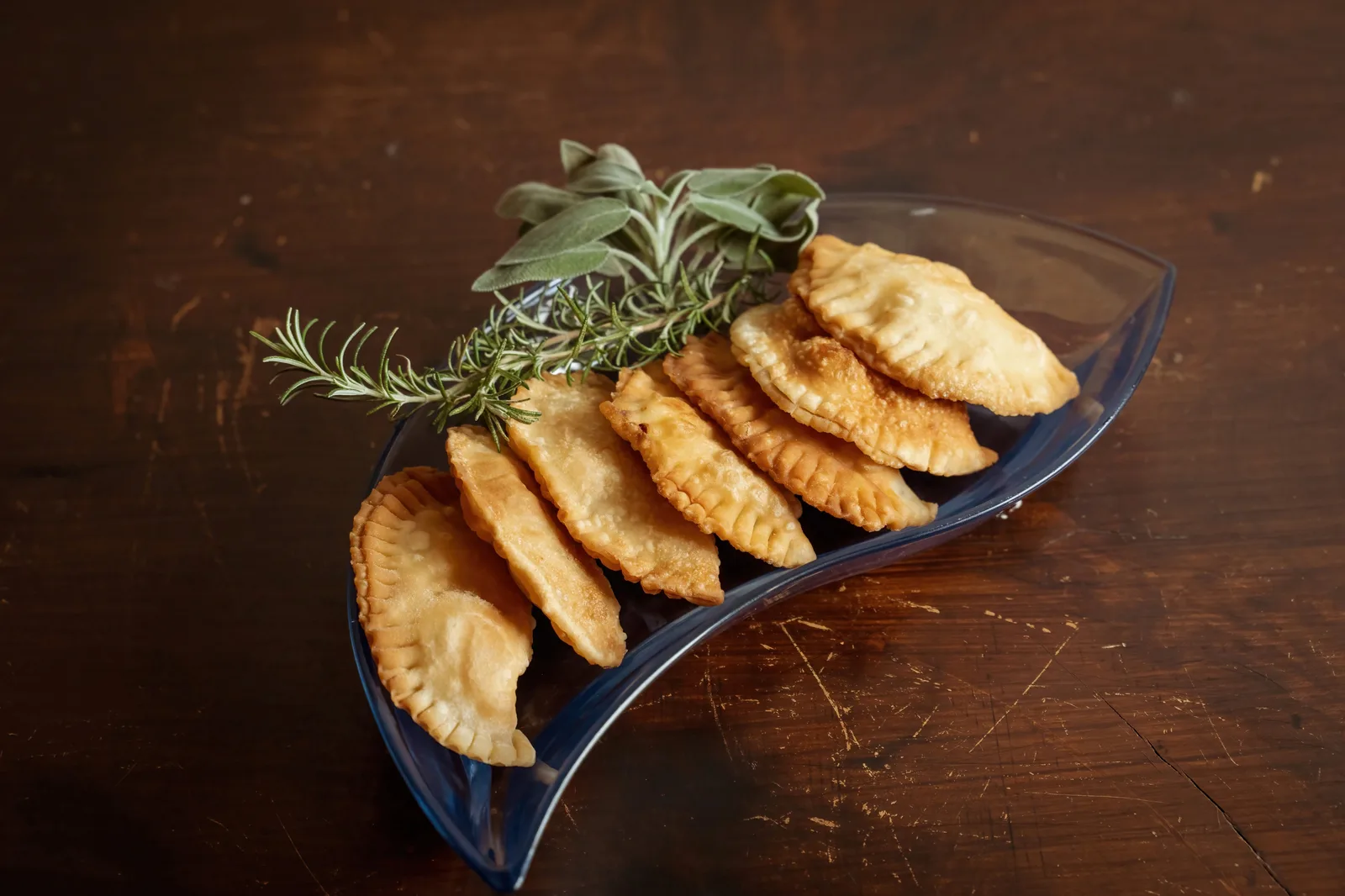
  • Kalitsounia. Small cheese pastries, sweet or savoury depending on the village and the season. The sweet ones come with honey.
  • Apaki. Pork, marinated in vinegar and smoked over aromatic branches. Thin slices, strong flavour. Keeps well, travels well.
  • Chochlioi boubouristi. Snails, fried face-down in the pan with rosemary and vinegar. Nobody is neutral about them. Try them once and decide for yourself.
  • Antikristo. Lamb or goat set in a ring around an open fire and cooked by the heat facing it, not over it. A shepherd’s method, and an event rather than a dinner.
  • Gamopilafo. The wedding rice, cooked in the broth of the meat and finished with staka butter. Rich, plain-looking and much better than it sounds — and there is a version of it that almost nobody writes down. It has its own section below.
  • Boureki. Courgette, potato, mizithra, baked in layers. High summer, when the courgettes will not stop.
  • The summer plate with no name. Boiled potatoes, boiled eggs, tomatoes, cucumber, red onion and a little boiled courgette, olive oil and salt — and, piled in the middle of it, boiled vlita. There is a photograph of it further down this page, because no food guide has one. It is not on any menu because it is not restaurant food — it is what people here actually eat in August, and it is one of the best things you will have all week.
  • Horta. Greens, boiled, served warm or cold with oil and lemon. Not a side dish here — often the main one. In winter they are the wild ones from the hillsides; in summer they are vlita, from the garden rather than the hill, and they go straight onto the plate above.
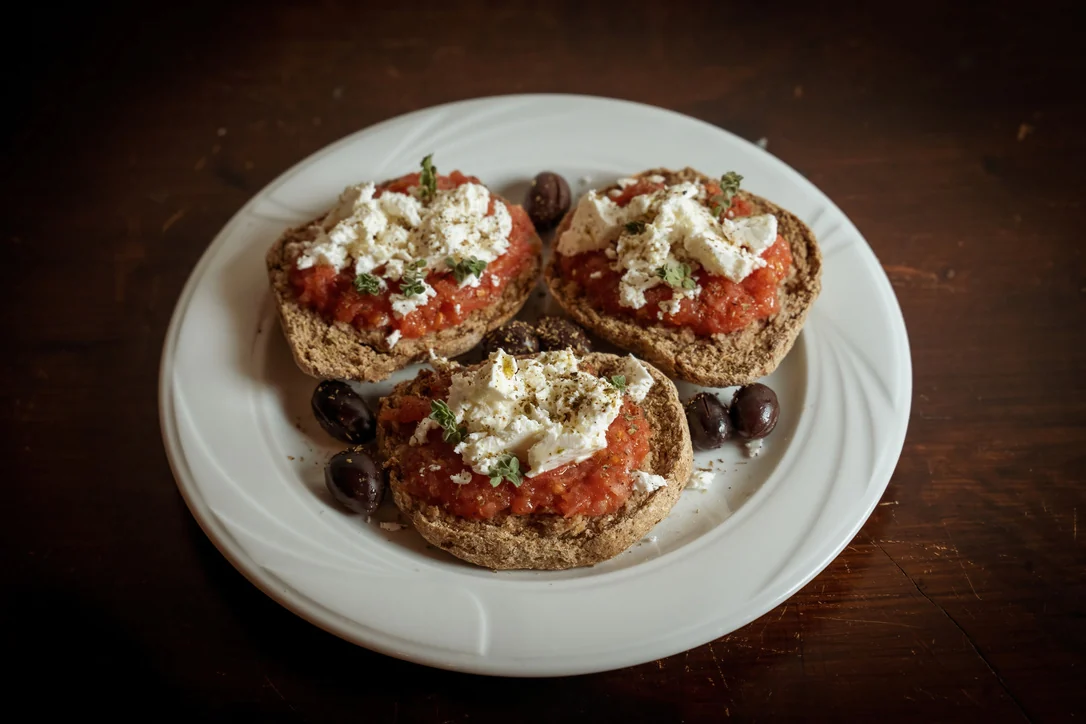
Dakos for breakfast: barley rusk, grated tomato, fresh mizithra, oregano and olives.
Dakos for breakfast: barley rusk, grated tomato, fresh mizithra, oregano and olives. Photo: Argyris Skordilis, Amazing Villas in Crete.
The summer plate that has no name: boiled potatoes and eggs, tomatoes, cucumber, courgette and red onion, with boiled vlita in the middle.
The summer plate that has no name: boiled potatoes and eggs, tomatoes, cucumber, courgette and red onion, with boiled vlita in the middle. Photo: Argyris Skordilis, Amazing Villas in Crete.
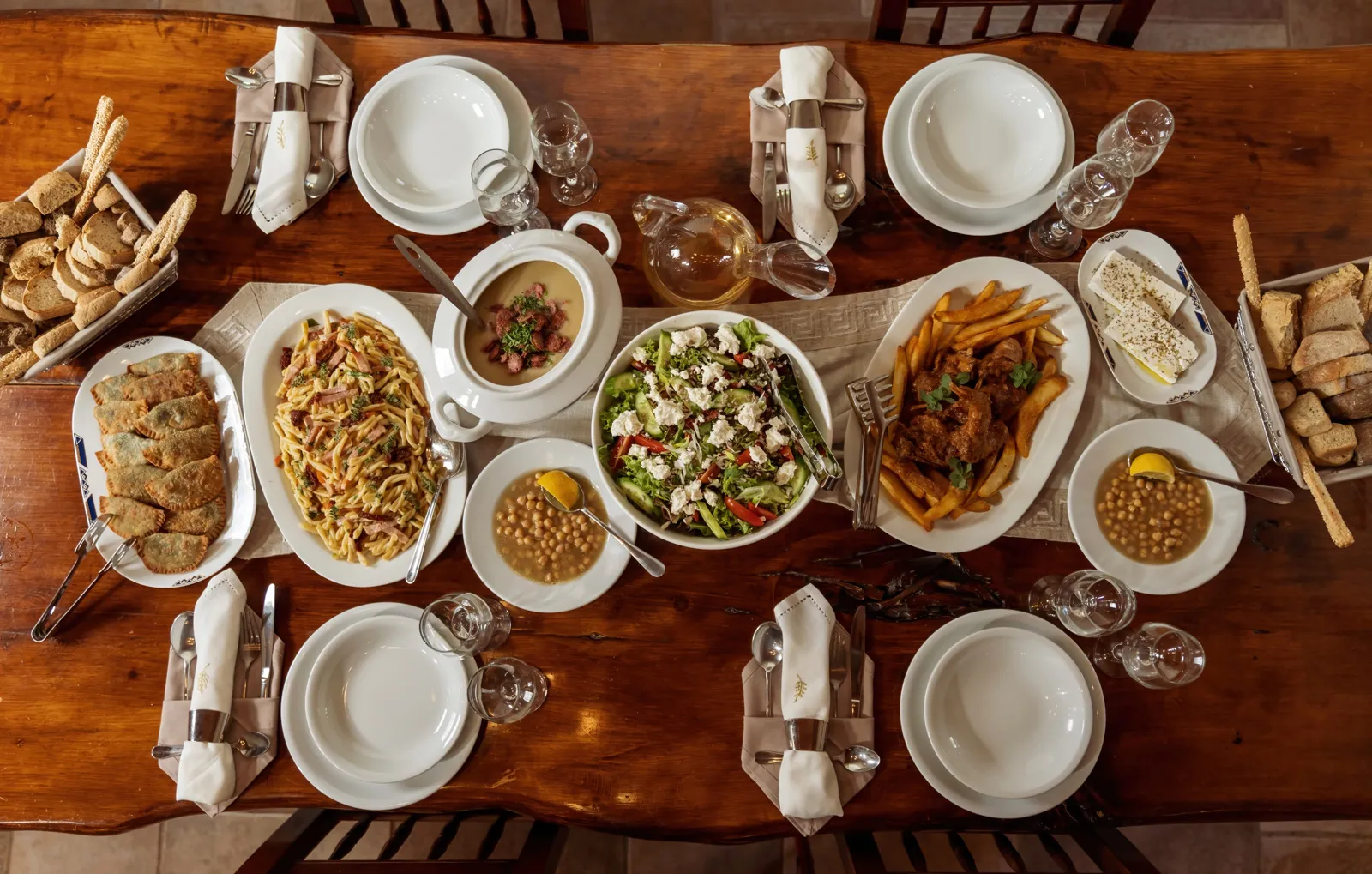
A Cretan lunch at Villa Asteri. A private chef can be arranged at every villa, on request.
Kalitsounia, small Cretan cheese pastries, part of the Easter table.
Kalitsounia, small Cretan cheese pastries, part of the Easter table. Photo: Argyris Skordilis, Amazing Villas in Crete.

Gamopilafo, and the Chicken Nobody Mentions

Gamopilafo is the wedding rice. The meat is boiled, the rice is then cooked in that broth until it has drunk all of it, and the whole thing is finished with staka butter and lemon. At a wedding the meat is goat or lamb.

But it is also made with chicken — and not any chicken. A village bird: older, slower-grown, the kind that is not sitting in the display case. The reason is fat. The rice drinks the broth, so the broth is the dish; a lean supermarket bird gives you thin broth and there is nowhere at all to hide it.

And here is the part that is worth knowing. A village chicken has the fat you need, but its fat is lighter than goat or lamb. You get the richness without the weight of it — which means you can eat gamopilafo in July, or give it to children, or serve it at lunch and still do something afterwards. The wedding version is magnificent and it ends the day. The chicken version does not.

The butchers in Rethymno have village chickens. You have to ask for one, because it is not what is out on the counter — but asking is all it takes.

If you are cooking once for everyone during the week, this is the dish. One pot, it feeds a full villa, and the work is in the waiting rather than in the doing.

The Cheeses, Briefly

  • Graviera. The hard one. Nutty, keeps for weeks, good with honey and better with raki.
  • Mizithra. Fresh and mild when young, hard and sharp when aged. The fresh one goes on dakos and into pastries.
  • Anthotyros. Softer, milder, made from the whey. Breakfast cheese.
  • Xygalo Siteias. A soft, slightly sour cheese from the east of the island, with its own protected name. Spreadable, and not much like anything else.
  • Staka. Not exactly a cheese: the fat skimmed from sheep’s milk and cooked with flour. It goes into gamopilafo and onto bread, and it is very rich.

The First Shop

If you buy nothing else on the first day, buy these. Everything here keeps, and everything here is better than its equivalent at home.
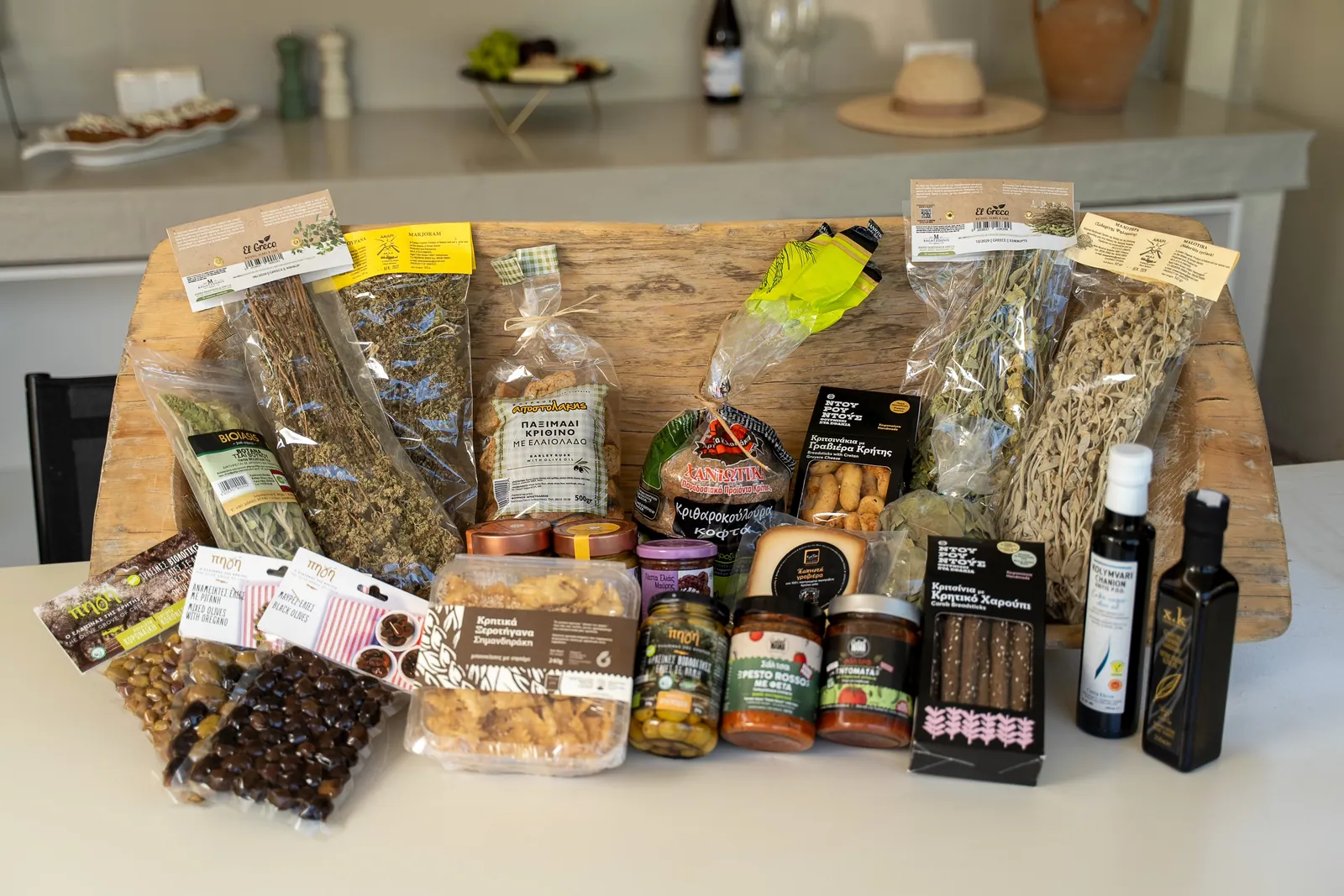
The Breakfast Basket that waits at the villa for direct bookings: local products from small Cretan producers.
  • Olive oil — a proper one, not the cheapest on the shelf. Look for the harvest date, not the words on the front.
  • Paximadi — barley rusk, the round ones or the small bites.
  • Tomatoes — in season, from a stall or the greengrocer’s van rather than the supermarket.
  • Graviera and fresh mizithra.
  • Thyme honey — with the yoghurt, with the cheese, on the kalitsounia.
  • Olives — the small wrinkled black ones are the local ones.
  • Oregano and a lemon or six.

That is dakos, breakfast and three lunches, before you have cooked anything. The first 24 hours food checklist has the practical version: which shops, what hours, what is open on Sunday.

Reading a Menu Without Being Sold To

We do not name tavernas on this page, and the reason is in the FAQ. But there are signals that travel, and you can use them anywhere on the island.

  • A short menu is a good sign. Four cooked dishes that change weekly beat forty that never do.
  • Ask what is cooked today, not what is available. In a real kitchen the answer is a short list and it is said with confidence.
  • Photographs on the menu, or a person outside inviting you in, usually mean the food is not the argument.
  • Greek is being spoken at the other tables. The simplest test, and still the best.
  • There is horta on the menu. Nobody puts wild greens on a menu for tourists; they are there because the kitchen cooks them.
  • Raki arrives at the end without being ordered. Usually with something sweet, and usually free. It is a sign of how the place sees you.
  • Lunch is the serious meal in many village places. The pot that was put on at ten is finished by three.

The Cretan Diet

Crete became known outside Greece in the 1960s, when a large international study of diet and heart disease included it and the results drew attention to how people here ate. That attention has never quite gone away, and you will see it on restaurant signs and on bottles.

What is worth knowing is what was actually on the table, because it was not a diet in the modern sense and nobody chose it. It was olive oil in quantity, bread, pulses, wild greens, seasonal vegetables, cheese, a little fish, and meat on the days that mattered. It was what the land gave and what kept through the winter. That is still the shape of the food here, and it is why a villa kitchen and a good greengrocer get you closer to it than a restaurant does.

We do not make health claims on this page, for oil or for anything else. They are tightly regulated in the EU and rightly so.

How to Make Dakos, Since We Keep Telling You To

There is no recipe, which is the point. Hold the rusk under the tap for a few seconds — a few, not thirty. Grate a ripe tomato over it, skin left behind in your hand, and let the juice finish softening it. Crumble fresh mizithra or feta on top. Oregano, salt, and more olive oil than feels reasonable.

That is the whole thing. It takes five minutes, it uses four things you bought that afternoon, and it is the best argument for a villa kitchen that we know.

The Wood-Fired Oven

Every one of the four villas has a BBQ and a traditional wood-fired oven outside. Most guests look at the oven, think about it, and never light it — which is a shame, because it is the one piece of equipment you do not have at home.
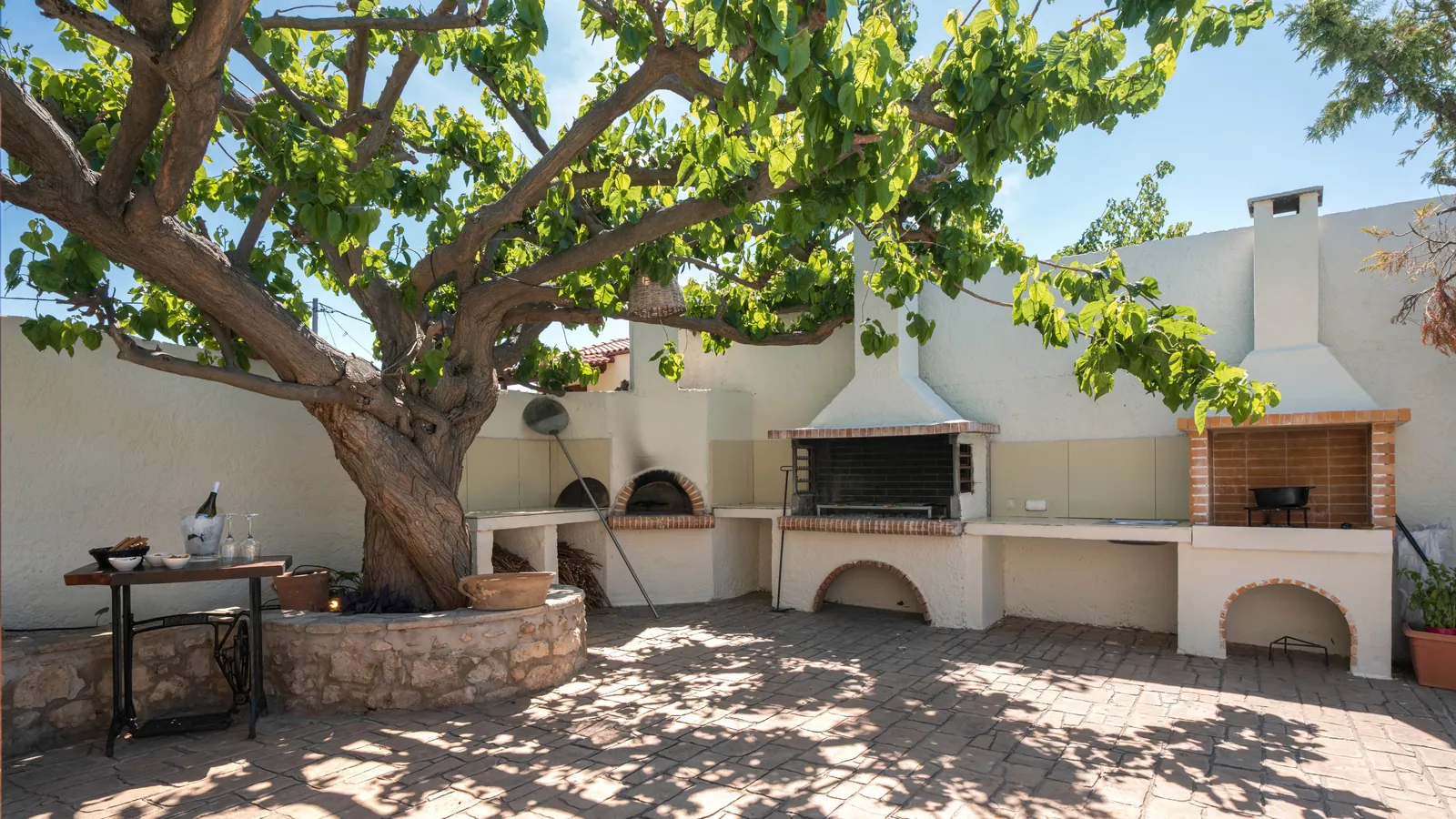
Villa Asteri: outdoor cooking area with BBQ and wood-fired oven.

It is a plan rather than an impulse: it needs time to come up to heat, and then it stays hot for hours, which is the opposite of how a kitchen works. That shape suits a tray of vegetables with oil and herbs, bread, a slow lamb or goat, or a stack of flatbreads at the very end when the heat is falling. It does not suit deciding at seven that you would like dinner at eight.

Ask Argyris whether wood is provided for your stay, or arranged separately. It depends on the villa and the dates.

Children

A fair question, and the honest answer is that about half of this food is a hard sell to a seven-year-old and the other half is exactly what they want.
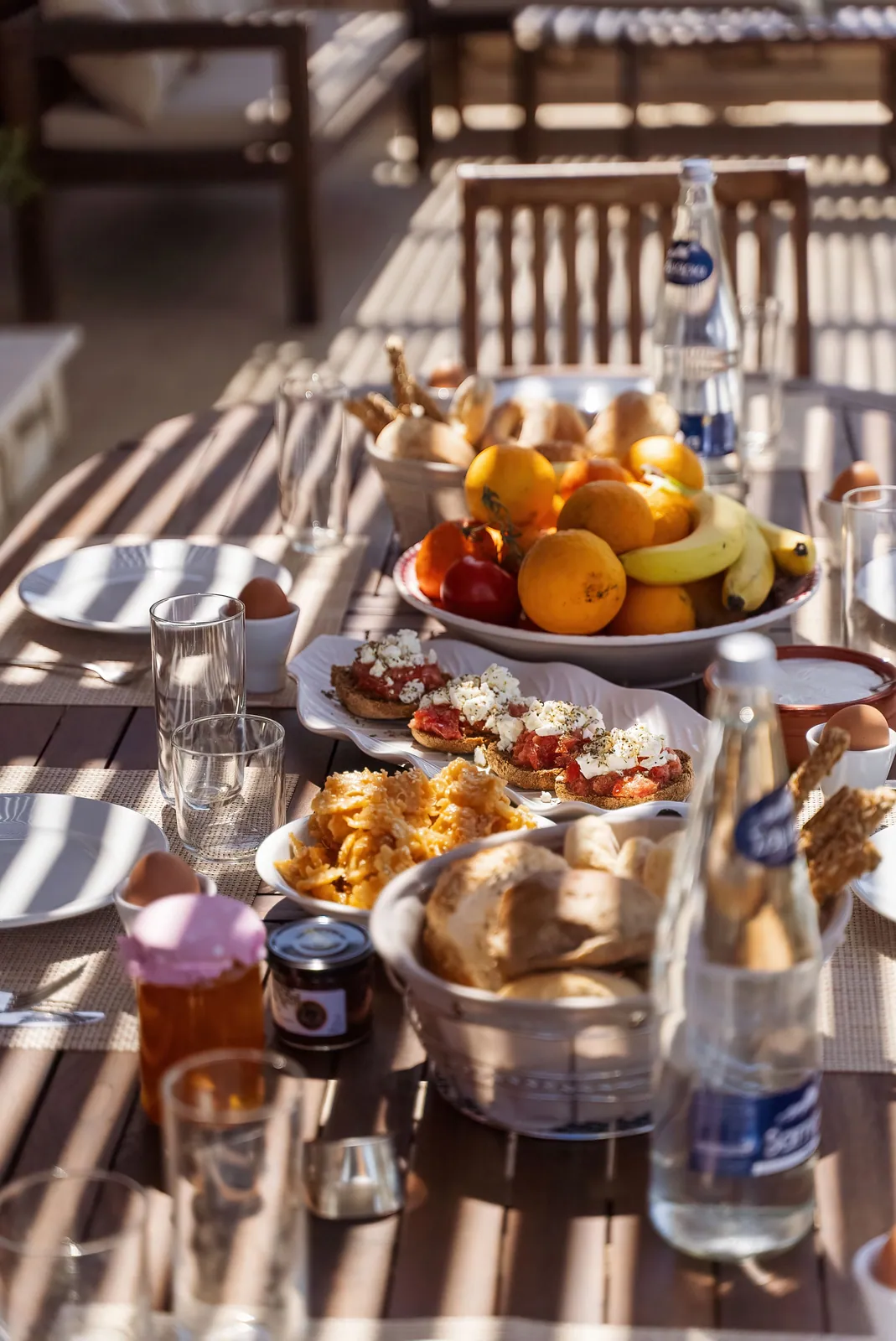
Villa Myrrini: Cretan breakfast on the veranda.

The easy wins: kalitsounia, which are cheese pastries and therefore universal; chips, fried in olive oil and better for it; plain graviera, which tastes closer to a mild cheddar than to anything frightening; yoghurt with honey; pasta with grated dry mizithra, which is the Greek child’s dinner. Bread, tomatoes and watermelon do the rest of the summer.

The hard sells are the greens, the snails and anything sharp. Nobody here pretends otherwise, and no Cretan grandmother expects a child to eat horta. Order them for yourself and let the table do the persuading.

What We Do Not Promise

  • We do not name tavernas. Places change hands, change cooks and close, and a recommendation that is two years old is worse than none.
  • Seasons move. A late spring or an early harvest shifts everything above by two or three weeks.
  • Nothing on this page is arranged by us. A chef, a tasting or a shop waiting at the villa are separate things, on request, and they are on the Experiences page.
  • We make no claims about what any food does for your health.
Argyris Skordilis, owner and host of Amazing Villas in Crete
From Argyris

The question I get most is where to eat. The honest answer is that it depends on the week, and I would rather tell you at the door than write it down and have it be wrong by next summer. What I can tell you in advance is the other half: buy the oil, the rusk and the tomatoes on the first day, and half your meals are already sorted.

Argyris Skordilis · Owner and host, Amazing Villas in Crete

Facts checked against our four villa pages · Last reviewed by Argyris Skordilis, owner of Amazing Villas in Crete.

FAQ

Frequently asked questions

What should we try first?

Dakos, on the first evening, made in your own kitchen from things you bought that afternoon. It takes five minutes and it tells you more about Cretan food than a restaurant meal will.

Why do you not recommend specific tavernas?

Because places change hands, change cooks and close, and a page that is two years old sends you somewhere that no longer exists. Argyris will tell you in person, for the week you are here.

Is Cretan food good for vegetarians?

Unusually so, and not as an afterthought. Wild greens, pulses, stuffed vegetables, cheese pastries and boureki are all traditional dishes rather than substitutions. Tell Argyris before you arrive if anyone is vegan, because cheese is everywhere.

What is raki, and is it the same as ouzo?

No. Tsikoudia, which everyone calls raki, is distilled from what is left of the grapes after pressing, and it has no aniseed in it. It is served at the end of a meal, usually free, and refusing it is harder than accepting it.

What is the one dish to cook for a group in the villa?

Gamopilafo, made with a village chicken rather than goat or lamb. One pot, it feeds a full villa, and the work is in the waiting. The bird matters more than the technique: a village chicken carries the fat that makes the broth, and its fat is lighter than goat or lamb, so the dish is rich without being heavy. Ask for one at any butcher in Rethymno — they have them, but not on display.

It is thirty-eight degrees and nobody wants to cook. What do we eat?

Boil potatoes and eggs in the morning while the kitchen is still cool, and a bunch of vlita with them — the greens take four minutes — then leave it all. At lunch, cut the potatoes and eggs up with tomatoes, cucumber and onion, pile the greens in the middle, pour over a lot of olive oil, salt it properly and eat outside. There is no name for this and it is not on any menu, but it is what people here eat in August, and it is genuinely one of the best plates of the summer. Bread and a piece of cheese finish it.

Can we cook Cretan dishes in the villa?

Every villa has a full kitchen, and all four have a BBQ and a traditional wood-fired oven outside. Dakos, horta, boureki and anything baked are all straightforward. A cook can also come to the villa for one evening, on request.

When is the new olive oil available?

From about November, once the harvest is pressed. It is green and peppery then, and that peppery catch at the back of the throat is the sign of a fresh oil rather than a fault.

Is there a market near the villas?

There are shops in and near both villages and a greengrocer’s van on the village road, and Rethymno has a larger choice about fifteen minutes away. Days and hours change with the season, so check them for your week.

What should we take home?

Olive oil, thyme honey, graviera if you are driving rather than flying, oregano and paximadi. Check your airline’s rules on liquids in hold luggage before you buy the five-litre tin.

Will our children eat any of this?

About half of it, happily. Kalitsounia, graviera, chips fried in olive oil, yoghurt with honey and pasta with dry mizithra all work. Wild greens and snails do not, and nobody here expects them to.

Eat Well Without Planning It

Tell Argyris your dates and how many of you there are. He can tell you what is good that week, arrange a shop waiting in the kitchen when you arrive, or a cook for one evening. The Cretan Breakfast Basket is already there with every direct booking.

Choosing your villa

More guides

Ask Argyris