Easter in Rethymno, Crete: A Villa-Stay Guide
Greek Easter is not simply one festive Sunday. In Rethymno and the surrounding villages, it unfolds through Holy Week: quieter days of preparation, the Good Friday Epitaphios, the midnight Resurrection service on Holy Saturday and the family table on Easter Sunday.
For international visitors, the first planning decision is which Easter they are travelling for. Western Easter, observed by Catholic and Protestant churches, does not always fall on the same date as Greek Orthodox Easter, and in 2027 the gap is the widest it can be.
 By Argyris Skordilis, owner and host · Updated
Two Different Spring Stays
Both periods can support a rewarding visit, but they are not the same holiday.
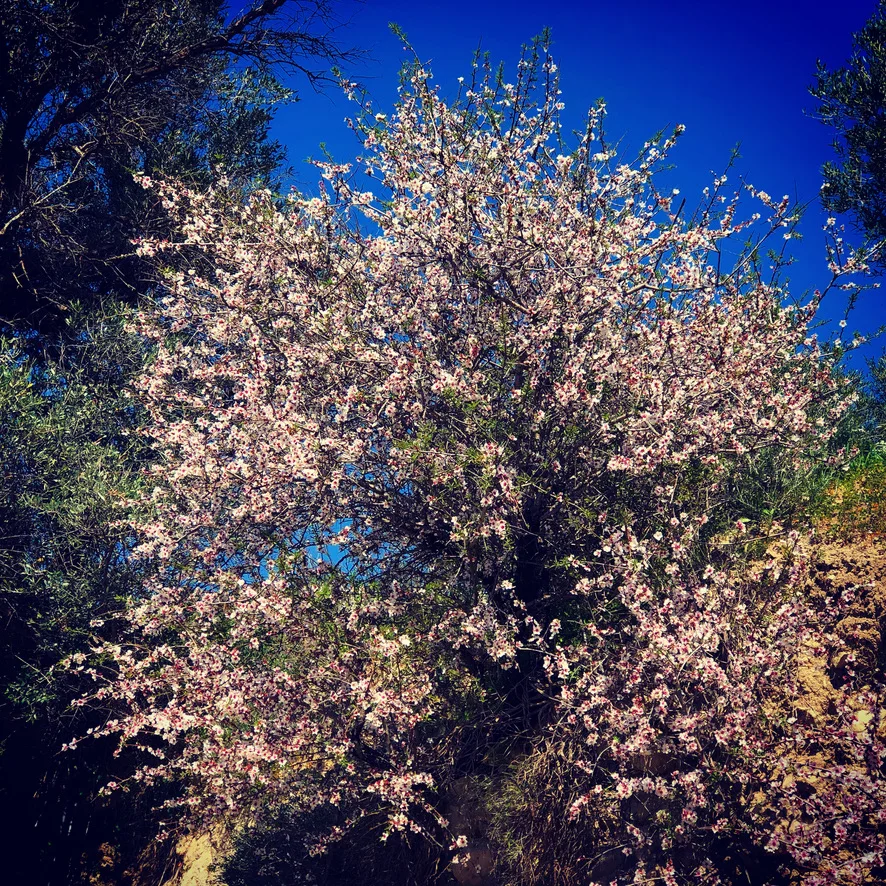
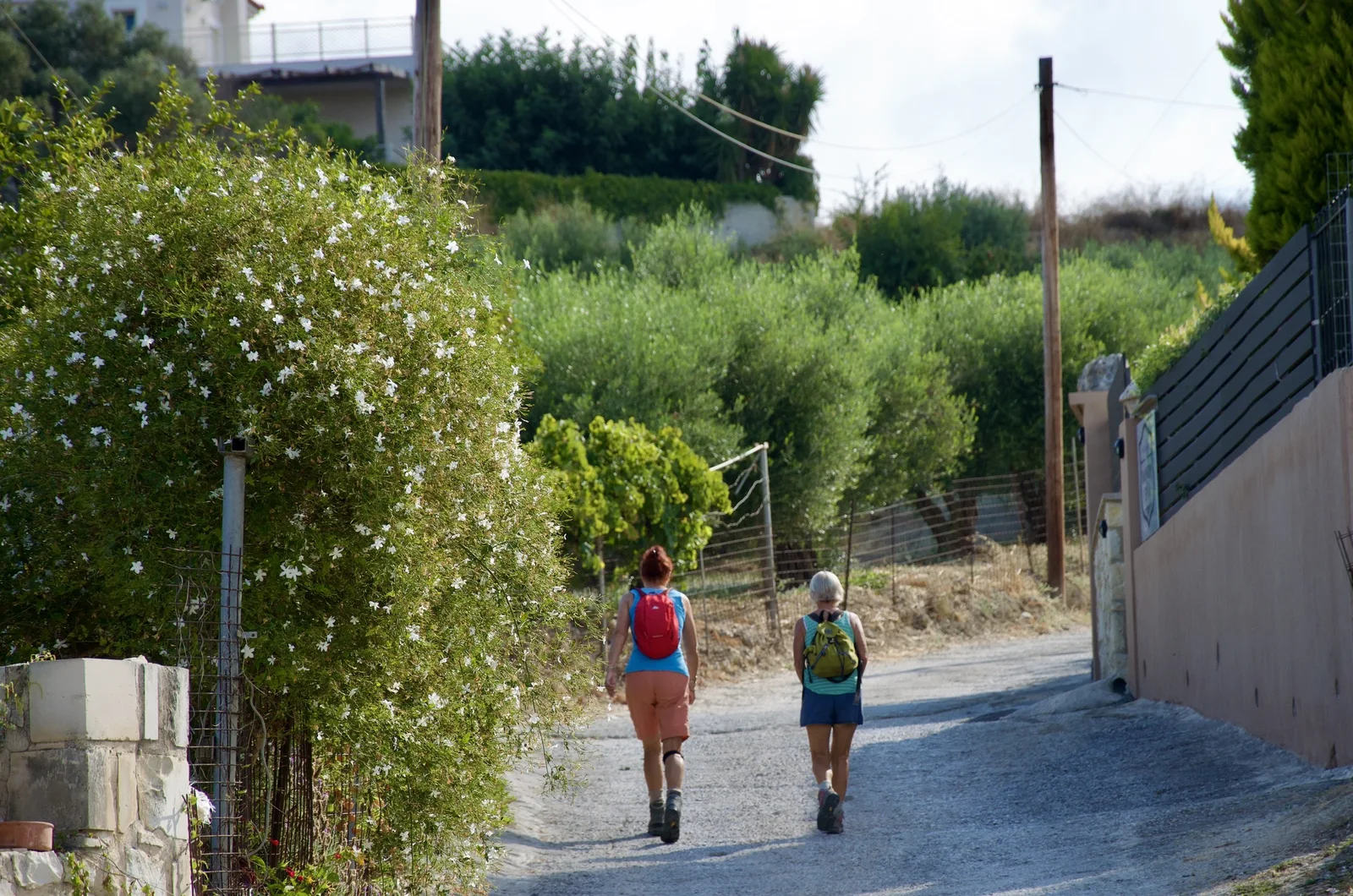
In 2027, Western Easter falls on 28 March. Around then you get early spring in Crete: a green landscape, archaeological sites without crowds, long lunches and villages going about an ordinary week. Shops, restaurants and attractions keep their normal seasonal hours.
Just before, on 25 March, Greece celebrates Independence Day, a public holiday marked with school and civic parades in Rethymno and the villages. What you won’t see then is the Greek Orthodox Holy Week, which follows the Orthodox calendar. Come for the season, not for the Greek Easter celebrations.
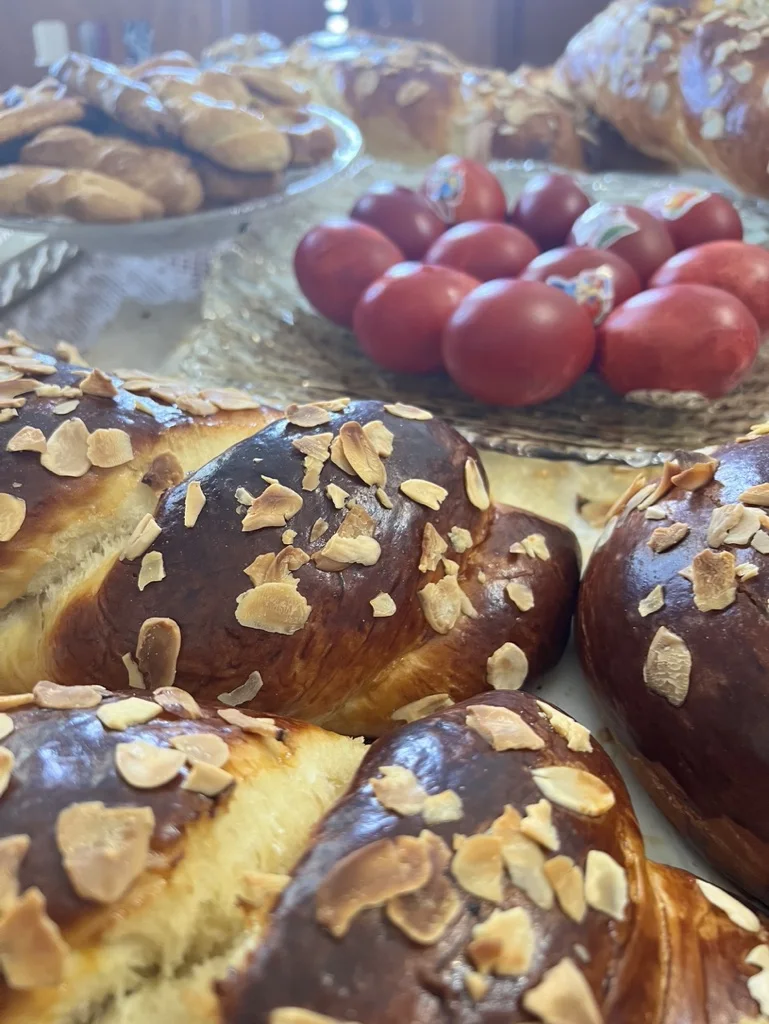
For Greek Orthodox Easter, 2 May, you get the Holy Week sequence itself: the Good Friday Epitaphios, the midnight Resurrection service, the greeting Christos Anesti, red eggs and tsoureki, and the long Easter Sunday table. This is the period for visitors whose purpose is to understand how Easter is kept in Greece.
Travellers with real flexibility can use part of the five-week interval for a longer stay or a wider journey combining Athens and Crete. The two celebrations are separate periods with different observances and different operating patterns.
What Holy Week Feels Like in Rethymno
Holy Week gradually changes the rhythm of daily life. Churches prepare for the services, bakeries and homes turn towards Easter food, and Good Friday and Holy Saturday become the emotional centre of the week.
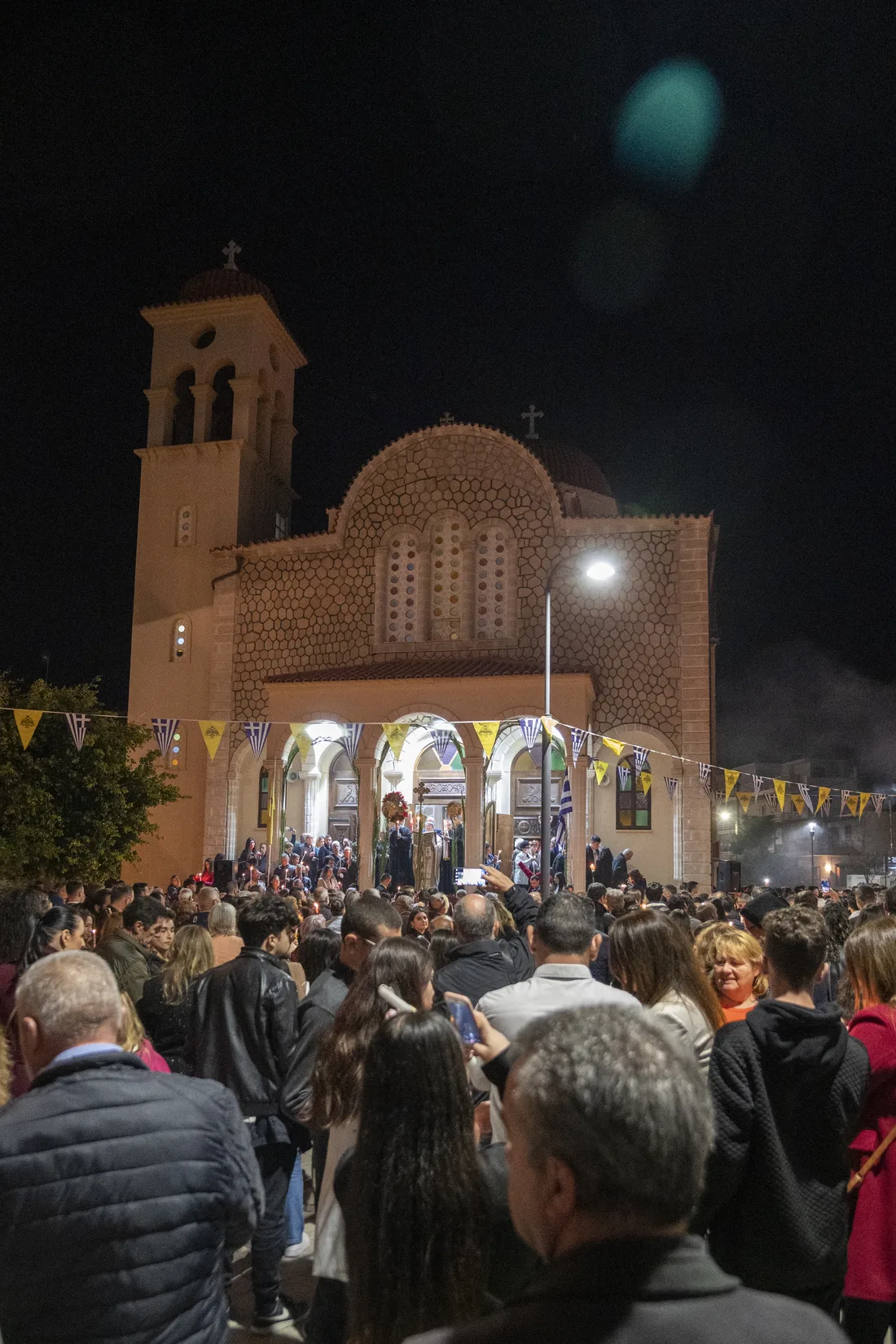
Visitors do not need to be Orthodox to observe respectfully. Dress with the setting in mind (shoulders and knees covered inside a church), keep conversation and photography discreet during services, and follow the pace of the people around you.
Good Friday and the Epitaphios
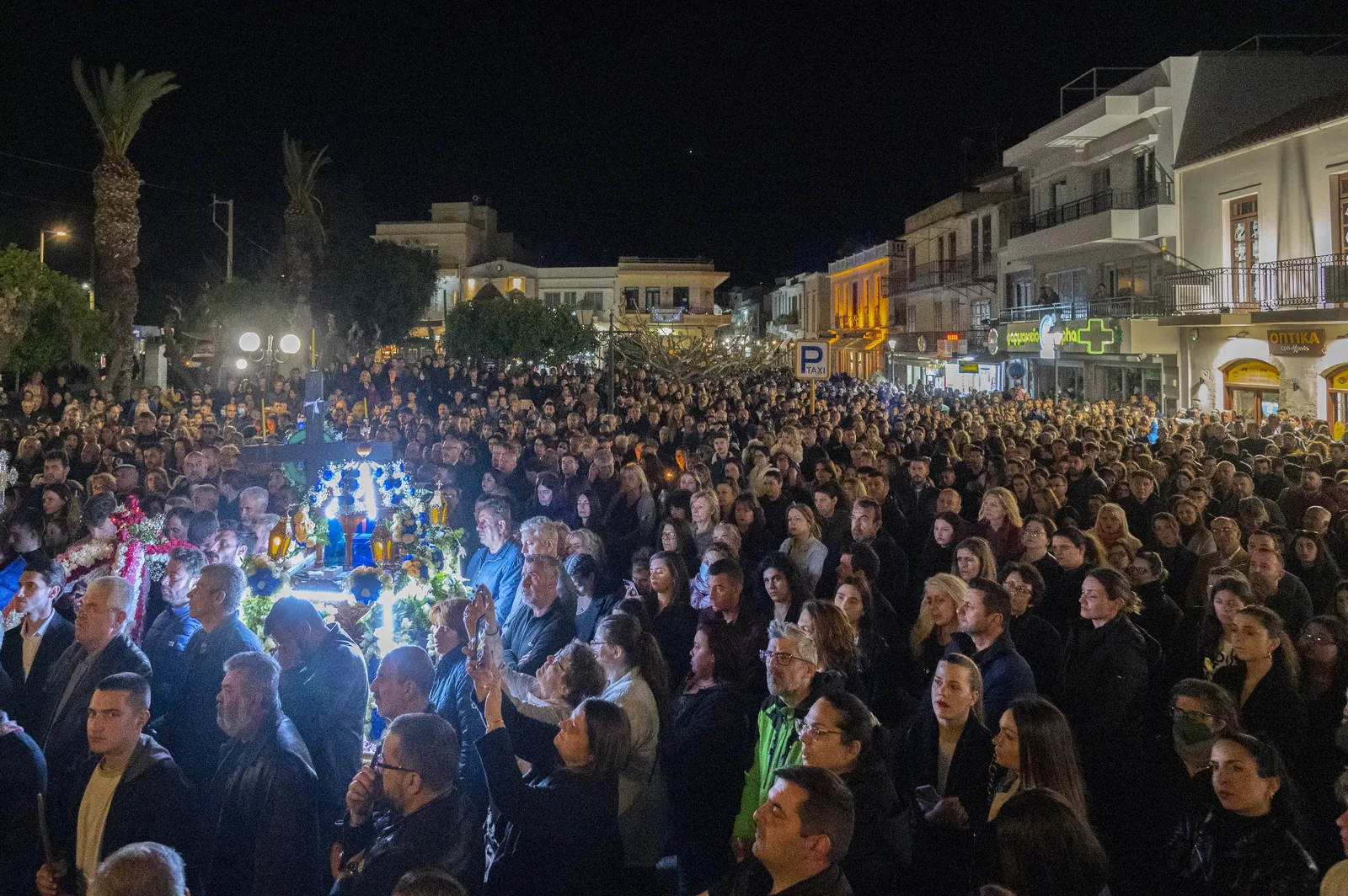
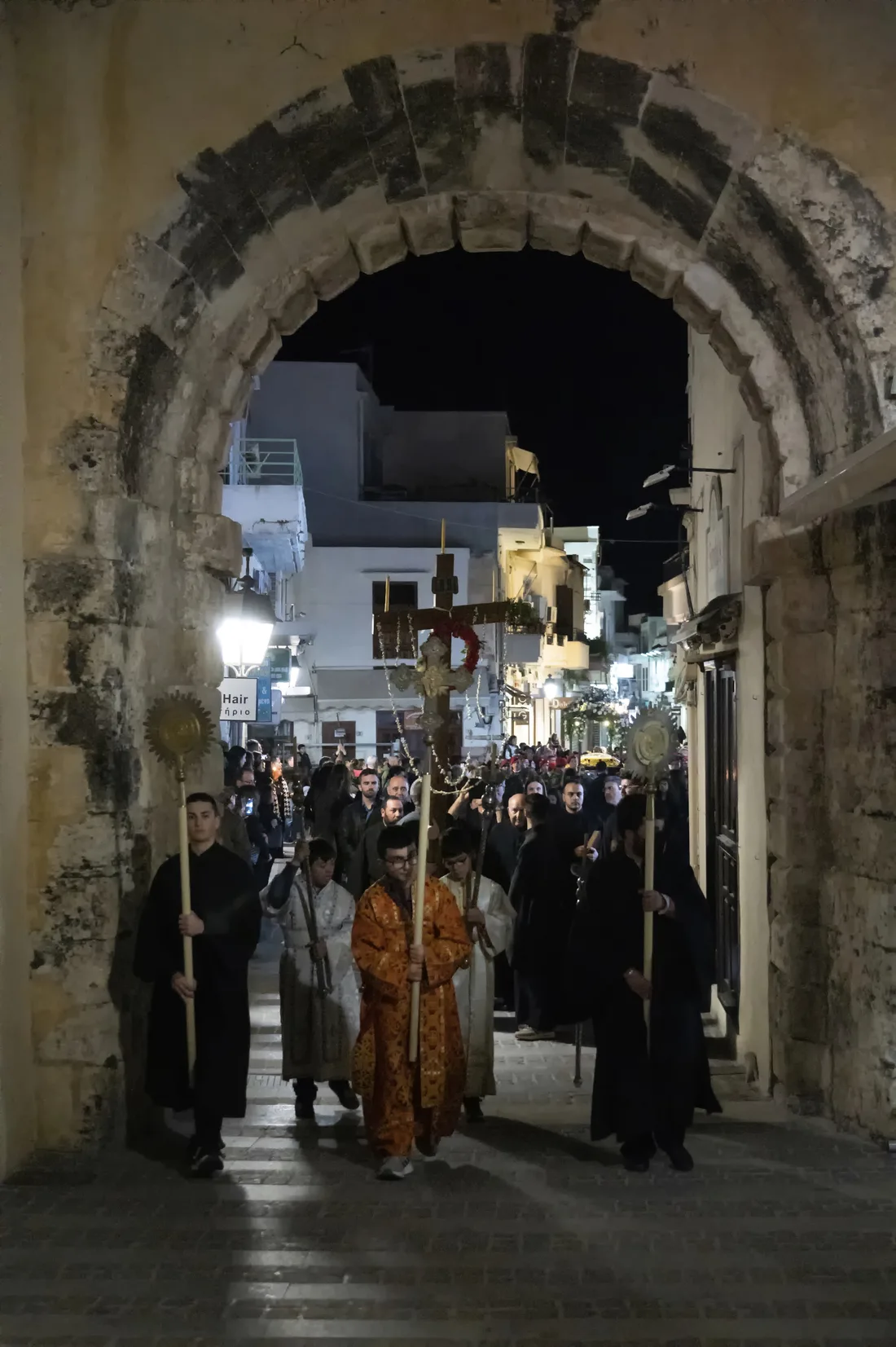
On Good Friday, the decorated Epitaphios represents Christ’s bier. Evening processions take place in Greek communities, accompanied by worshippers carrying candles. In Rethymno, the Epitaphioi of the Old Town parishes pass through the Megali Porta, the Venetian gate of the Old Town, and gather in the Square of the Four Martyrs just outside it, where large crowds wait for them before each returns to its church.
The custom is stable; the exact church, route and starting time are not. Check the official programme or the relevant parish for that year.
Holy Saturday and the Resurrection
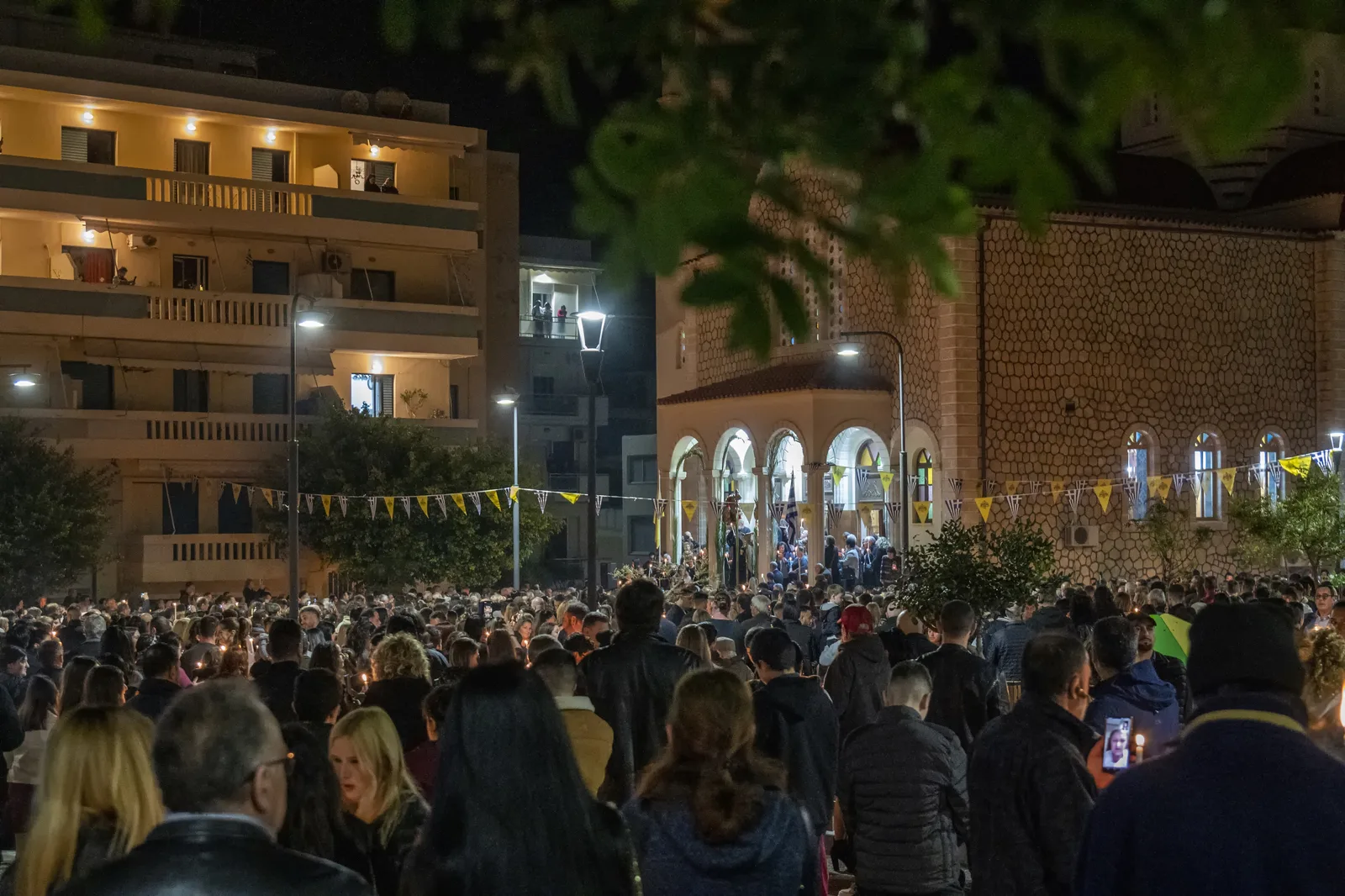
Late on Holy Saturday, people gather for the Resurrection service, usually from about 23:00, and the churchyards and squares fill before midnight. At midnight, the greeting Christos Anesti (“Christ is risen”) is answered with Alithos Anesti (“truly he is risen”). Candles and the Resurrection light are central to the experience.
Many worshippers bring an unlit candle or lambada, sold in shops and outside churches during Holy Week, and light it when the Holy Light is shared at midnight. Some carry the flame home and use the candle smoke to mark a cross above the entrance, a familiar Greek Easter custom, though not one followed by every household.
Visitors may join respectfully, but participation is optional. Keep candles upright and away from clothing and hair, and do not ask young children to carry a lit candle through a crowd or during the journey back to the villa.
Firecrackers and fireworks commonly accompany the midnight Resurrection in towns and villages across Greece, and in many Cretan villages an effigy of Judas is burned on a bonfire after the service. Their intensity varies by location and year. Guests travelling with small children, people sensitive to sudden noise or nervous animals should ask what is normally experienced near their villa. Watch from a safe distance, never handle fireworks and keep children away from anyone using them or from the fire.
After the service, families commonly break the fast with magiritsa, a traditional soup usually made with lamb offal and herbs, accompanied by red eggs and Easter bread. Visitors who do not eat offal should ask what is in the dish rather than assume it is a general meat soup. Restaurants serving after midnight are year-specific and should be reserved only after direct confirmation.
Easter Sunday
Easter Sunday is built around family, food and time together. Lamb or goat, red eggs, breads and seasonal dishes commonly form part of the table.
Across Greece, lamb or goat cooked on a rotating spit is the familiar Easter image. In Crete, antikristo is an established local method: large pieces of meat are arranged around an open fire rather than placed above it, cooking slowly from the side. Many Cretans now choose it in preference to conventional spit-roasting, while other households use the oven. None of these is the only authentic choice.
A villa offers another approach: preparing lamb or goat slowly in the wood-fired oven and sharing it at your own table. This is a suggestion, not a required Easter menu, and the oven may be used only in accordance with the villa instructions, weather conditions and the fire-safety rules in force on the date. Guests may equally cook something different, reserve a restaurant that has confirmed its Easter opening, or ask about a private chef.
Greek Easter Traditions Visitors Will Encounter
Some traditions are stable enough to explain clearly.
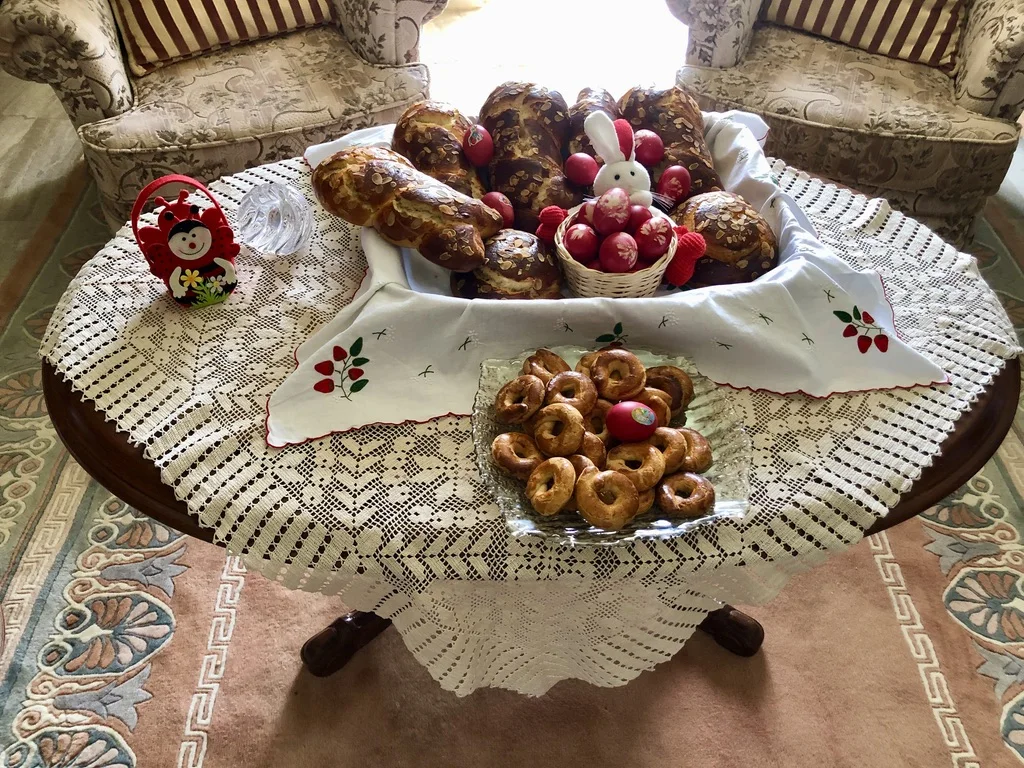
- Kalo Pascha means “Happy Easter” and is used in the days leading up to the celebration.
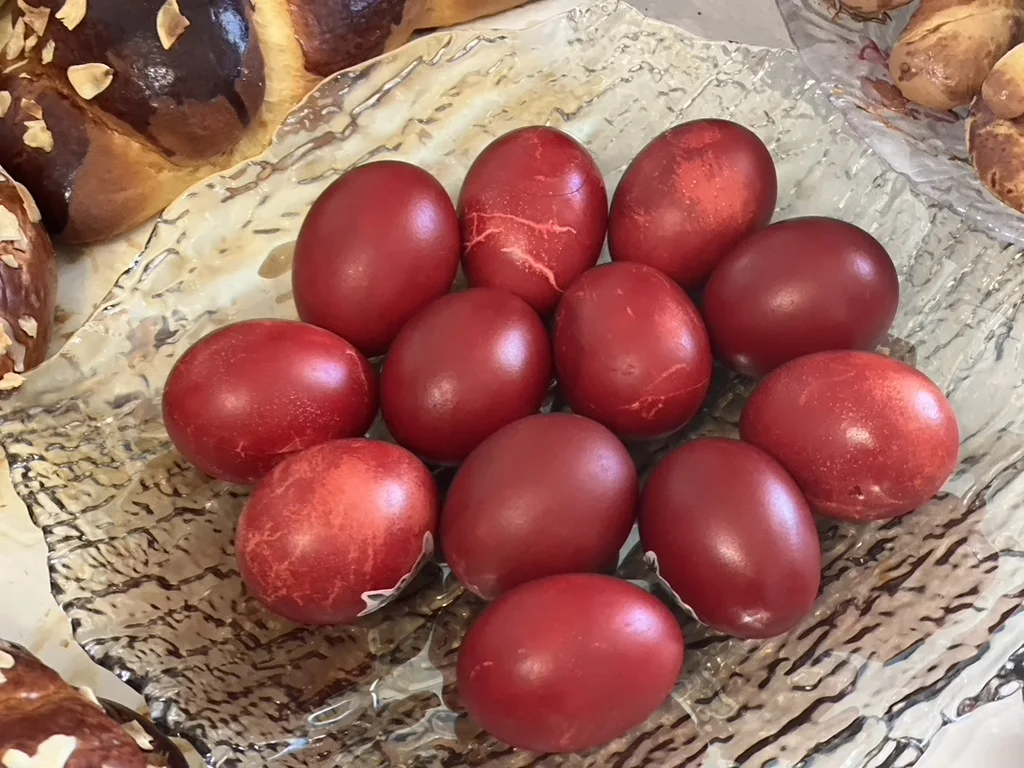
- Eggs are traditionally dyed red on Holy Thursday and cracked in a game known as tsougrisma.
- The Good Friday Epitaphios and the Holy Saturday Resurrection are the central observances.
- After the Resurrection, Christos Anesti is answered with Alithos Anesti.
- Tsoureki is a sweet, aromatic Easter bread.
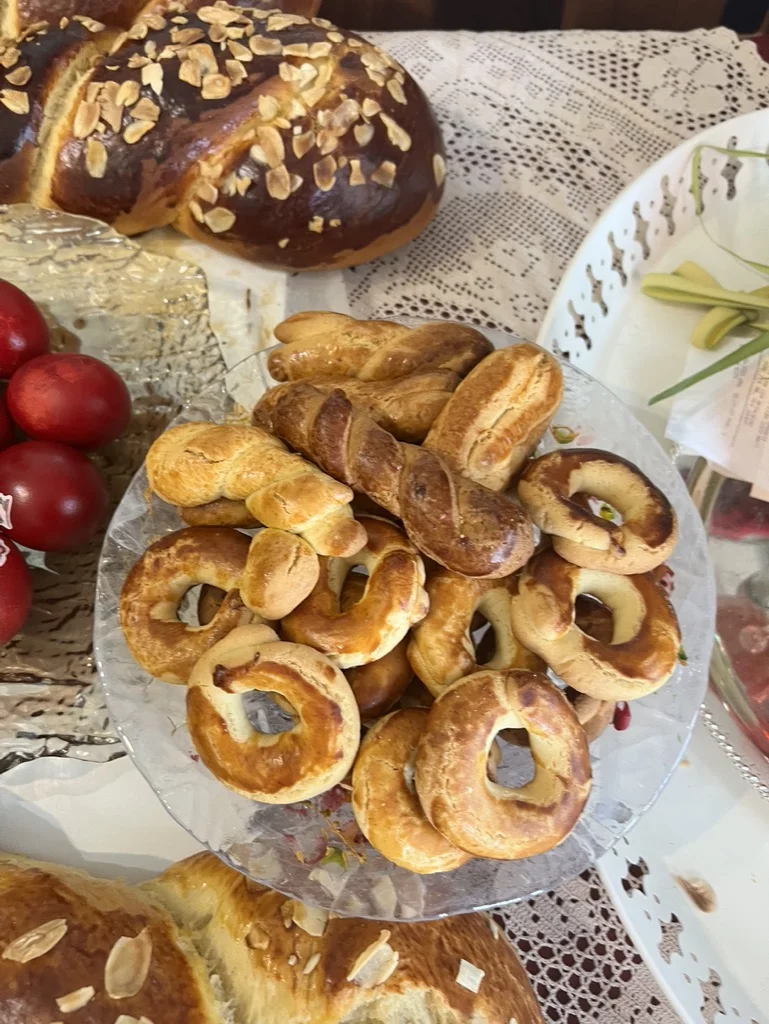
- Koulourakia are Easter biscuits found in homes and bakeries.
- The Easter Sunday meal is a long family gathering rather than a quick lunch.
Whether and where you meet each of these depends on the village, household, church and annual programme. If you are invited to a Greek home, a tsoureki or a box of sweets is a welcome gift.
Easter Food in Crete
Easter food makes the transition from fasting to celebration visible, and visitors notice it before they understand it. During Holy Week, kitchens and many restaurants turn towards fasting dishes based on vegetables, pulses, wild greens and, in some cases, shellfish prepared without meat or dairy products. A restaurant visited earlier in the stay may offer a noticeably different menu during Holy Week, so it is worth asking what is being prepared that day.
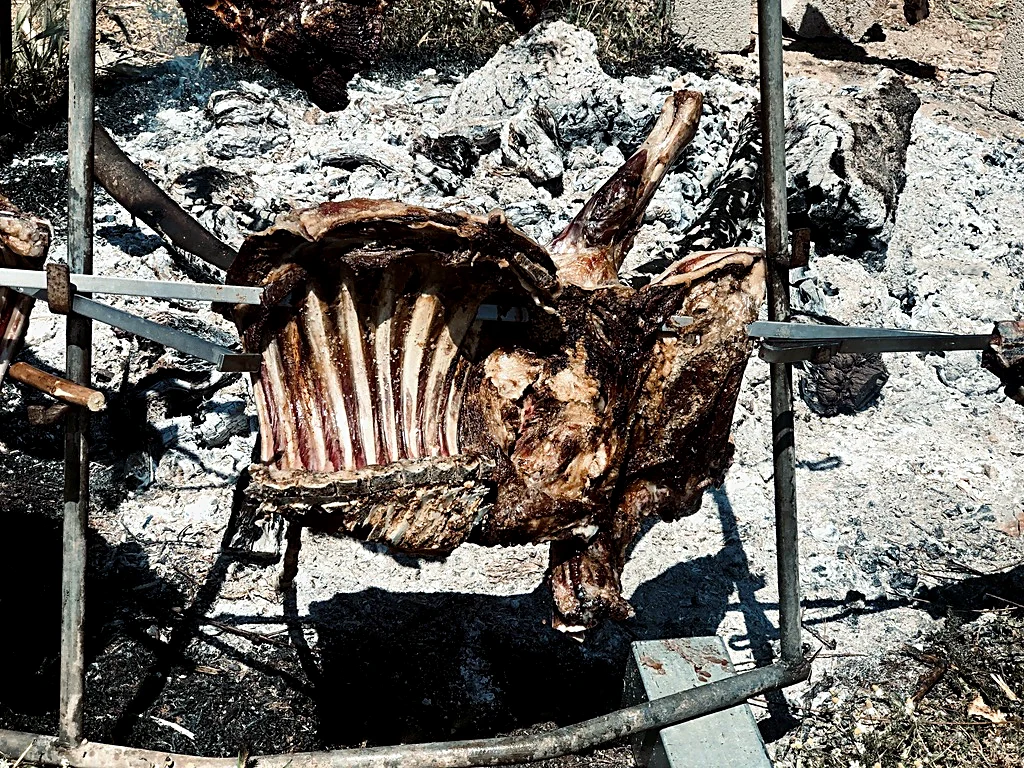
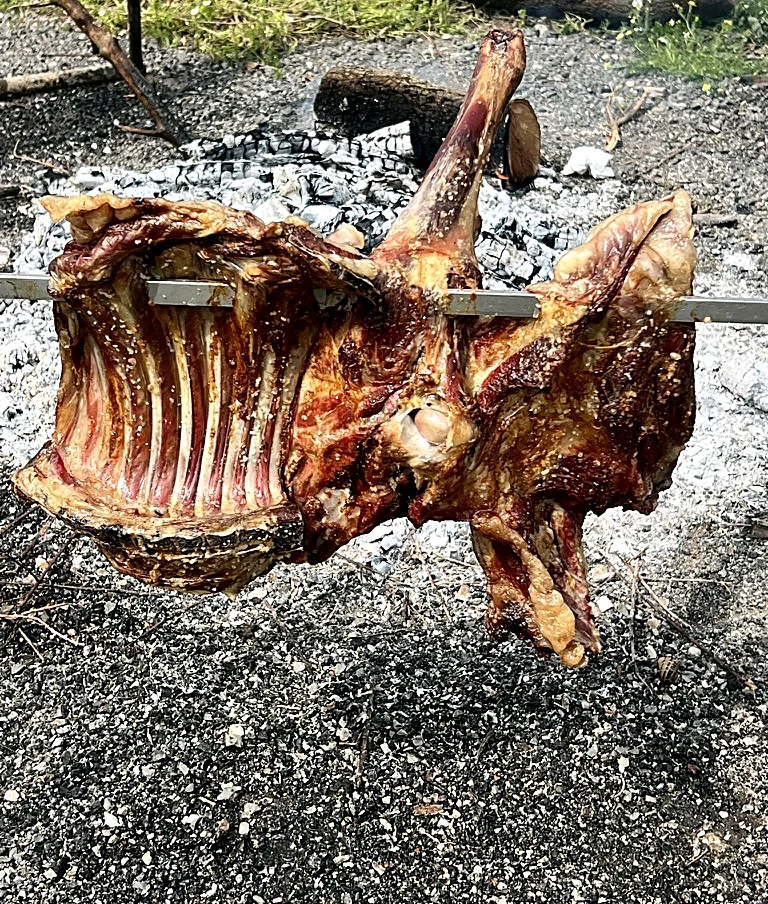
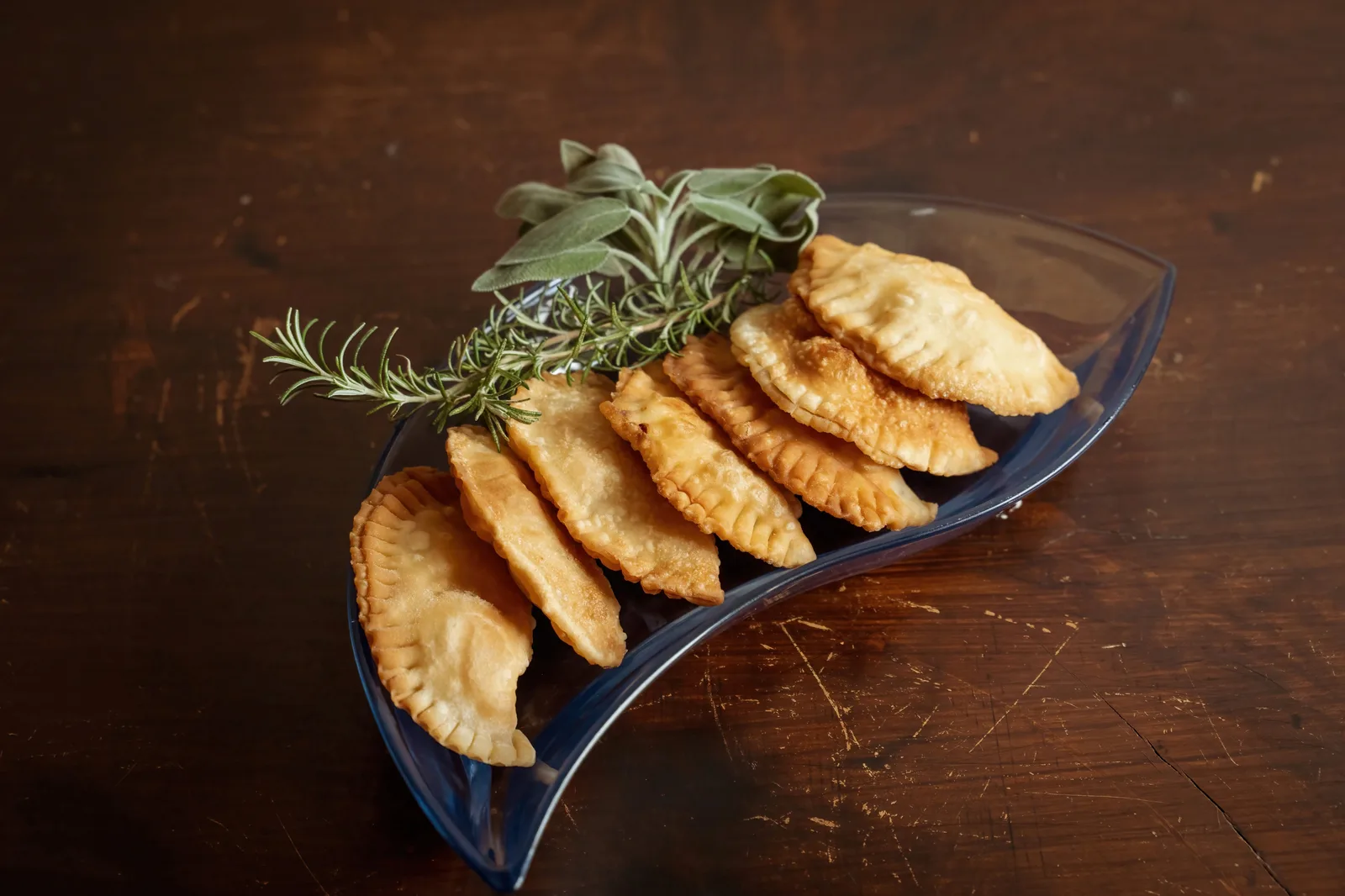
The change is not a restriction on visitors. Fasting cooking is some of the best food in the Greek year, and Crete does it particularly well. Then, after the Resurrection, the table turns in a single night towards magiritsa, red eggs, tsoureki, koulourakia, Cretan cheese pastries such as kalitsounia, and meat.
In Crete, local cheeses, wild greens, olive oil, seasonal baking and methods such as antikristo give the wider Greek celebration a distinct local character. Ask what is being prepared that week: a household or restaurant may serve the meat from the oven, the spit or antikristo.
Guests can also ask Argyris about grocery pre-stocking for the first evening or the Easter table, a private chef subject to availability, or a wine tasting, olive-oil tasting or Cretan cooking lesson through independent local providers. Availability, content, price and terms are confirmed for the specific dates. These are optional experiences, not inclusions in the villa stay.
What Can You Do During an Easter Stay?
Easter does not need to fill every hour. The strongest stay combines the main Holy Week moments with open days for Rethymno, villages, archaeology, food and the spring landscape.
Walk through Rethymno Old Town
The Old Town and Venetian harbour suit an unhurried morning or early evening. Good Friday and the Easter weekend affect shop, museum and restaurant hours, so check current opening information before setting out.
Visit Arkadi, Ancient Eleutherna and Margarites
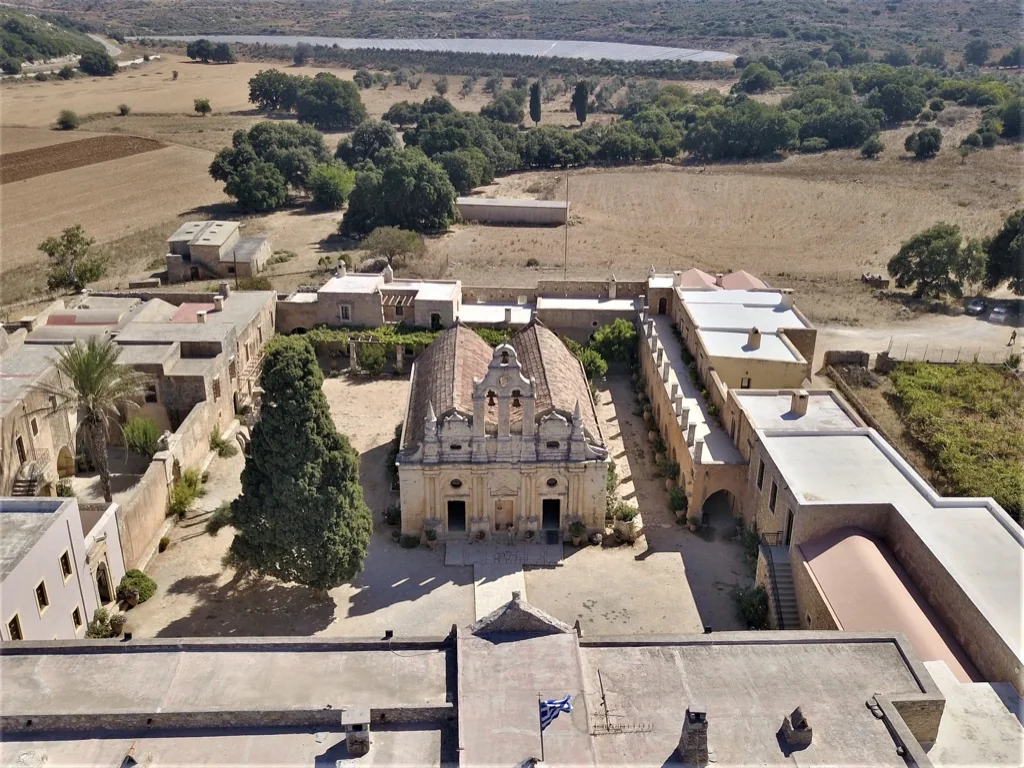
Arkadi Monastery, Ancient Eleutherna and its museum, and the pottery village of Margarites make a strong cultural day when their current opening hours allow; see the route. They should not be forced into Holy Saturday or Easter Sunday without checking the arrangements for that year.
Combine Spili with the south coast
Spili pairs with Plakias or, depending on the day’s pace and road conditions, beaches such as Damnoni, Ammoudi, Schinaria or Preveli; see South Rethymno Beaches. Spring weather changes quickly and swimming conditions should not be assumed.
Spend a day in Heraklion
On longer stays, give Rethymno and Heraklion separate days. Knossos can be combined with the Heraklion Archaeological Museum and a stop in the city centre for food or shopping, subject to current opening hours; there are car parks a short walk from the centre.
Consider a day in Chania
A longer stay may also include a separate day in Chania, approx. 72 km (45 mi) away. It works better as a full excursion than as an addition to another major archaeological or south-coast route.
Leave room for the villa
A spring stay should include time at home: breakfast outdoors when the weather allows, cooking together, reading, an evening around the table. The purpose is not to reproduce a peak-summer itinerary in a cooler month.
A Suggested Seven-Night Orthodox Easter Stay
| Day | Suggested rhythm |
|---|---|
| 1 | Arrival, groceries and a quiet first evening at the villa |
| 2 | Rethymno Old Town and orientation |
| 3 | Arkadi, Ancient Eleutherna and Margarites, if current hours allow |
| 4 | Good Friday at a slower pace and a confirmed Epitaphios option |
| 5 | Holy Saturday, rest during the day and the Resurrection service in the evening |
| 6 | Easter Sunday meal and time together |
| 7 | A flexible spring day: south-coast route, village visit or villa rest |
This is a planning example, not a fixed itinerary. It changes with the year’s dates, weather, opening hours, the ages of the group and the pace guests prefer.
Planning a 10- to 14-Night Stay
For travellers arriving from North America, or combining Crete with mainland Greece, one week compresses quickly once connections, travel recovery and the Easter operating pattern are included. A longer stay separates celebration days from excursion days.
A 10- to 14-night stay can include several nights before Holy Week to settle in; the full Good Friday to Easter Sunday sequence; quiet time after Easter Monday; separate days for Rethymno, Arkadi and Eleutherna, the south coast, Knossos and Heraklion, or Chania; rest days for children, grandparents or anyone recovering from a long journey; a tasting or cooking lesson when confirmed; and ordinary days at the villa with nothing planned.
Keep the first full day light after a long journey, and avoid placing the longest excursion immediately before the return flight. Longer stays also give households permission to move at different speeds; not everyone needs to join every excursion for the holiday to feel shared.
Opening Hours, Shops and Restaurants
Greek Orthodox Easter changes the pattern of the week, but it does not shut the island down.
Good Friday and Easter Monday are public holidays in Greece. Museums and archaeological sites usually close on Easter Sunday and keep shorter hours on Good Friday and Holy Saturday, so check any you want to visit.
On Good Friday and Holy Saturday, supermarkets and shops keep special Easter hours, shorter than a normal day; check them for the year you travel. These are also among the busiest food-shopping days of the season. Most shops are closed on Easter Sunday and Easter Monday, so the villa should be stocked for both.
In 2027, 1 May (Labour Day, normally a public holiday) falls on Holy Saturday. When this happens, the holiday is often moved to another day, so check the announcement for the year.
Order the meat early
The one thing not to leave late is the Easter meat.
Lamb and goat are in heavy demand across Crete before Easter Sunday, particularly when a household needs a specific cut, quantity or preparation method. By Good Friday the choice narrows quickly, and what is left may not be what your table needs. The same applies to a tsoureki from a specific bakery.
If your group plans to cook, decide the Easter meal early and order the meat several days ahead rather than on the Friday. Grocery pre-stocking can be requested so the main items are already in the villa before Holy Week reaches its busiest point.
Ordinary groceries require less advance planning than Easter meat, but holiday opening hours still need to be checked. Have enough in the villa to carry the group through Easter Sunday and Easter Monday.
Restaurants, museums and archaeological sites follow their own Easter arrangements, which vary by year and by venue. Confirm the ones that matter to your group for the exact dates rather than assuming normal-season hours.
Why a Private Villa Works for Easter
A villa gives a family or group a shared kitchen, a private table and room for different daily rhythms. That matters at Easter, when late services, holiday opening patterns, travel recovery and mixed generations make a fixed hotel schedule awkward.
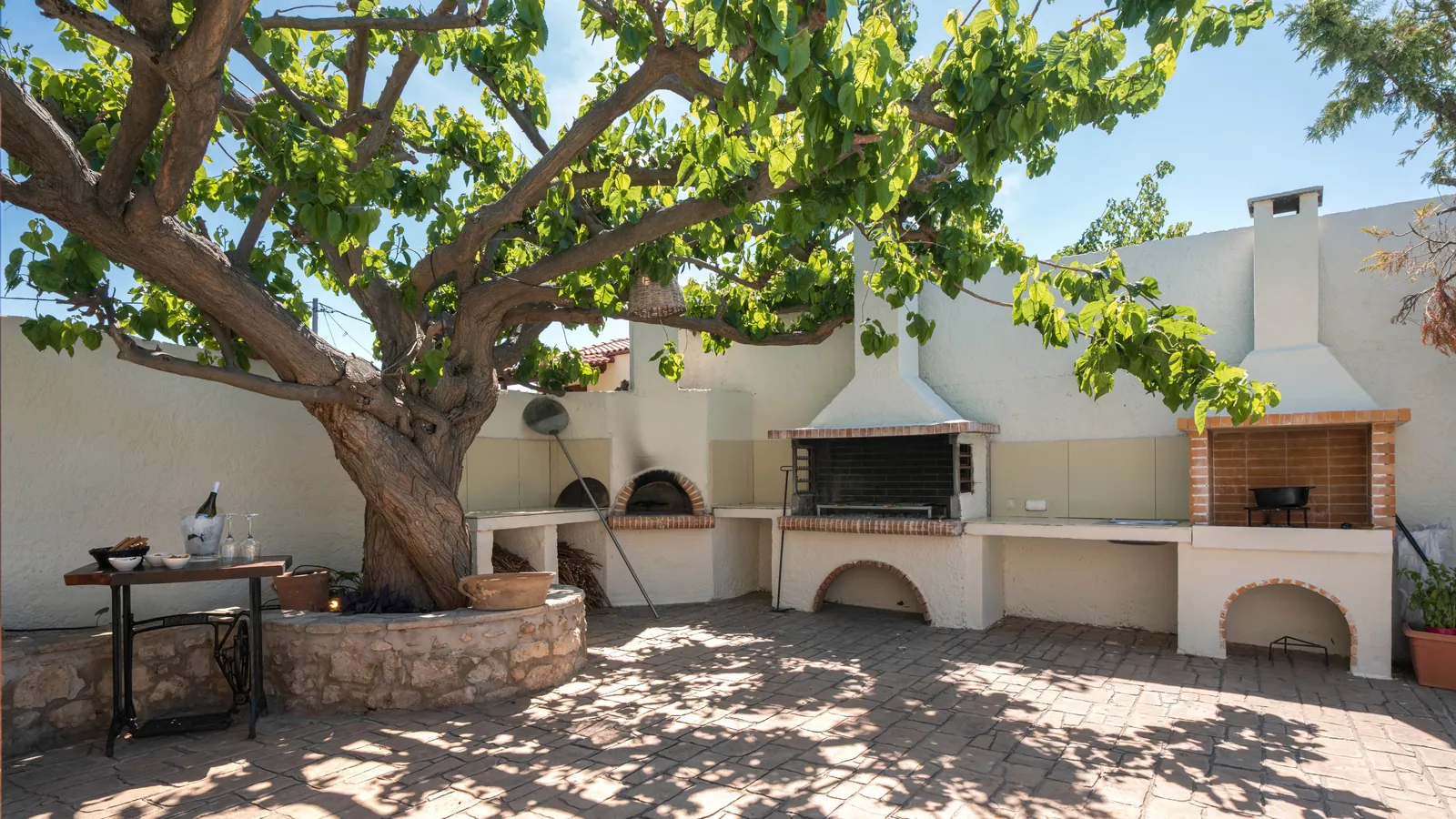
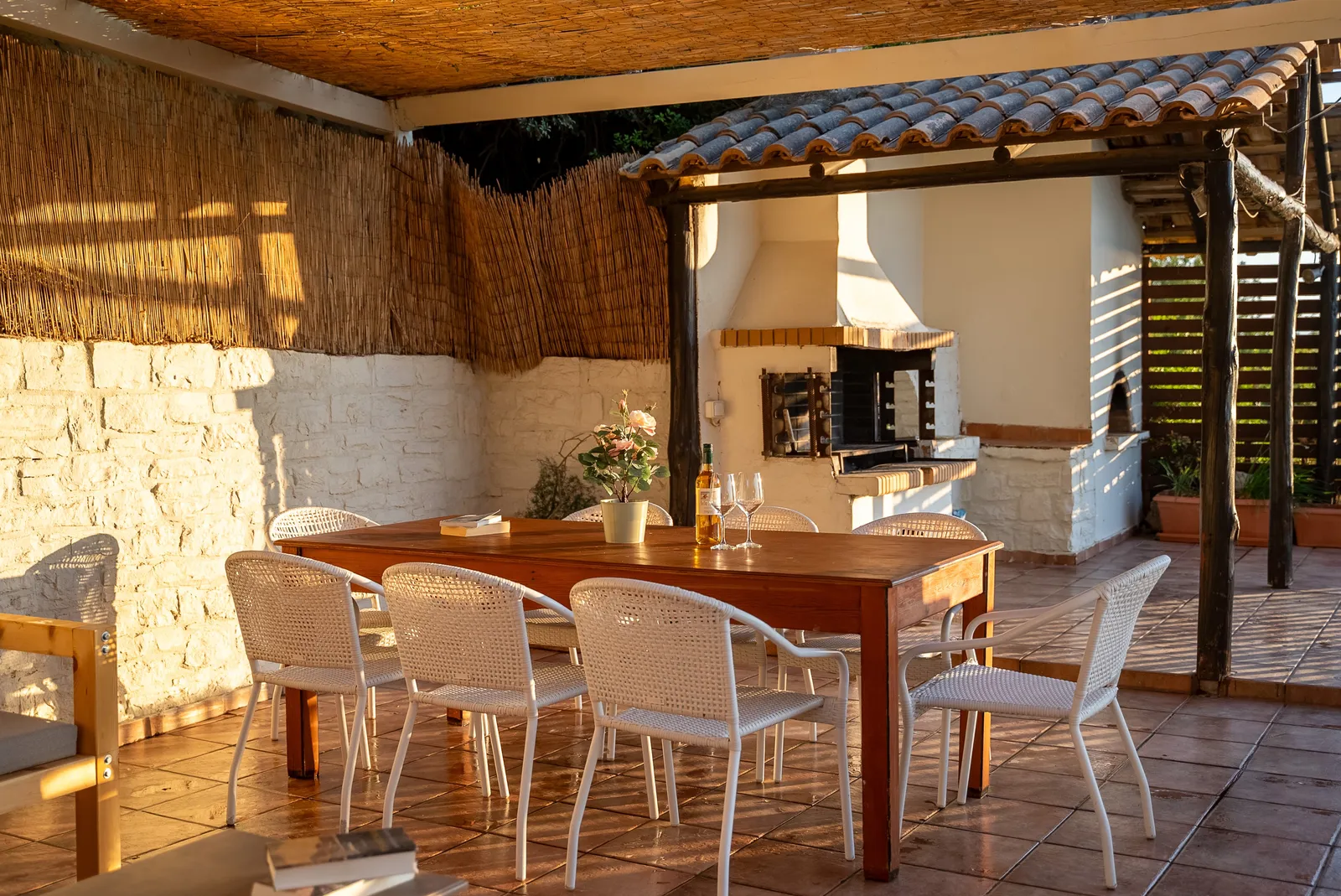
Guests can prepare their own Easter table, use the wood-fired oven when conditions and rules allow, request grocery pre-stocking, ask about a private chef, split rest and excursion days between households, and come back from the midnight Resurrection service without a dining room waiting to close. Spring evenings can be cool: All four villas have air conditioning with heating and a fireplace.
Amazing Villas in Crete provides private accommodation and local stay guidance. Church services, public celebrations and organised experiences take place at the relevant external venues. For larger groups, two or three independent villas in Asteri Village can be considered through MAZI, subject to availability and a room plan agreed with Argyris. Spending the winter holidays in Crete instead? See Christmas and New Year in Rethymno.
Easter in Crete isn’t something you tick off a list. It builds slowly, from the quiet of Good Friday to the candles at the midnight Resurrection, and on Sunday it becomes a long lunch around the table. So pick the moments that matter to your group, sort out the food early and give yourselves time at the villa. You don’t need to spend every day in the car.
There’s no single right way to do the Easter meal. Some families still use the spit; many Cretans now prefer antikristo. At the villa, the wood-fired oven makes for a different kind of afternoon, weather and fire-safety rules permitting.
One thing I tell every group: decide about the meat before you arrive. In the last days before Easter the whole island is buying the same thing, and a big group asking on Good Friday may not find the size or cut they’re looking for. Tell me what you have in mind and I’ll help you sort it out in good time.
Argyris Skordilis · Owner and host, Amazing Villas in Crete · usually replies within 12 hours
