Heraklion Archaeological Museum: A Guide for Villa Guests near Rethymno
If Knossos is the stage of Minoan Crete, the Heraklion Archaeological Museum is where the treasures are. A visit turns the ruins into a civilisation: the frescoes, the gold, the goddesses and the objects that made the Minoans famous.
This guide is written for guests at our villas near Rethymno: what to see, how long it takes and how to fit it into a relaxed day.
 By Argyris Skordilis, owner and host · Updated
Why the Museum Matters
This is the museum of the whole of Crete. It brings together finds from every part of the island, from the great palaces of Knossos, Phaistos, Malia and Zakros to Hagia Triada, sacred caves, peak sanctuaries, villas and village cemeteries, including sites in the Rethymno area close to the villas.
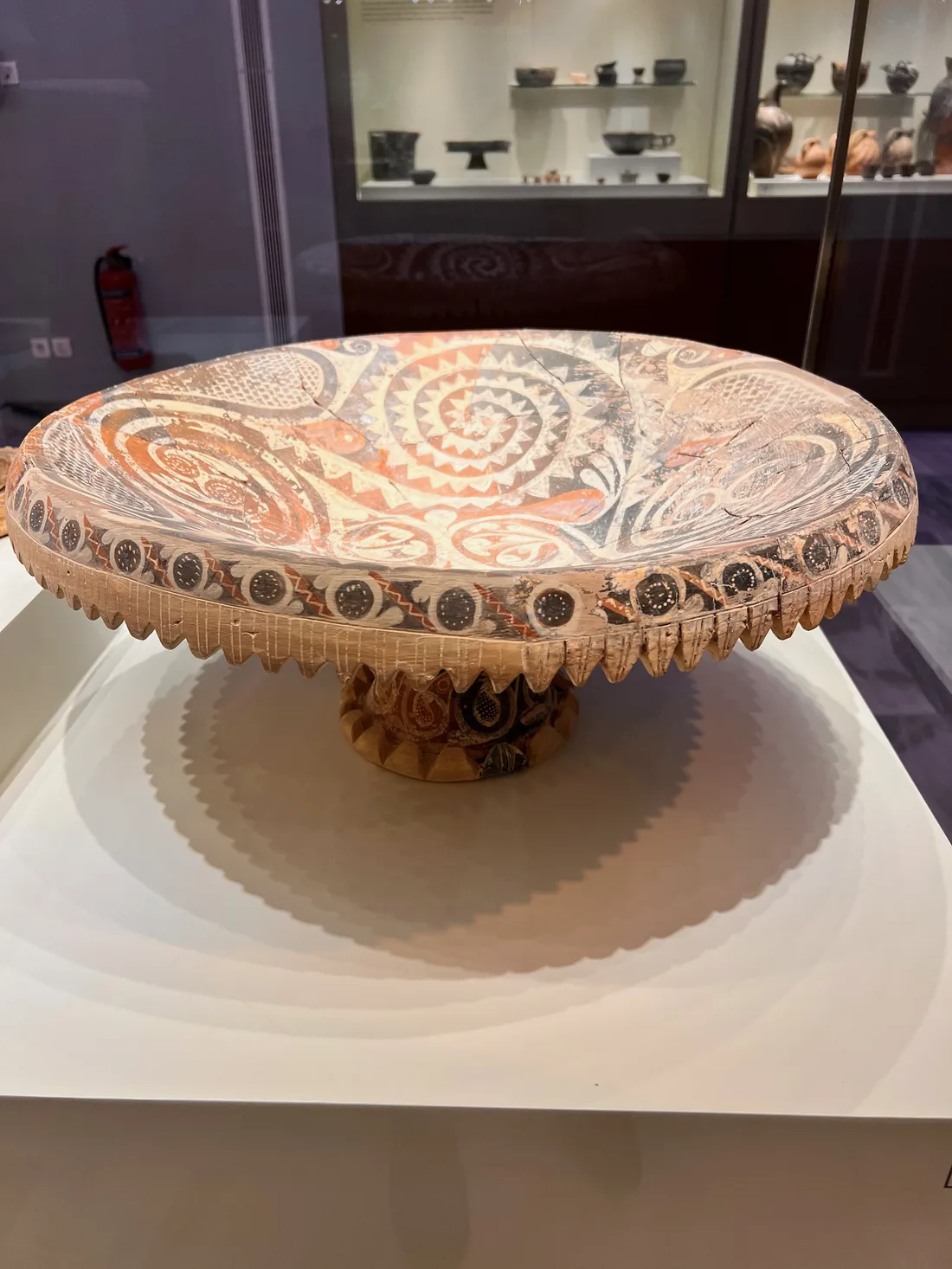
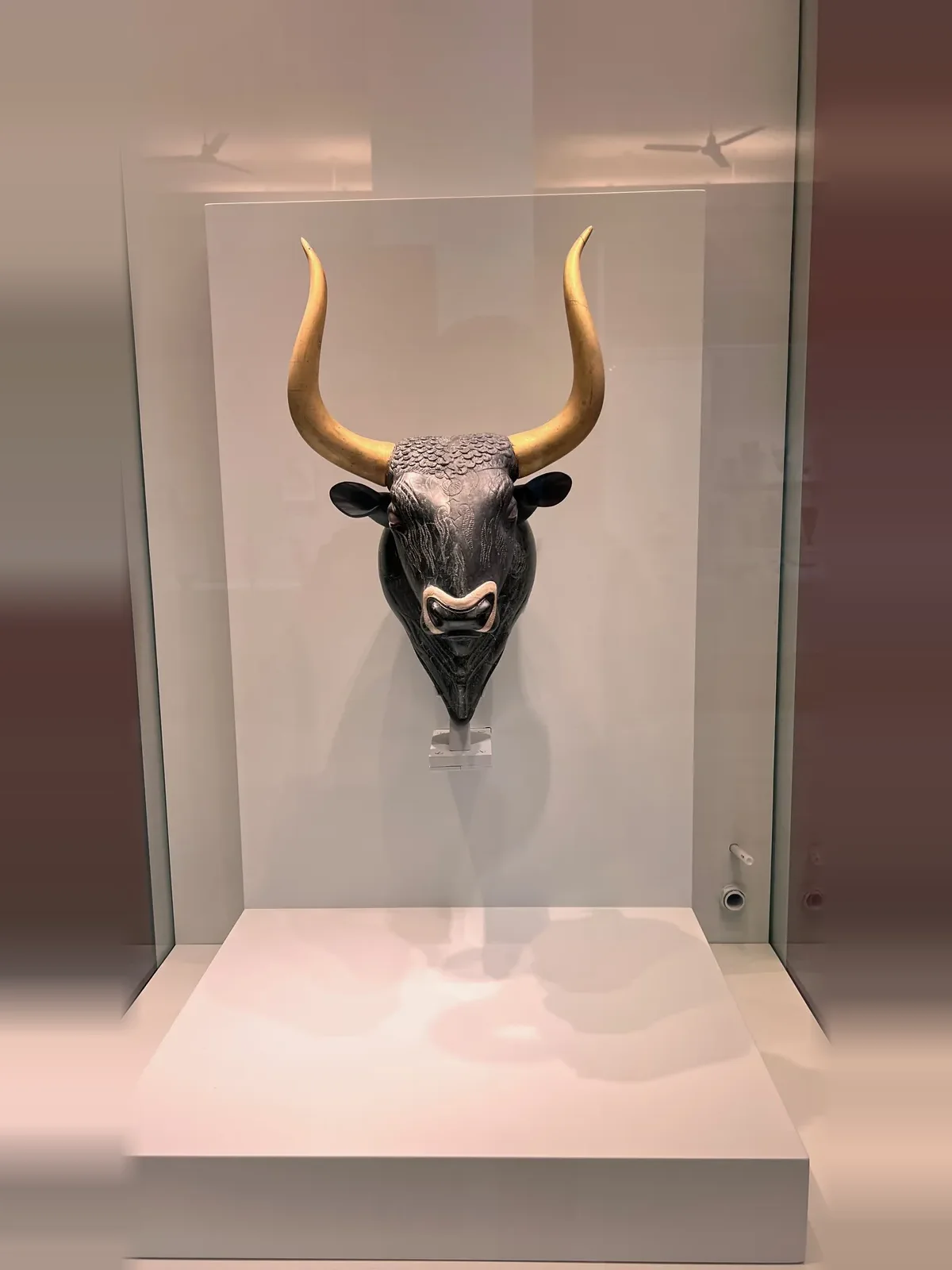
Most of what you see at Knossos is the setting; most of what made Minoan Crete famous is here. The original frescoes whose copies stand on the palace walls, the Snake Goddesses, the bull’s-head rhyton and the Phaistos Disc are all in these galleries.
Finds from the Rethymno area
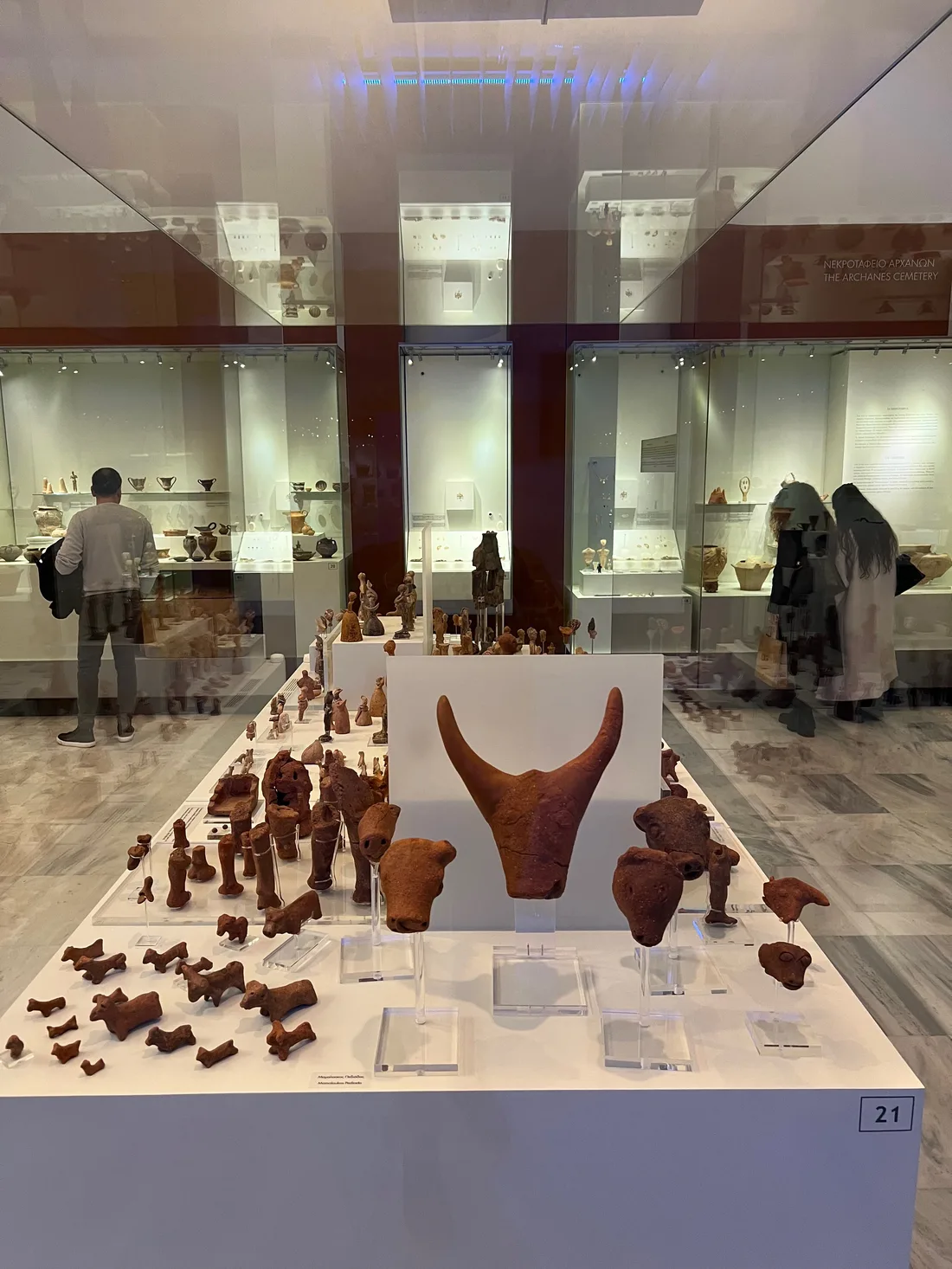
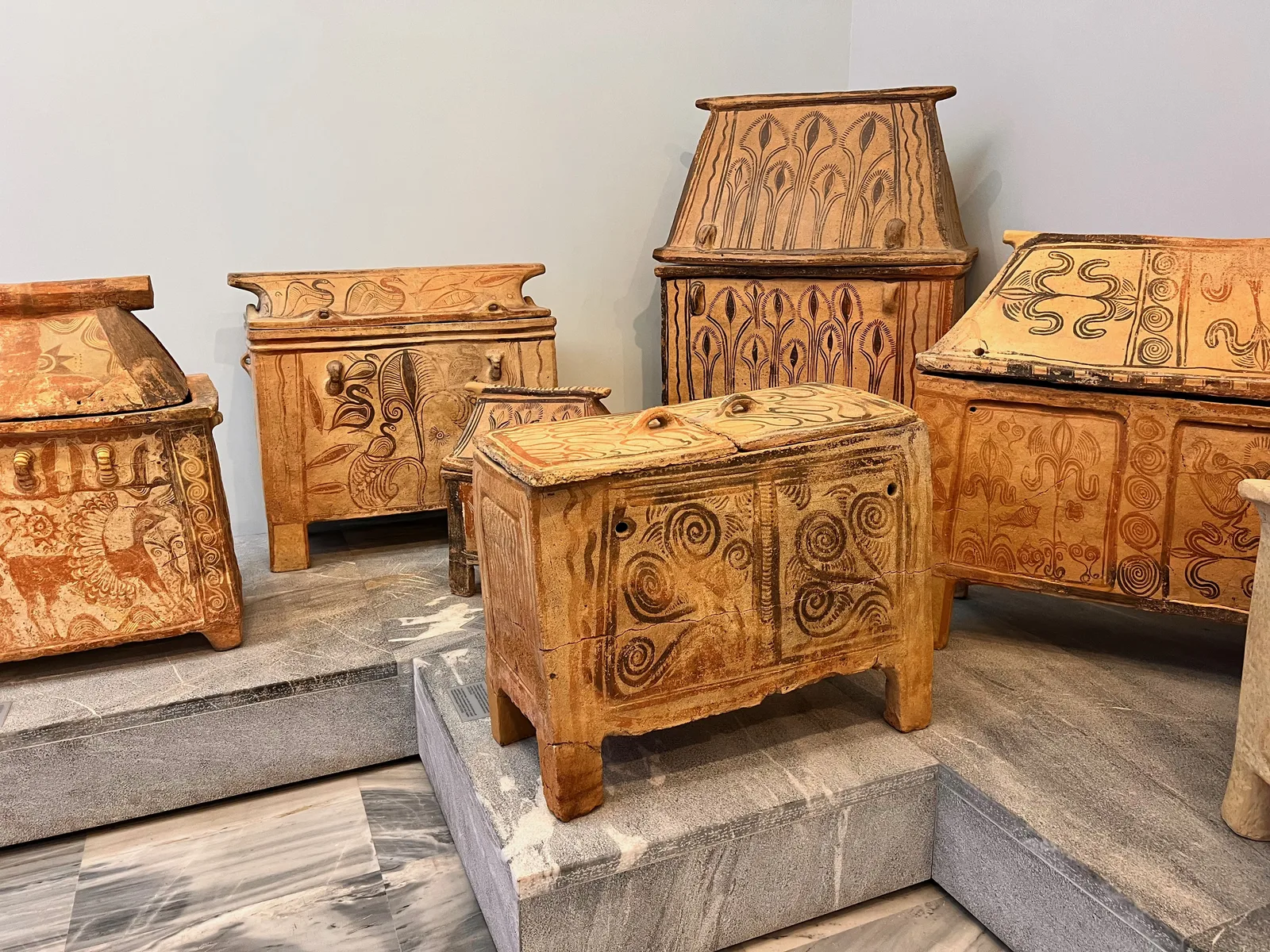
The Rethymno area is part of the story too, above all through the Late Minoan cemetery at Armeni, about 8 km south of Rethymno on the road to Spili. Excavated since 1969, it has more than 230 rock-cut chamber tombs from about 1400–1200 BC, and its finds include painted clay larnakes, bronze weapons, seal stones, jewellery and a boar’s-tusk helmet. In the Heraklion museum, look for the painted clay larnakes, the chest- and bath-shaped coffins of the period, from Armeni; more finds are in the archaeological museums of Rethymno and Chania, and the cemetery itself, in an oak wood beside the road south, can be visited on the way to Spili or the south coast; check its opening hours before you go.
The collection began in 1883 as a small group of antiquities, and the present building, designed by the architect Patroklos Karantinos, dates from the late 1930s. After a long renovation it reopened in stages from 2013, with clear, modern galleries arranged by period. It is one of the great archaeological museums of Europe, and for Minoan Crete it is the essential museum.
Opening Hours, Tickets and Free Days
| Period | Hours |
|---|---|
| 1 April – 31 October | 08:00–20:00; Wednesday 13:00–20:00 |
| 1 November – 31 March | 08:30–15:30; Wednesday 10:00–17:00 |
| Last admission | 20 minutes before closing |
| Closed | 1 January, 25 March, 1 May, Easter Sunday, 25 and 26 December |
Tickets are €20 full and €12 reduced. Admission is free on 6 March, 18 April, 18 May, the last weekend of September and 28 October, and on the first and third Sundays of each month from November to March. Reduced and free categories (for example for children, students and some visitors over 65) depend on age, nationality and documents, so check the official museum page before you go. Tickets can be bought on the day or online through the official Hellenic Heritage ticket site. Details checked 21 September 2026; hours and prices can change.
How the Museum Is Laid Out
The galleries follow the story of Crete in order, so it is easy to find your way.
- Ground floor: from the Neolithic through the Old Palace and New Palace periods to the end of Minoan Crete: pottery, seals, gold, stone vessels, the Phaistos Disc, the Snake Goddesses and the bull’s-head rhyton, then the finds from cemeteries, sanctuaries, villas and caves, and the later Bronze Age.
- Upper floor: the frescoes from Knossos and other sites, the painted sarcophagus from Hagia Triada, and the galleries of later periods, from the Geometric and Archaic to Greek and Roman Crete.
There is a lift between the floors. If time is short, walk the ground floor in order, then go straight up to the frescoes.
Twelve Things Not to Miss
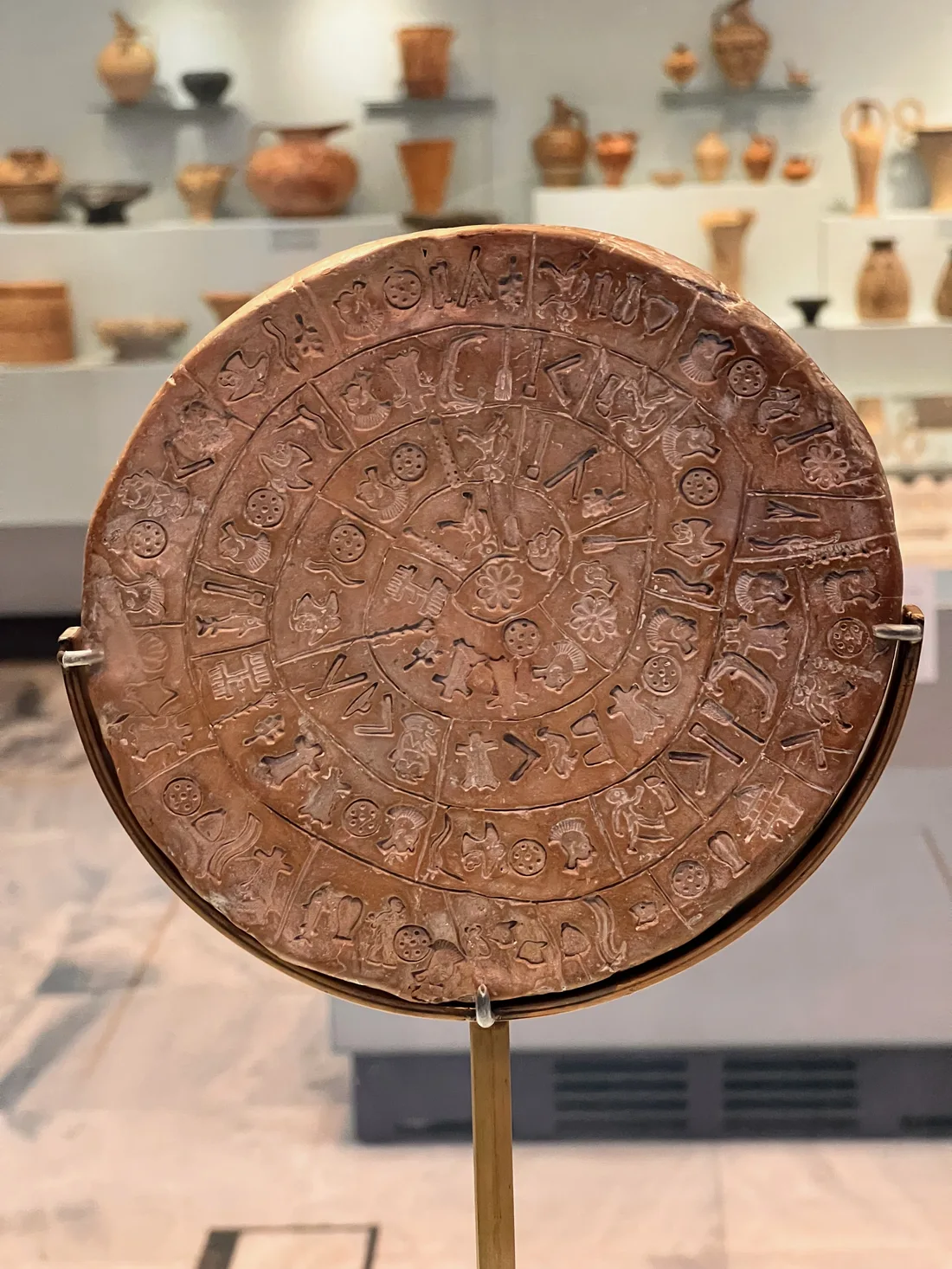
- The Phaistos Disc. A clay disc found at the palace of Phaistos in 1908, stamped on both sides with a spiral of symbols. No one has deciphered it, and it is still debated.
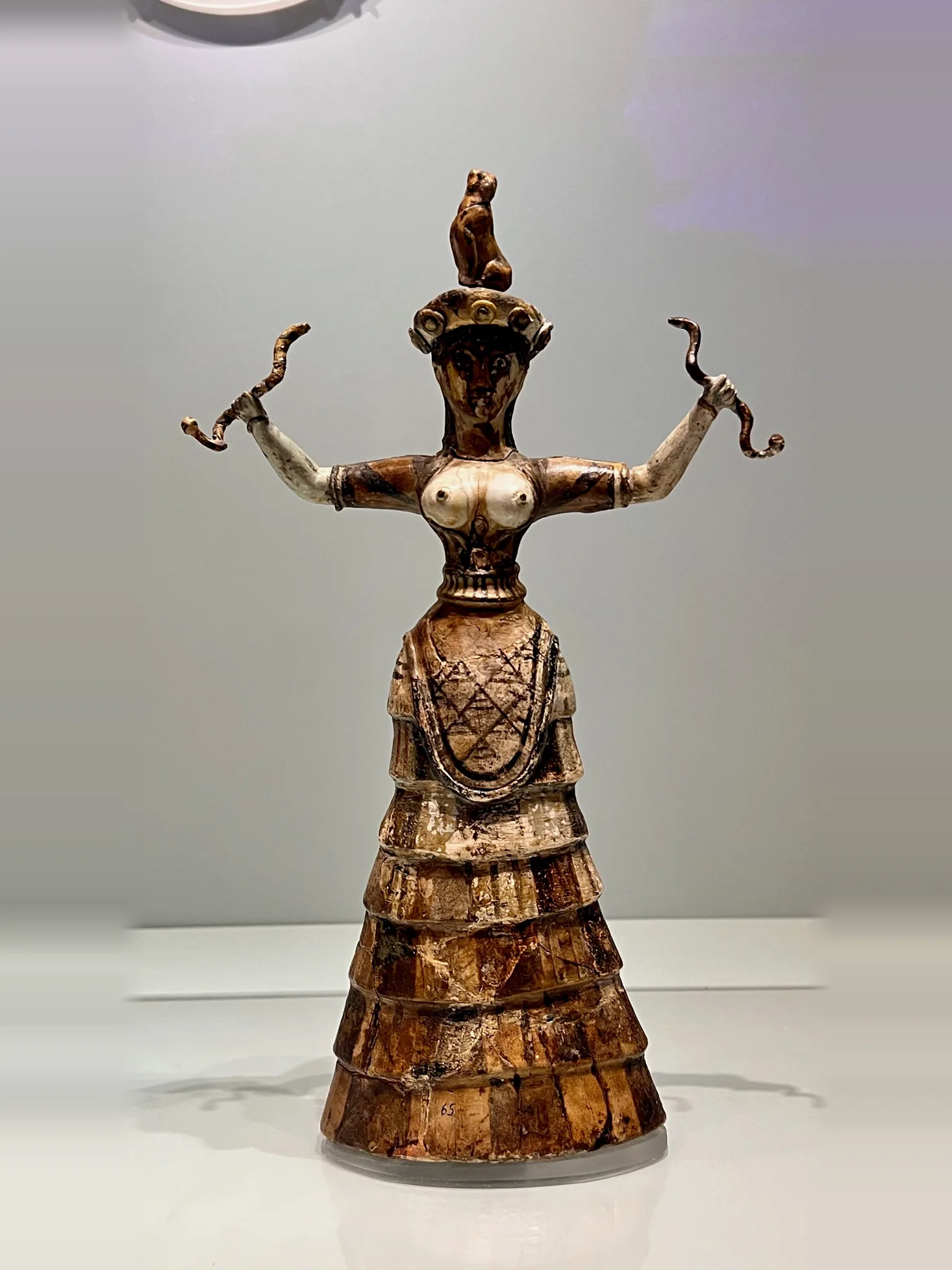
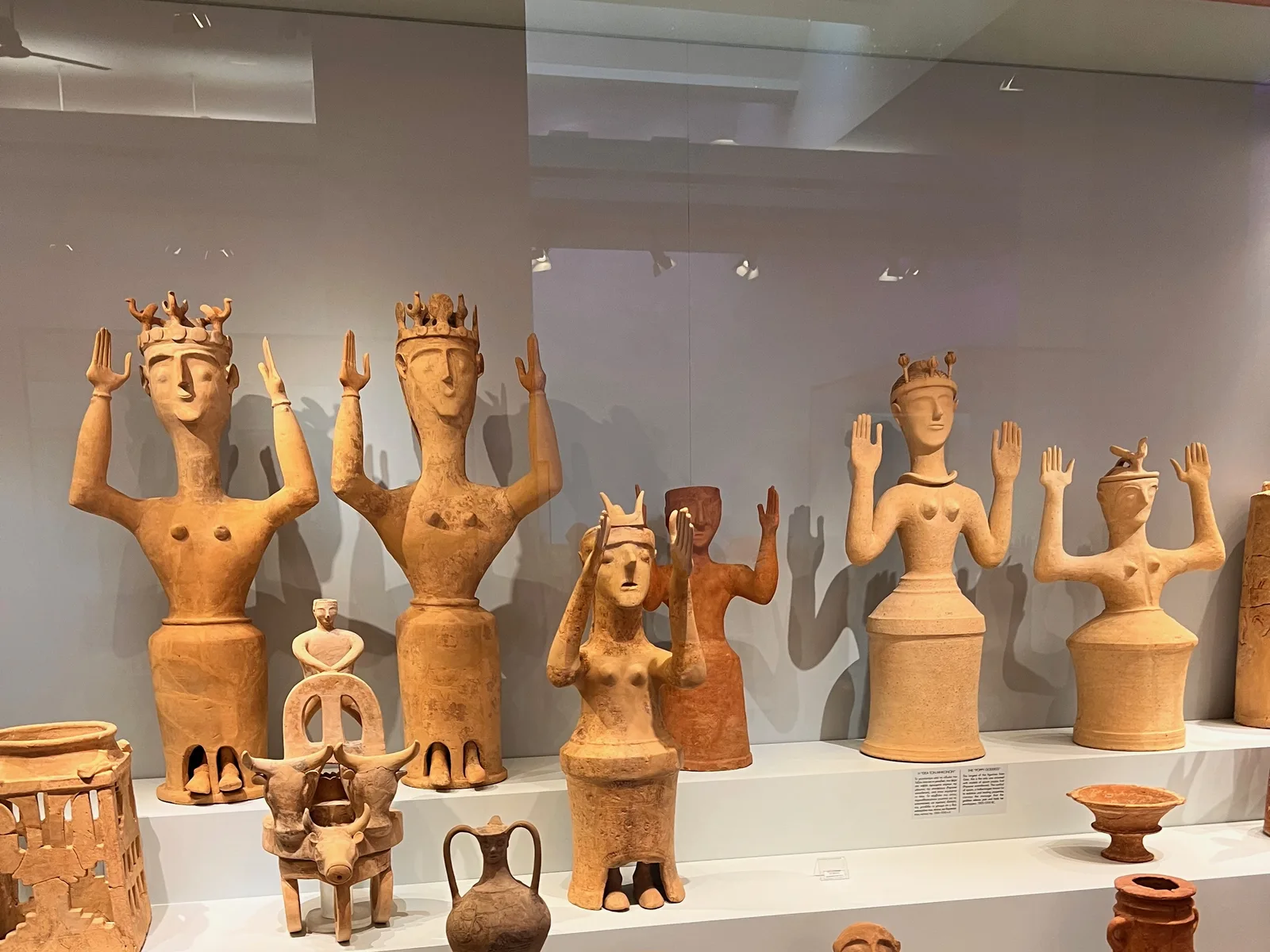
- The Snake Goddesses. Small faience figures from the palace of Knossos, arms raised, holding snakes: the best-known images of Minoan religion.
- The bull’s-head rhyton. A ritual vessel from Knossos carved in black stone, with an inlaid eye of rock crystal and restored golden horns.
- The bee pendant from Malia. A tiny gold jewel of two bees around a drop of honey, a masterpiece of Minoan goldsmiths.
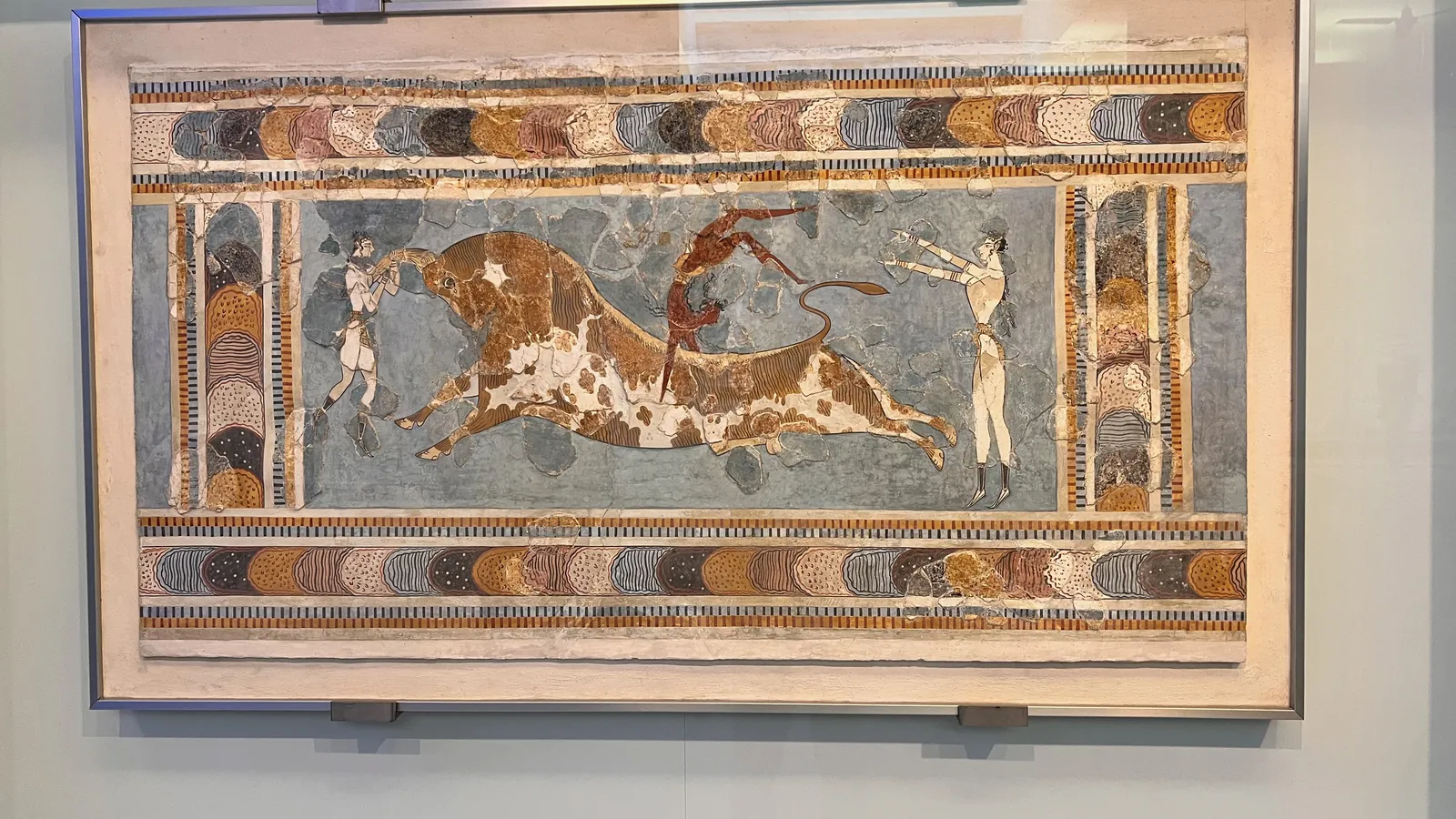
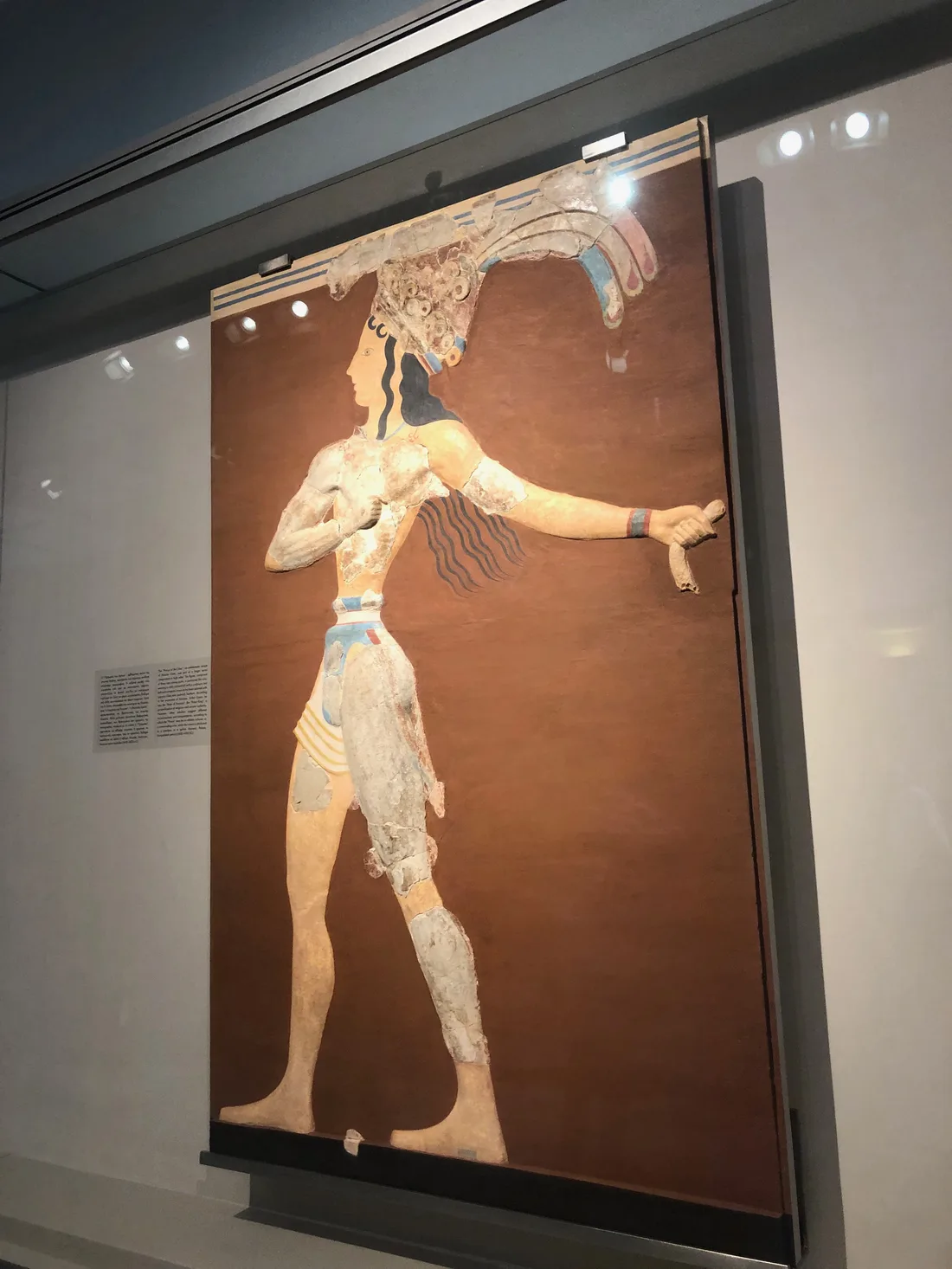
- The frescoes. Upstairs: the bull-leaping fresco, the Prince of the Lilies, the woman known as La Parisienne, the dolphins and more. They are reconstructed from surviving fragments, and the reconstructions are part of their story.
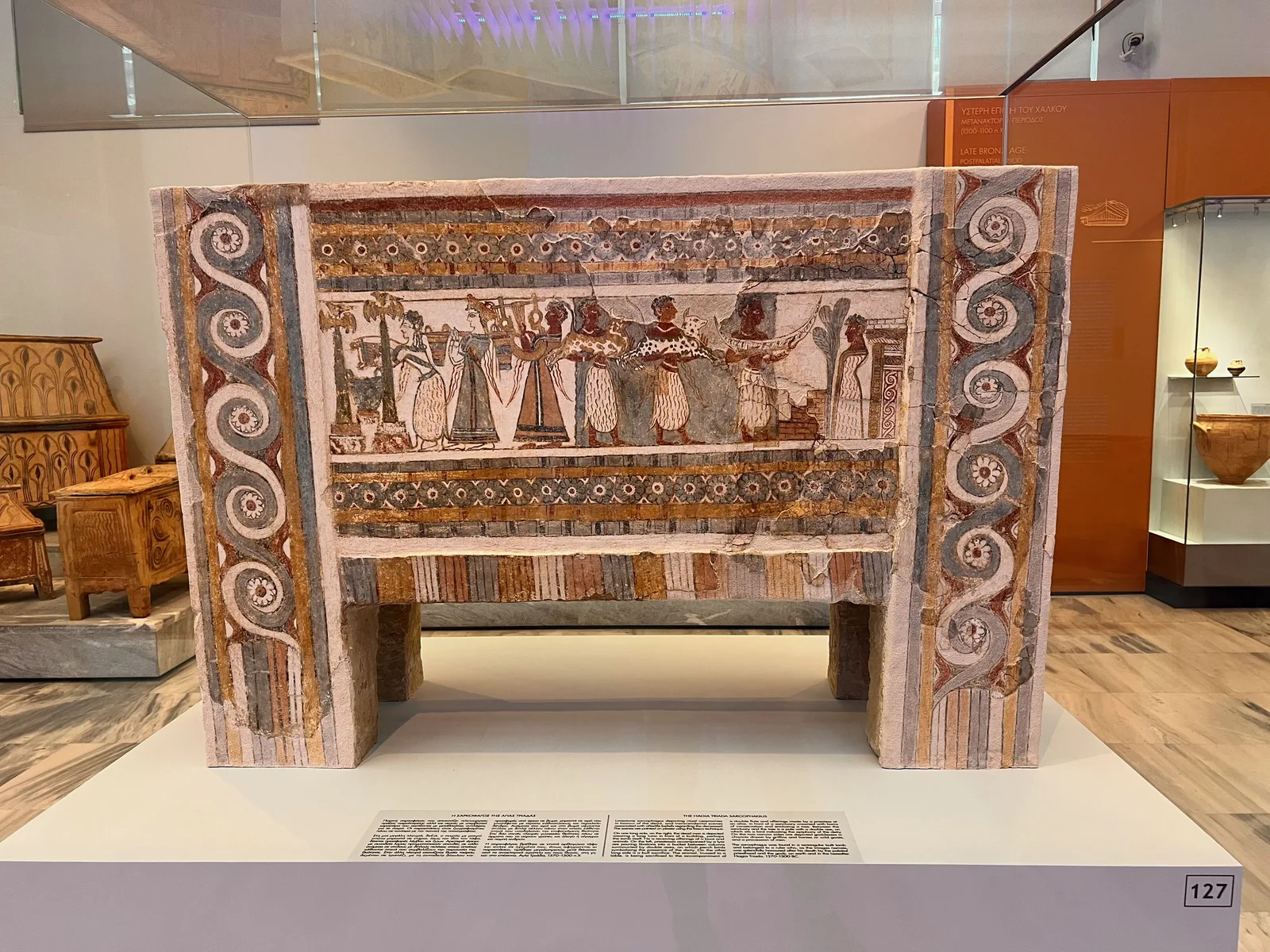
- The Hagia Triada sarcophagus. A painted stone coffin showing offerings, music and a sacrifice: the most detailed picture of a Minoan ritual that survives.
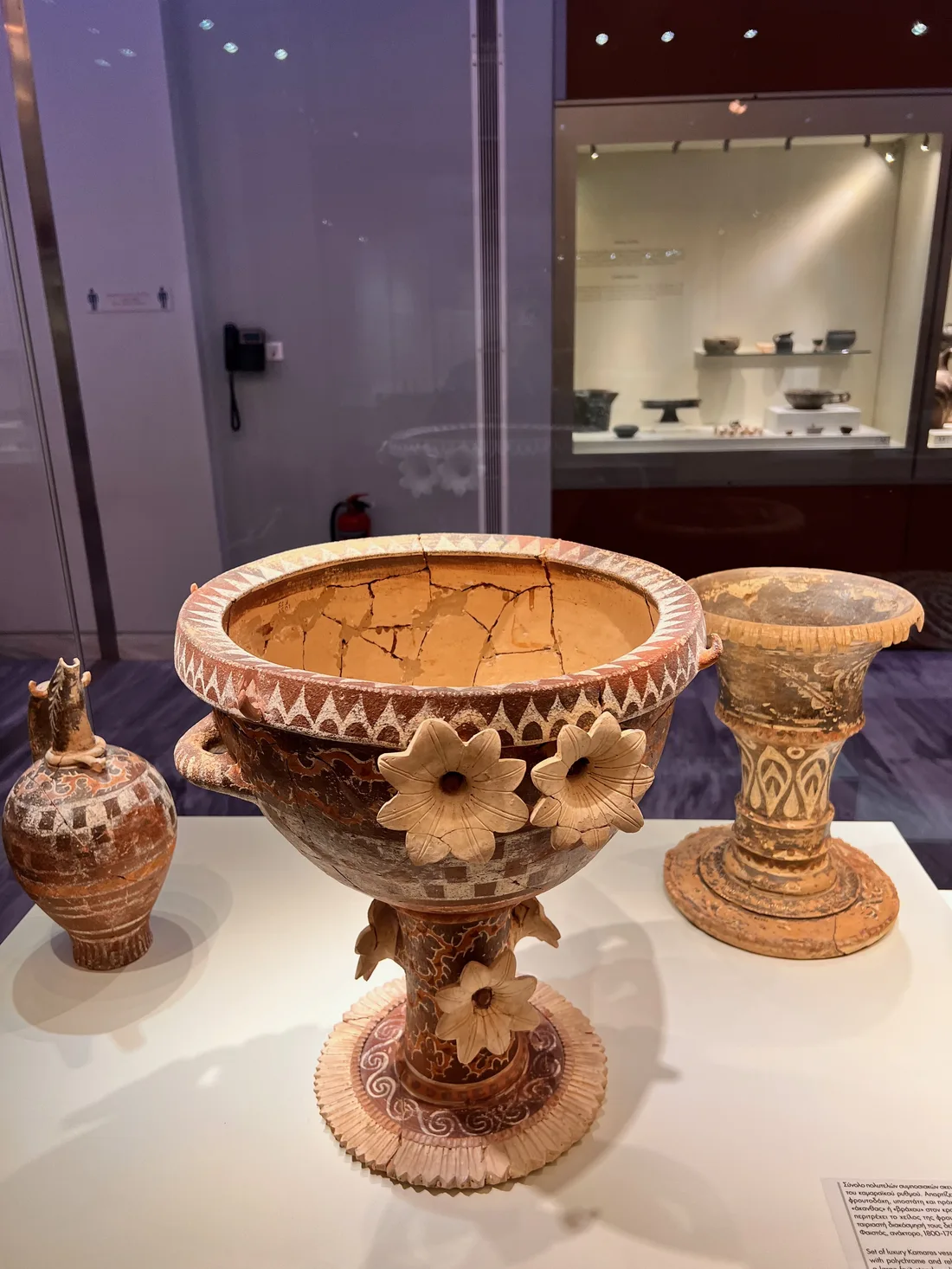
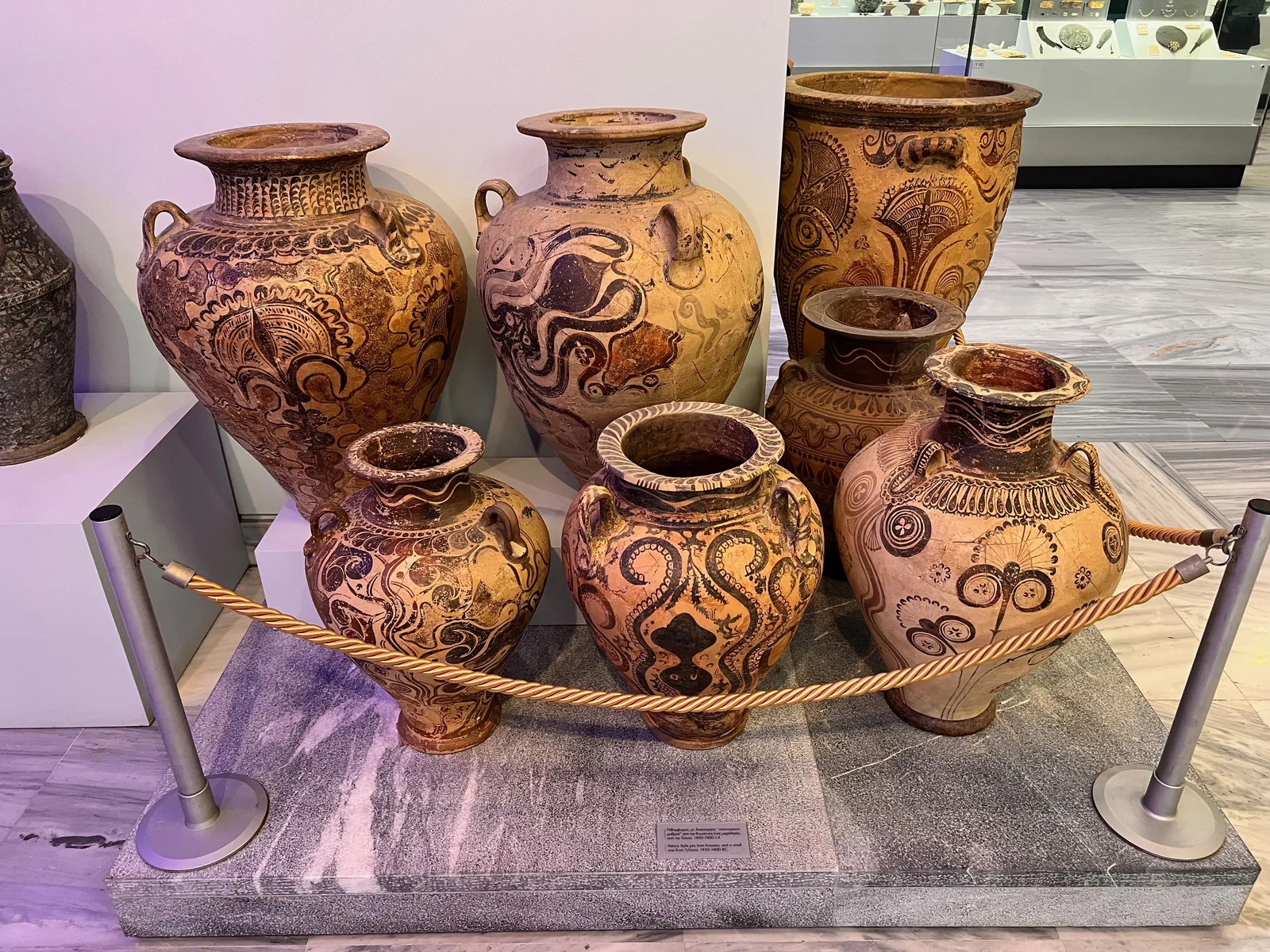
- Kamares ware. The thin, colourful pottery of the Old Palace period, painted in white, red and orange on a dark ground, some with flowers modelled in clay.
- The stone vessels from Hagia Triada. Including the Harvester Vase, with a procession of men carrying tools and singing.
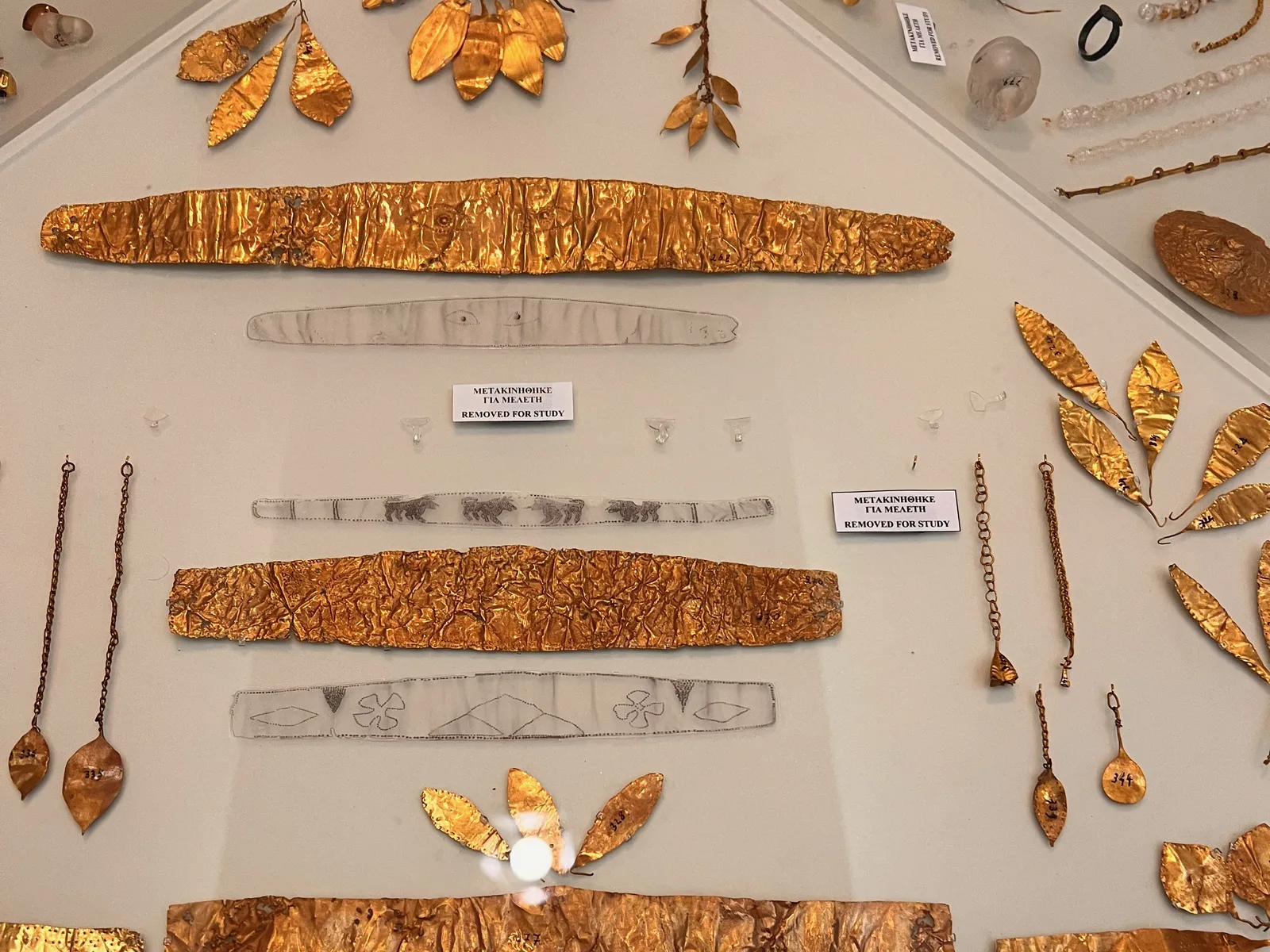
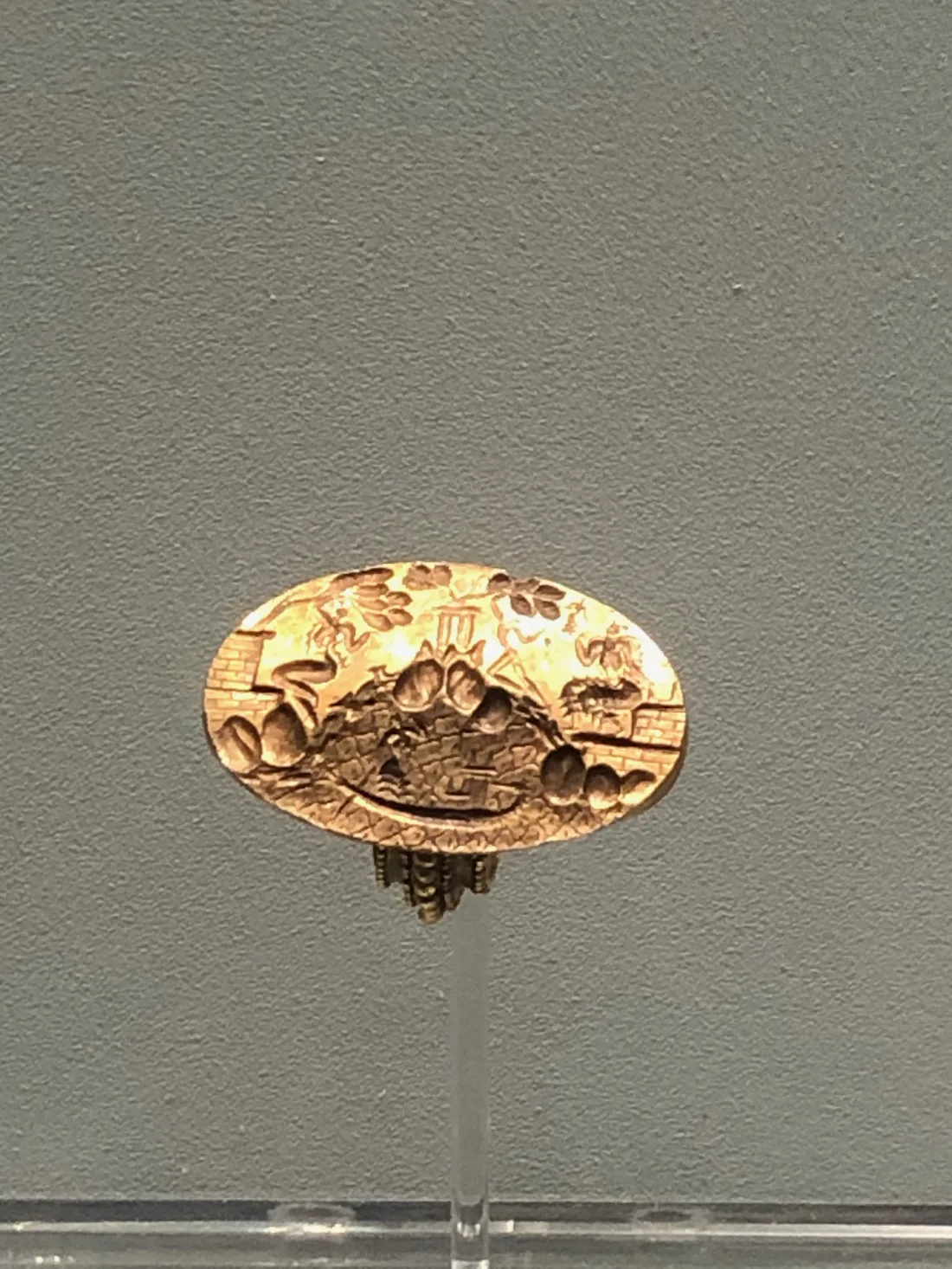
- Minoan gold and seals. Gold signet rings with engraved scenes, and the early diadems and ornaments shaped like leaves and flowers.
- The double axes. Bronze and gold labrys, the sacred symbol that appears across Minoan art.
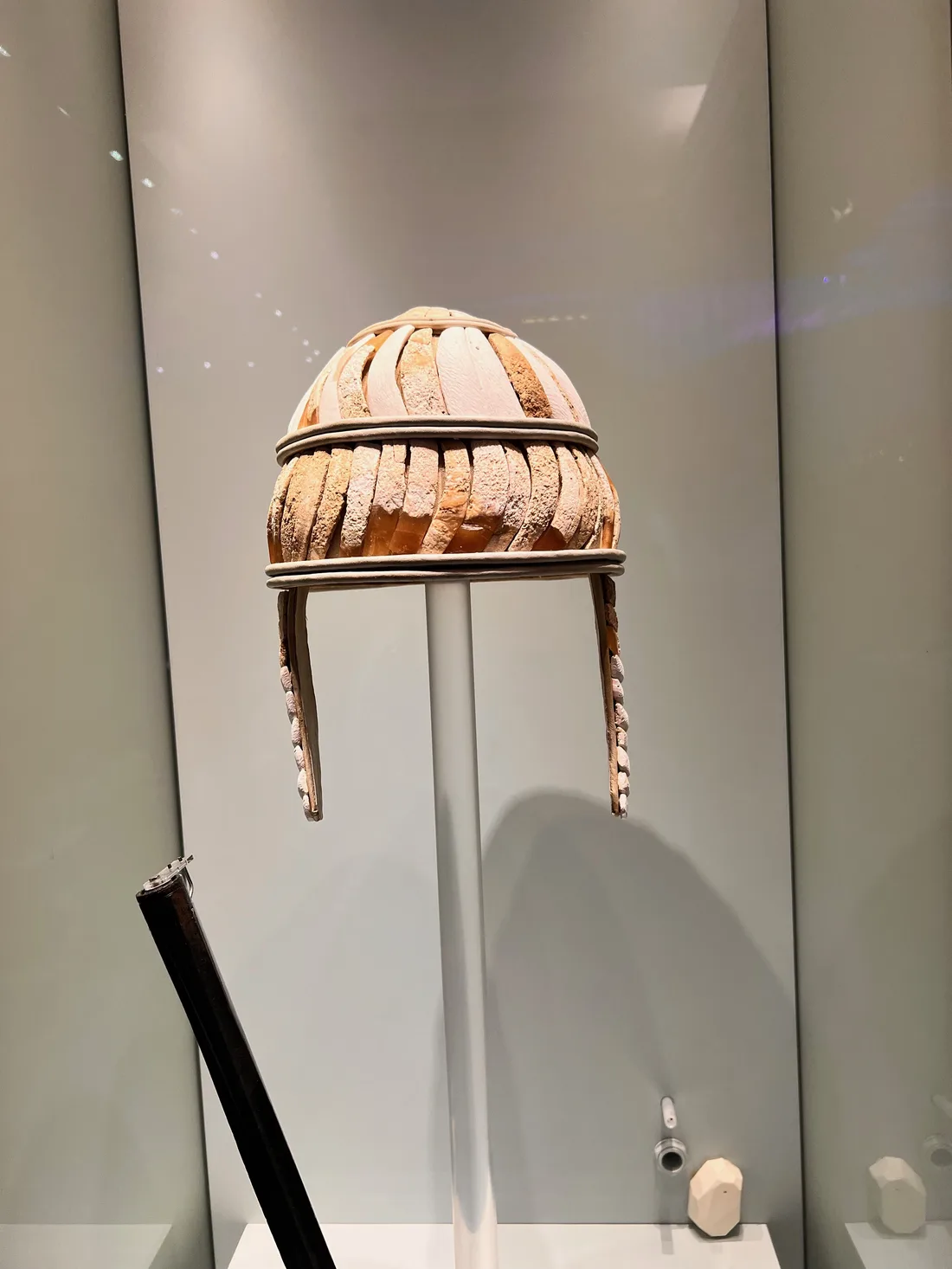
- The boar’s-tusk helmet. A helmet made of plates of boar’s tusk, from the later Bronze Age, the kind described in Homer.
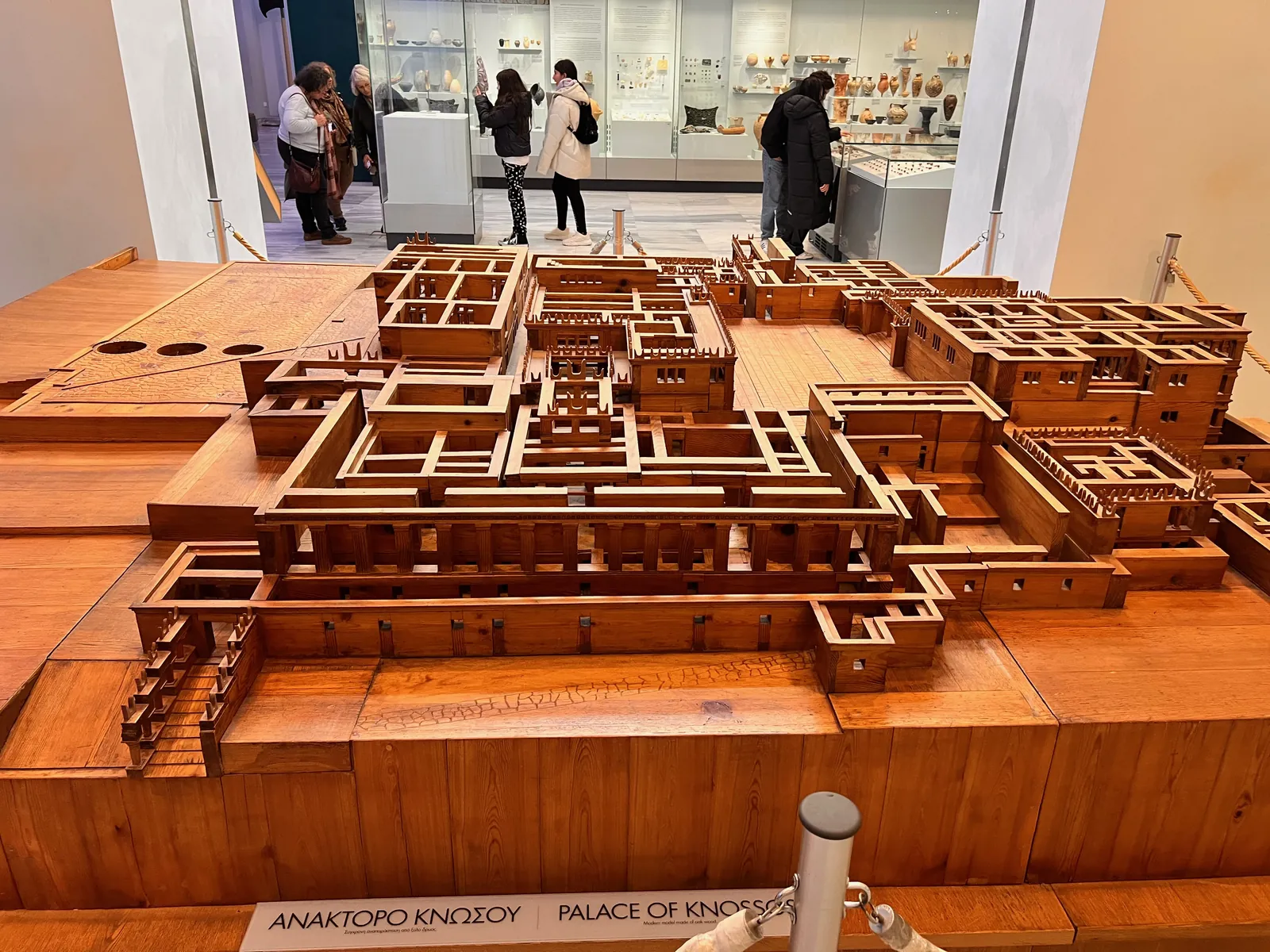
- The model of the palace of Knossos. A large model that makes sense of the site, best seen before or after the visit.
Knossos and the Museum in One Day
Most guests combine the two. Knossos is about 5 km from the museum, 15–20 minutes by car. In warm weather, see Knossos near opening and the museum afterwards; in cool weather or on a Wednesday, when the museum opens later, adjust the order. Two big visits make a full day, so leave out everything else. The Knossos from Rethymno guide covers the site, the order and the timings.
A Route for 90 Minutes or for Three Hours
90 minutes: the highlights
Ground floor in order, stopping at the Kamares ware, the Phaistos Disc, the Snake Goddesses, the bull’s-head rhyton, the bee pendant and the Harvester Vase; then upstairs for the frescoes and the Hagia Triada sarcophagus.
Three hours: the full story
All the Minoan galleries at an easy pace, with time for the gold, the seals, the sanctuary and cemetery finds and the palace model, then the frescoes and at least a walk through the later Greek and Roman galleries. Take a break in between; the museum is large, and attention runs out before the galleries do.
Visiting with Children
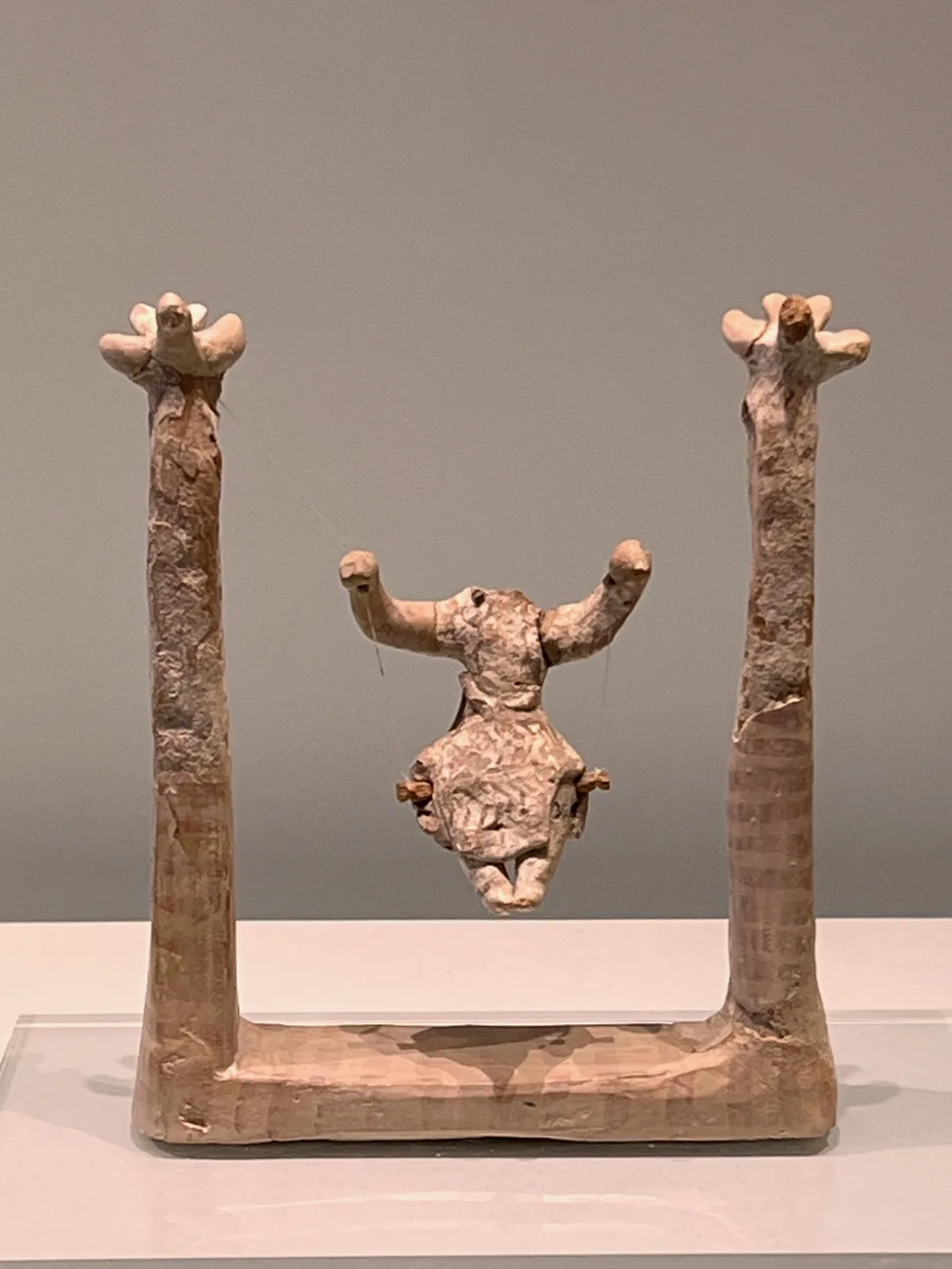
The museum works well for children when it is short and has a purpose. Give them a list to find: the bees, the bull, the Snake Goddess, the dolphins, the helmet made of tusks and the little clay figure on a swing. An hour is usually enough for younger children; older children and teenagers often enjoy the frescoes and the mystery of the Phaistos Disc. Pushchairs are fine on the smooth floors, and there is a lift.
Accessibility
The museum lists a lift and accessibility services, and the galleries are on two level floors connected by the lift. For specific needs, contact the museum before the visit: +30 2810 279000, amh@culture.gr. The walk from the car parks in the centre is on city pavements; if anyone has reduced mobility, plan a drop-off close to the entrance.
Before or After: Market and Lunch
The museum is a few minutes’ walk from the traditional market street around 1866 Street, good for local products, herbs, cheese and gifts, and from the squares and lanes of the centre, where there are plenty of places for lunch. Shops keep their own hours, and it is quieter on Sundays and later in the day. A museum visit, a walk through the market and a long lunch make a relaxed city day even without Knossos.
A Good Choice for Rainy and Winter Days
When the weather turns, the museum is one of the best days out from the villas: indoors, absorbing and easy to combine with lunch in the city. In winter, remember the shorter hours (08:30–15:30, Wednesday 10:00–17:00) and aim to arrive by late morning. See Christmas and New Year in Rethymno and Crete Beyond Peak Summer for the cooler months.
Go to the museum with a few things you really want to see, not with the idea of seeing everything. Stand in front of the bull’s head, the Phaistos Disc and the frescoes for a while, then stop. After Knossos, it is the visit that makes the whole Minoan story fall into place. And leave time for the walk to the market and a proper lunch in the centre before the drive back.
Argyris Skordilis · Owner and host, Amazing Villas in Crete · usually replies within 12 hours
