Ancient Eleutherna and Museum Guide: Where Crete’s Story Opens Beyond the Minoans
The first surprise at Ancient Eleutherna is not how old it is. It is how much of Crete’s story starts after the Minoan palaces.
Inside the museum, objects from houses, sanctuaries and cemeteries turn a very long timeline into individual lives. Outside, the landscape explains why a city grew on this ridge and why the digging has not stopped. This is not a quick collection of antiquities on the way to somewhere else. It is the place where the island’s Early Iron Age, Classical, Roman and Byzantine past becomes something you can see.
 By Argyris Skordilis, owner and host · Updated
Why Ancient Eleutherna Changes the Picture of Crete
Most people meet Crete through Knossos and the Minoan palaces. Eleutherna tells the part of the story that comes afterwards, and it tells it from one place rather than from a national collection.
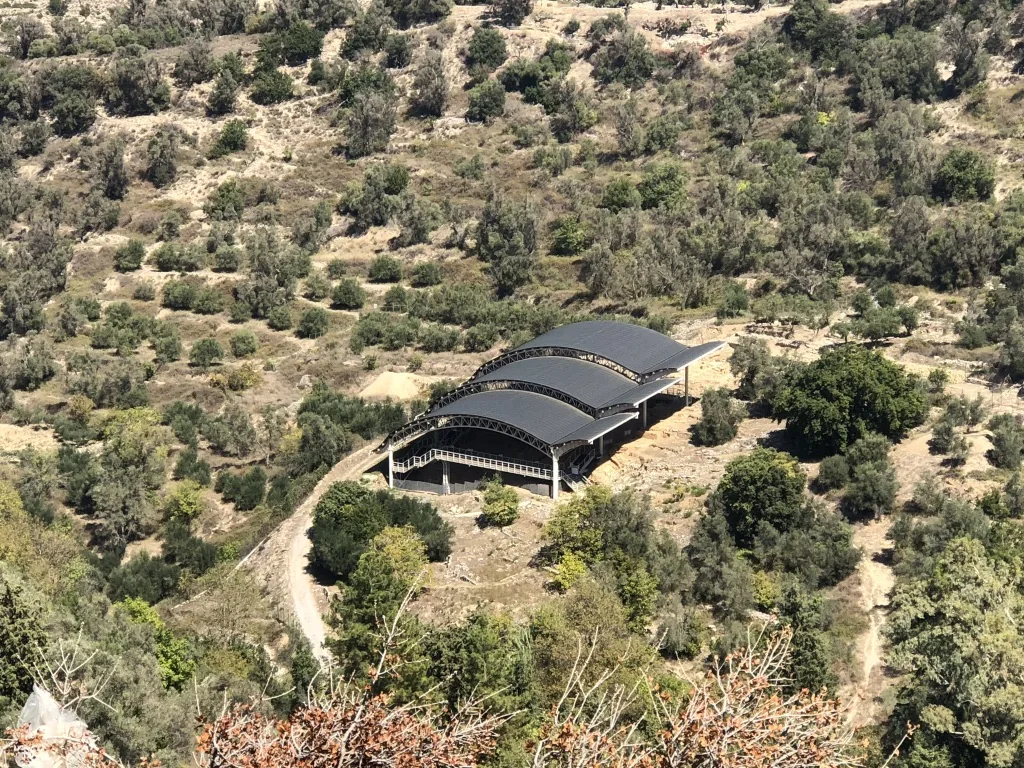
Excavations led by the University of Crete have traced activity in the wider city from the late fourth millennium BC through to the Byzantine period. What matters most here comes from the centuries after the Bronze Age palaces fell, above all the Early Iron Age. Crete in that period is usually called a dark age; at Eleutherna, it turns out not to have been.
The museum’s own account describes Eleutherna as one of ancient Crete’s most important cities and a leading centre in the Geometric and Archaic periods, the centuries in which the Homeric poems were transmitted and written down. The city minted its own coins in the fourth century BC. What makes the site important is that long civic life, not the age of any single ruin.
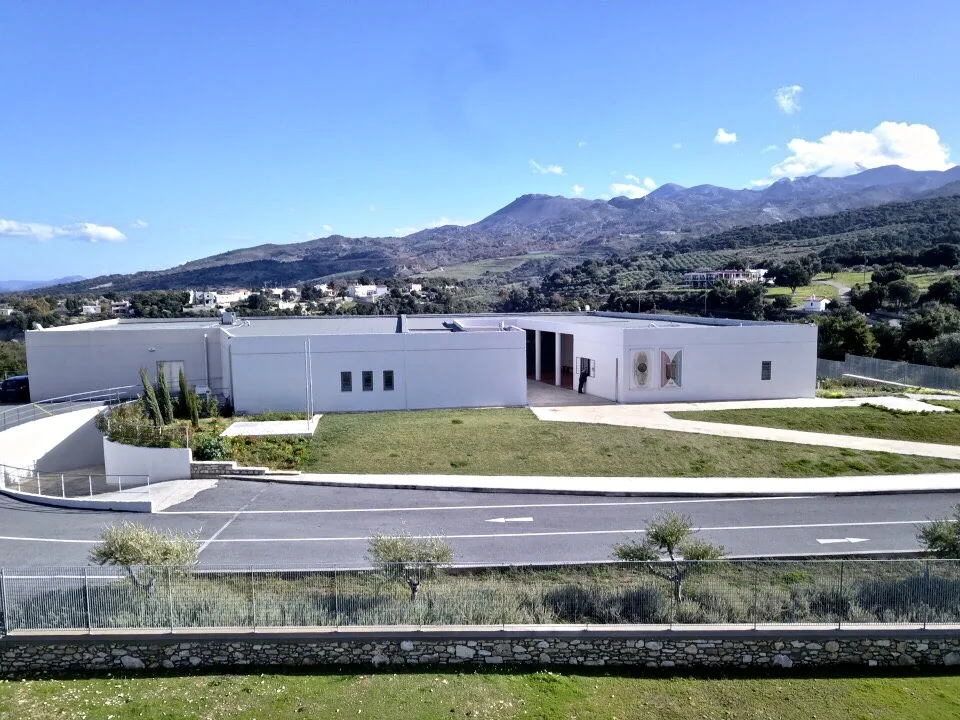
The museum was built to hold the results of more than thirty years of digging. It describes itself as the first archaeological site museum in Crete: a museum built right beside the place its collection came from. That is the point. These are not masterpieces gathered from across the island; they belong to one city and the hillside around it.
The museum also says its permanent display can change as the excavations turn up new finds. That’s unusual, and worth knowing: what you see is tied to work that is still going on.
You will see the name written both ways. Eleutherna and Eleftherna are the same place; we use Eleutherna, which is the spelling the museum uses in English.
What to Look For in the Museum
The permanent display moves through public life, religion, daily work and burial. Do not try to hold every date. Follow a few human questions instead: how people showed status, how far they traded, how they honoured their dead, and how a Cretan city changed across a very long time.
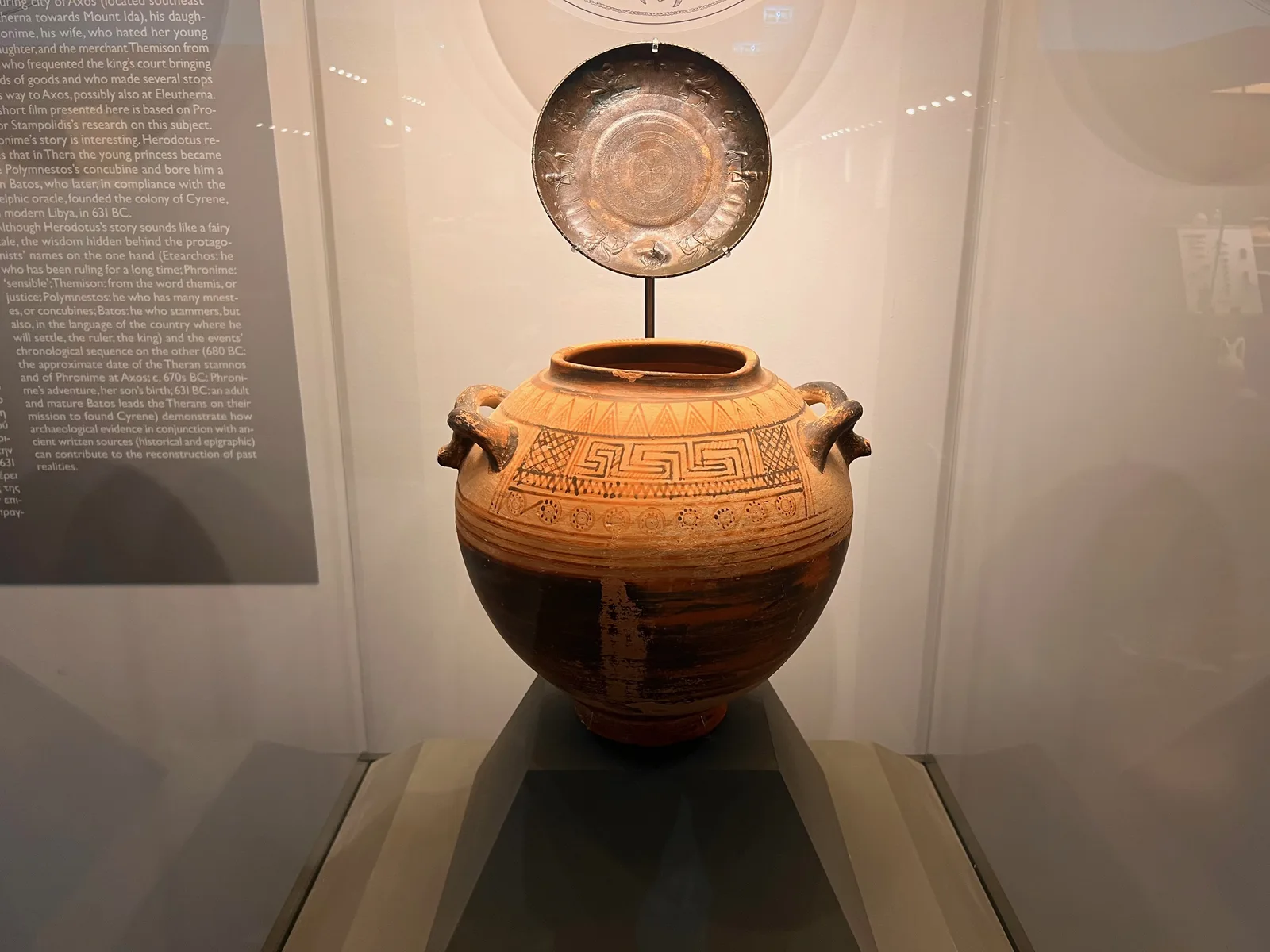
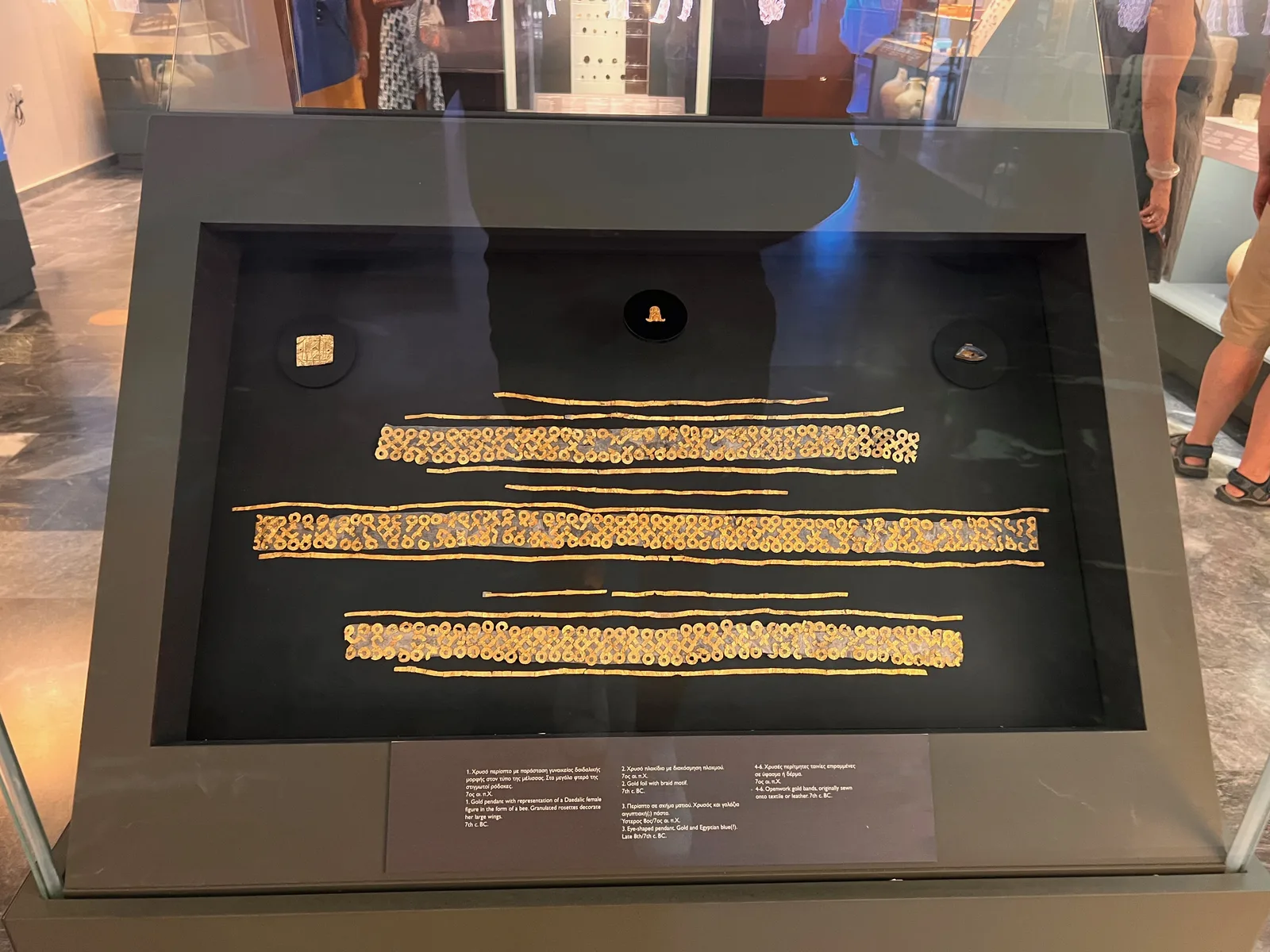
Hall C gives particular attention to the cemetery at Orthi Petra. The burials and the objects placed in them show a society connected through the Aegean to Cyprus, Asia Minor, the Near East and Egypt. The museum uses that evidence to explore parallels with the world described in Homer’s epics.
That isn’t the same as saying archaeology has proved Homer. It means that the burial practices and social world reflected in this cemetery make those poems feel more real as history. The museum is careful about that difference, and so are we.
The scale of the place is an advantage. It is big enough to reward close attention and small enough that nobody leaves exhausted. Families can pick five or six objects and build the visit around them; anyone who wants the full chronology can have it.
The Three Halls
The museum opened in June 2016 as the first site museum in Crete, built beside the excavations the University of Crete has run here since the mid-1980s under Professor Nikolaos Stampolidis. Its three halls follow three questions, and knowing them before you walk in makes the visit much easier to hold together.
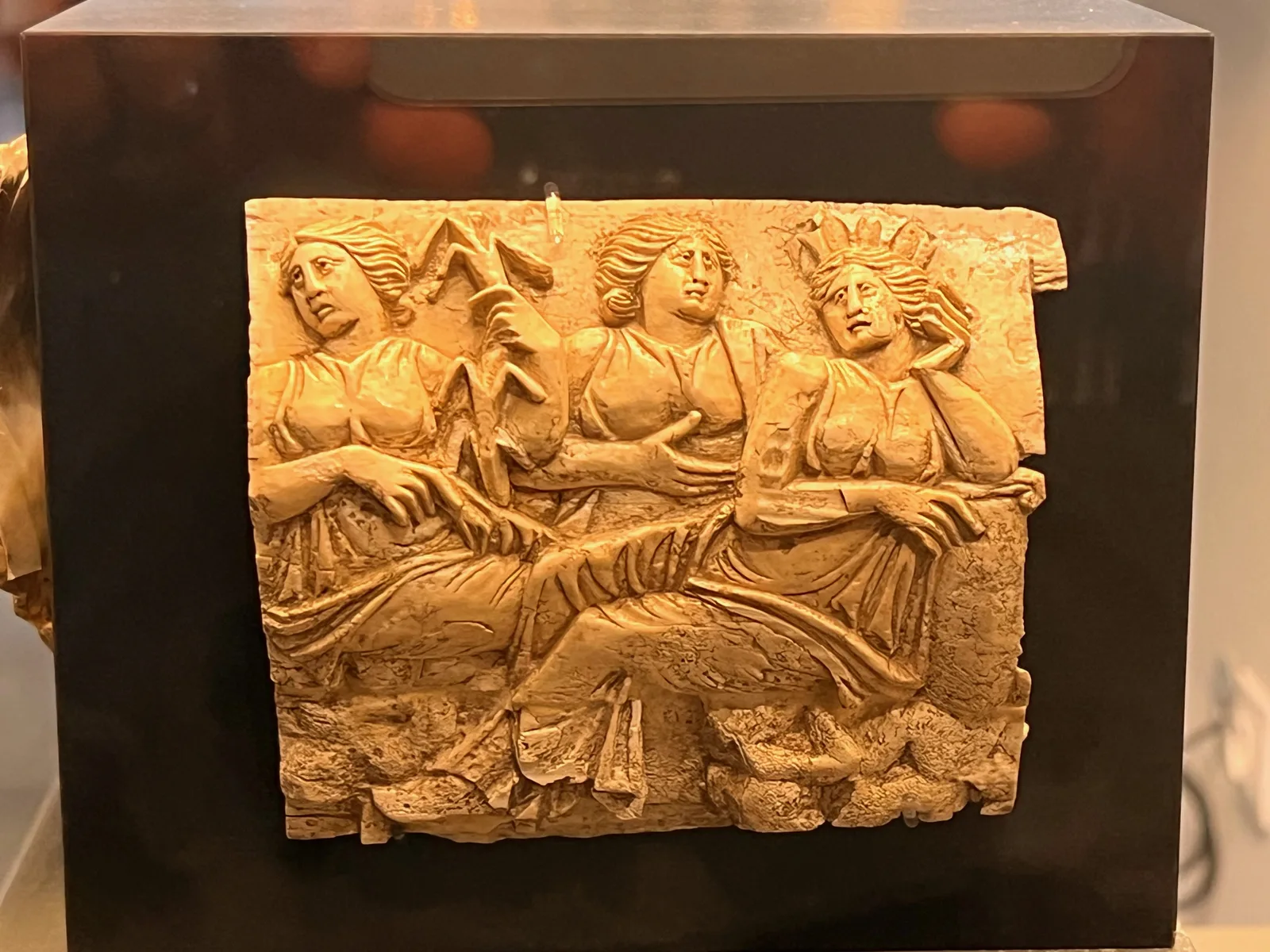
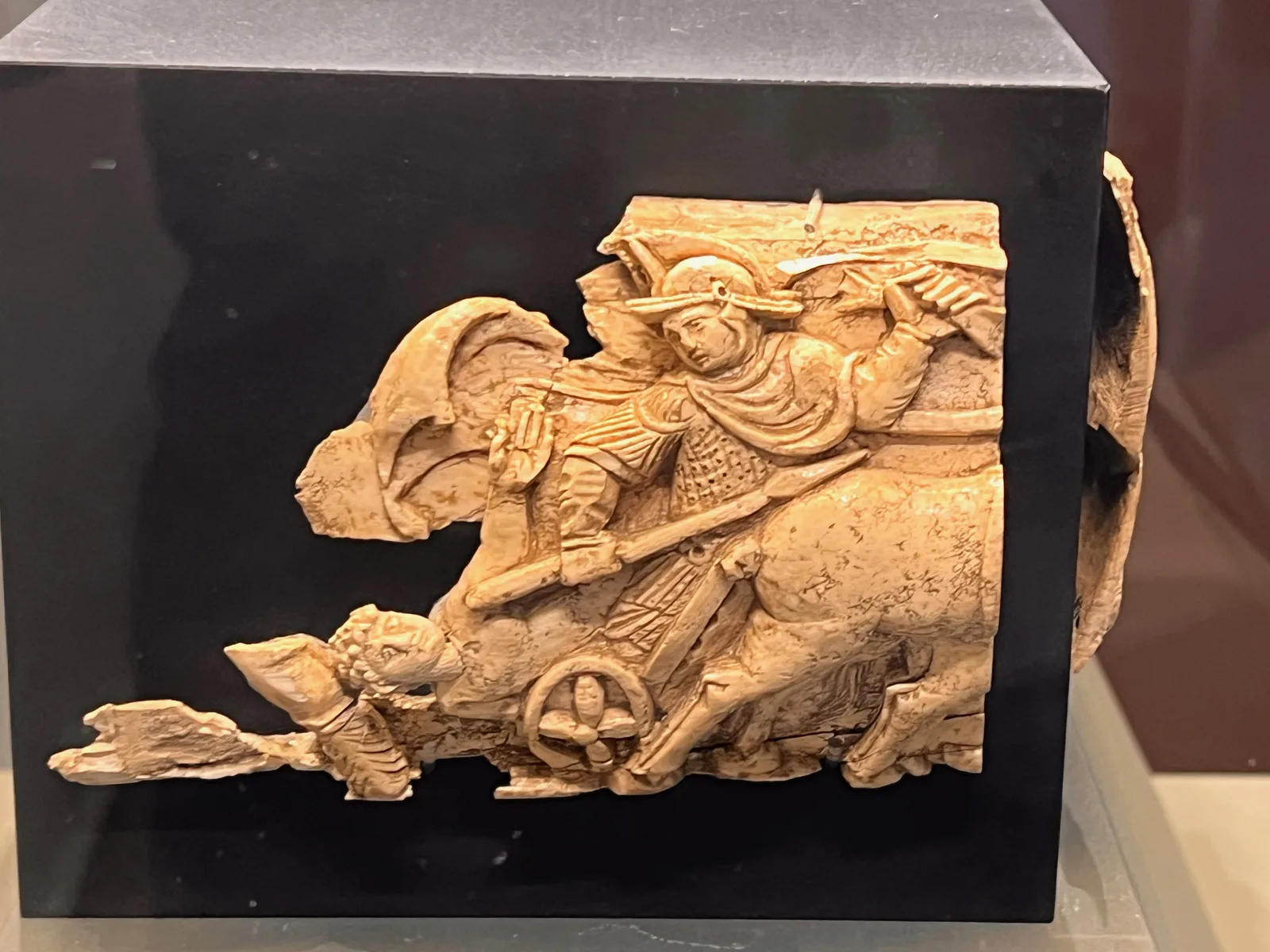
Hall A: the city and daily life. Houses, workshops, tools, lamps and pottery, and the imported objects that show how far Eleutherna traded across the Mediterranean and into the Near East.
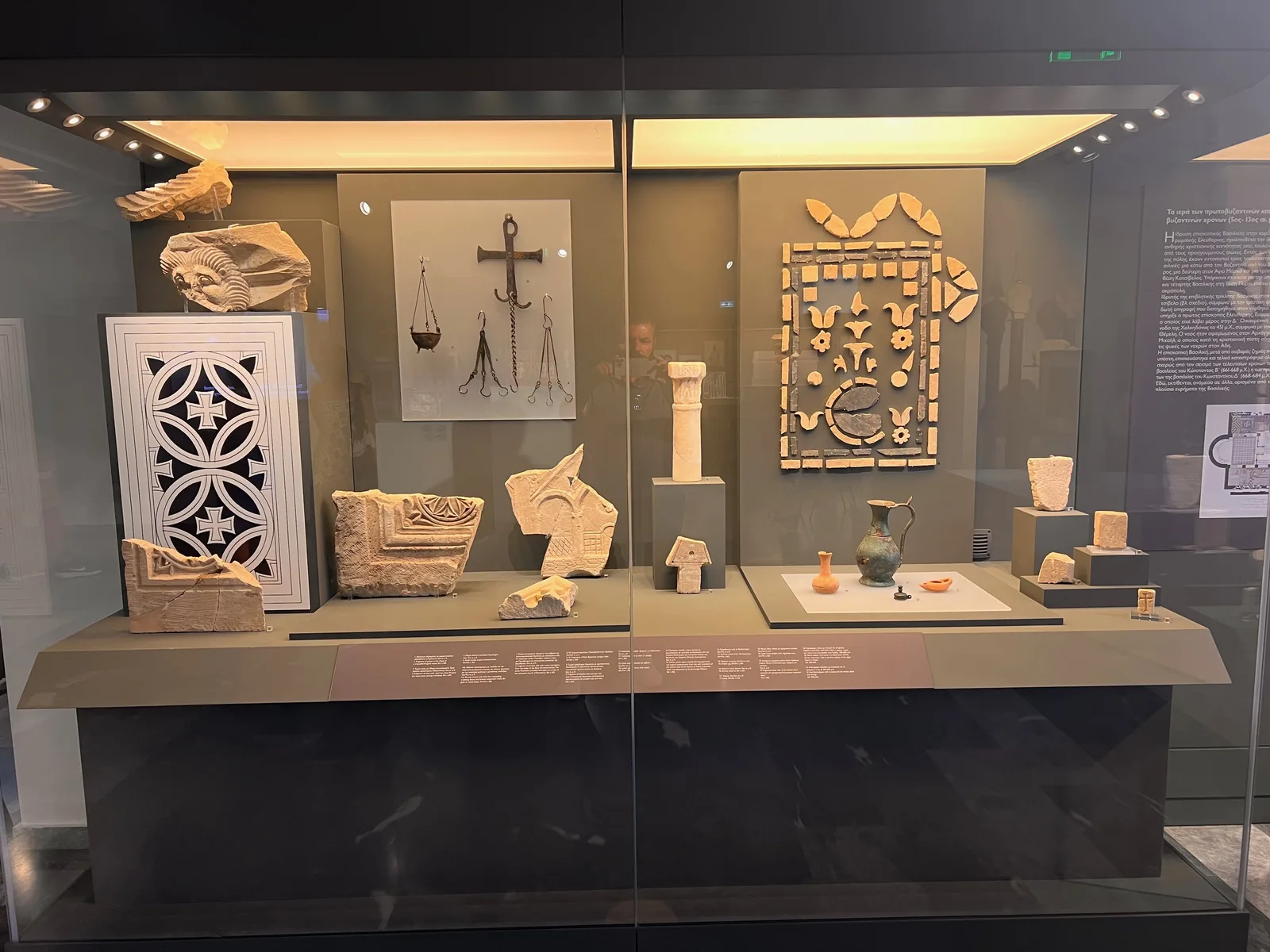
Hall B: religion and belief. Sanctuaries and cult from the Iron Age to Byzantine times, including sculpture from the Archaic, Hellenistic and Roman city and the early Christian finds from the basilica at Katsivelos.
Hall C: the Orthi Petra cemetery. The burials, the grave goods and the funeral customs of the city’s leading families, displayed tomb by tomb.
Things Not to Miss
If you only look closely at a handful of things, make it these. Each one says something about the city that a label alone does not.
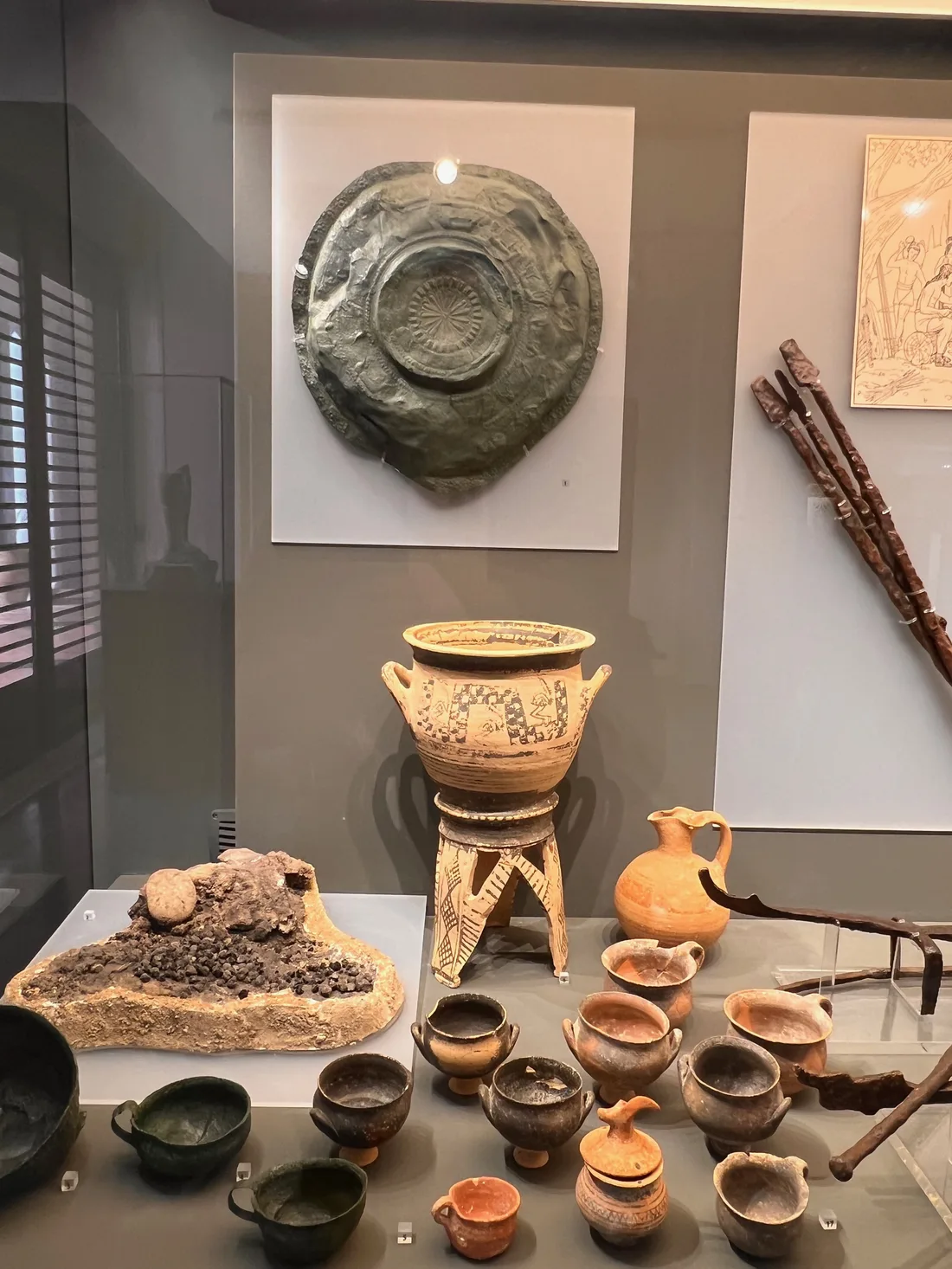
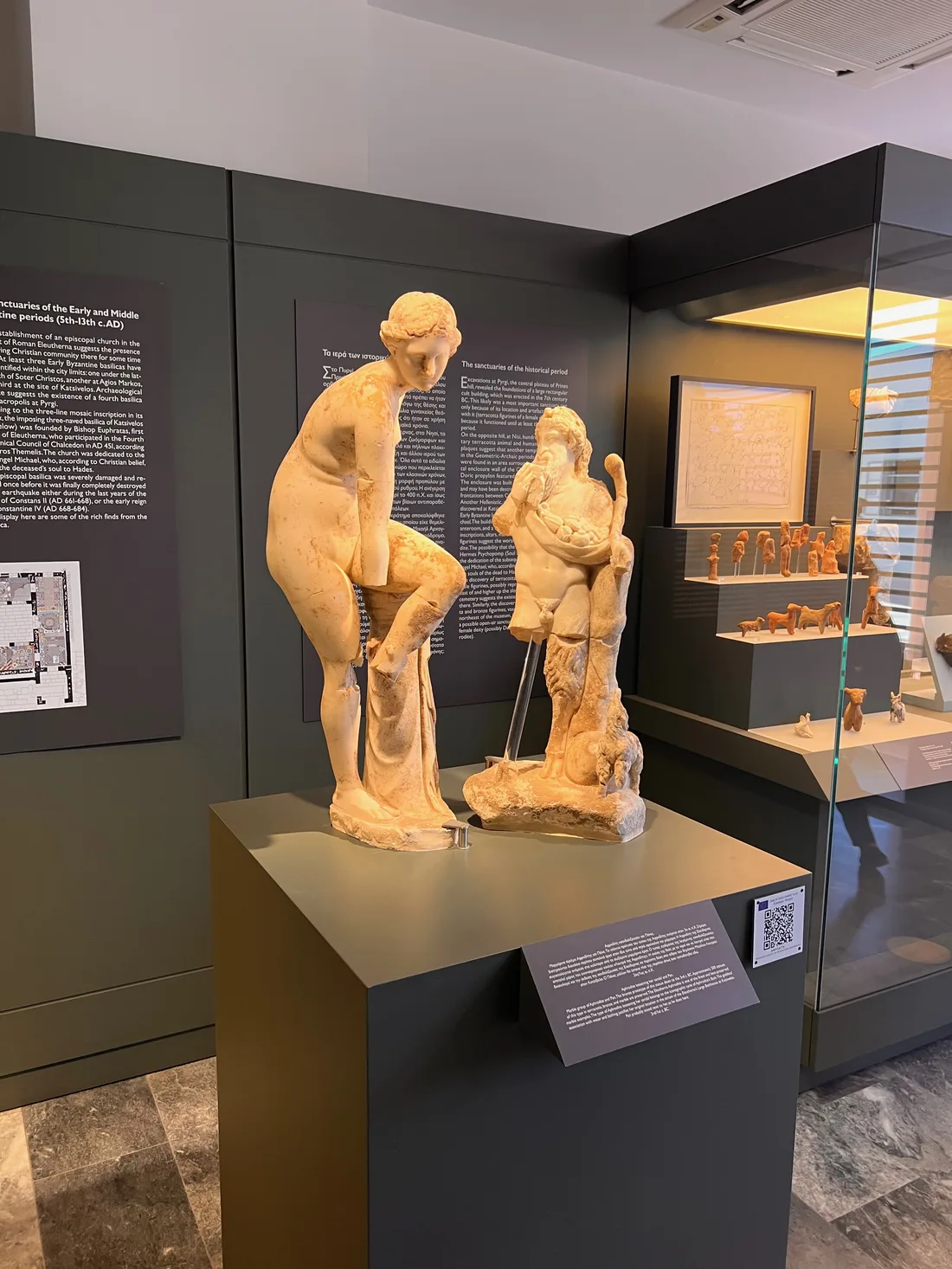
- The Lady of Eleutherna. An Early Archaic statue of a young woman. She is a close relative of the famous Lady of Auxerre in the Louvre, which is thought to come from the same Eleutherna stone.
- The bronze bowl with dancing women. It once covered an urn of ashes in the Tomb of the Warriors, and the women on it are still easy to follow round the rim.
- The Tomb of the Warriors. A family tomb at Orthi Petra, used from about 880/870 to 660/650 BC and found unlooted, with weapons, a bronze shield, jewellery and urns.
- The pyre of a young warrior. A funeral pyre of about 720–700 BC that the museum places beside the funeral of Patroclus in the Iliad. It is one of the clearest examples of what the museum means by parallels with Homer.
- Building M. A burial building for four women of high standing, the youngest about 13 and the eldest about 72, with gold, glass, faience and ivory from across the eastern Mediterranean.
- The gold. Thin gold bands and small ornaments from the burials, easy to walk past and worth the second look.
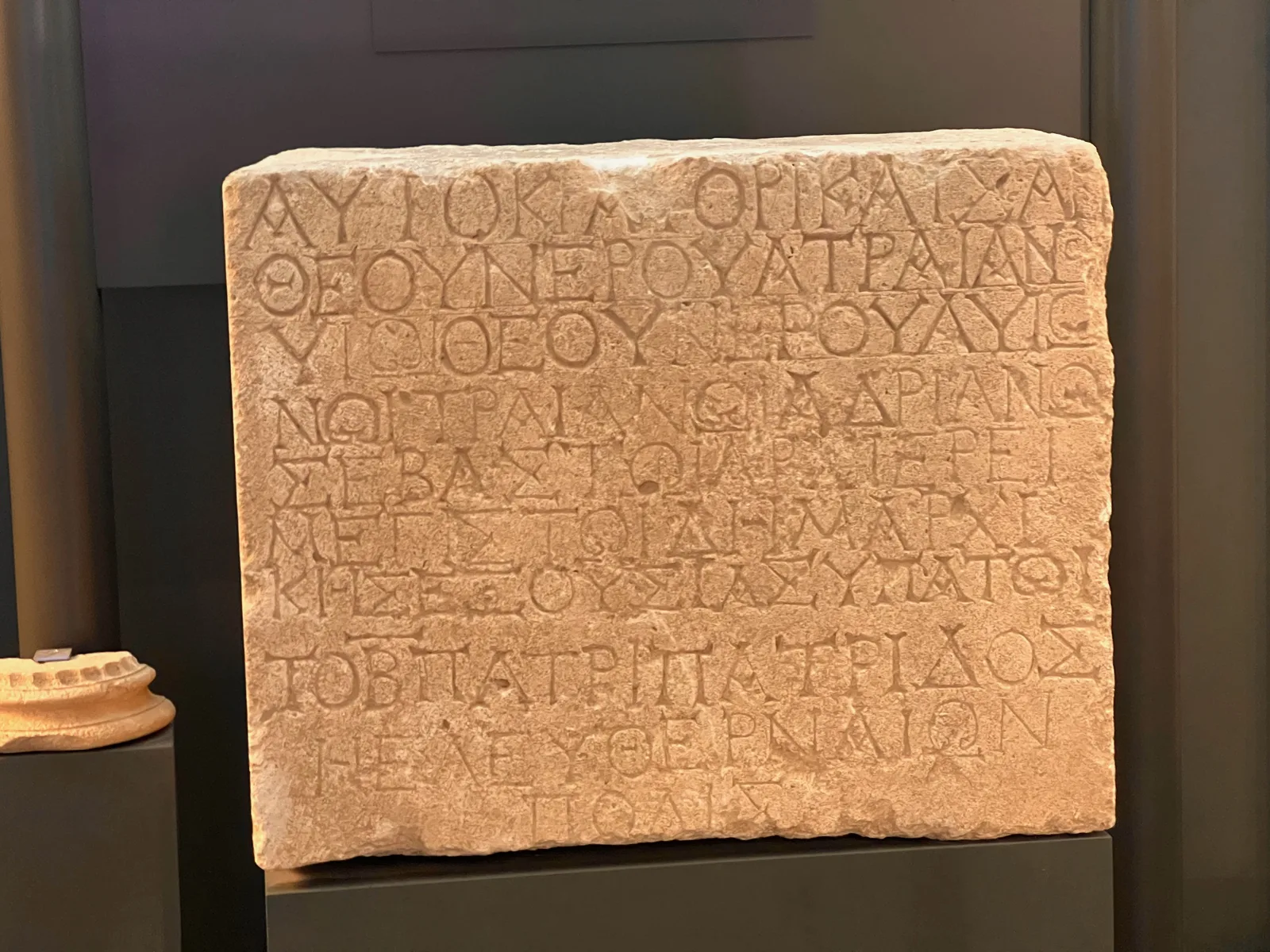
- The Roman city. Marble sculpture and an inscription naming the emperor Trajan: a reminder that Eleutherna was still an important city more than a thousand years after its earliest tombs.
- The early Christian finds. From the basilica at Katsivelos, whose bishop Euphratas took part in the Council of Chalcedon in 451.
A 90-Minute Route Through the Museum
This is the order we suggest to guests who want to see the best of it without rushing.
- Hall A, 20 minutes. Start with daily life and the imports. It sets the scene for everything else.
- Hall B, 25 minutes. The Lady of Eleutherna, the bronze bowl, the Roman sculpture and the early Christian finds.
- Hall C, 35 minutes. Orthi Petra: the Tomb of the Warriors, the pyre and Building M.
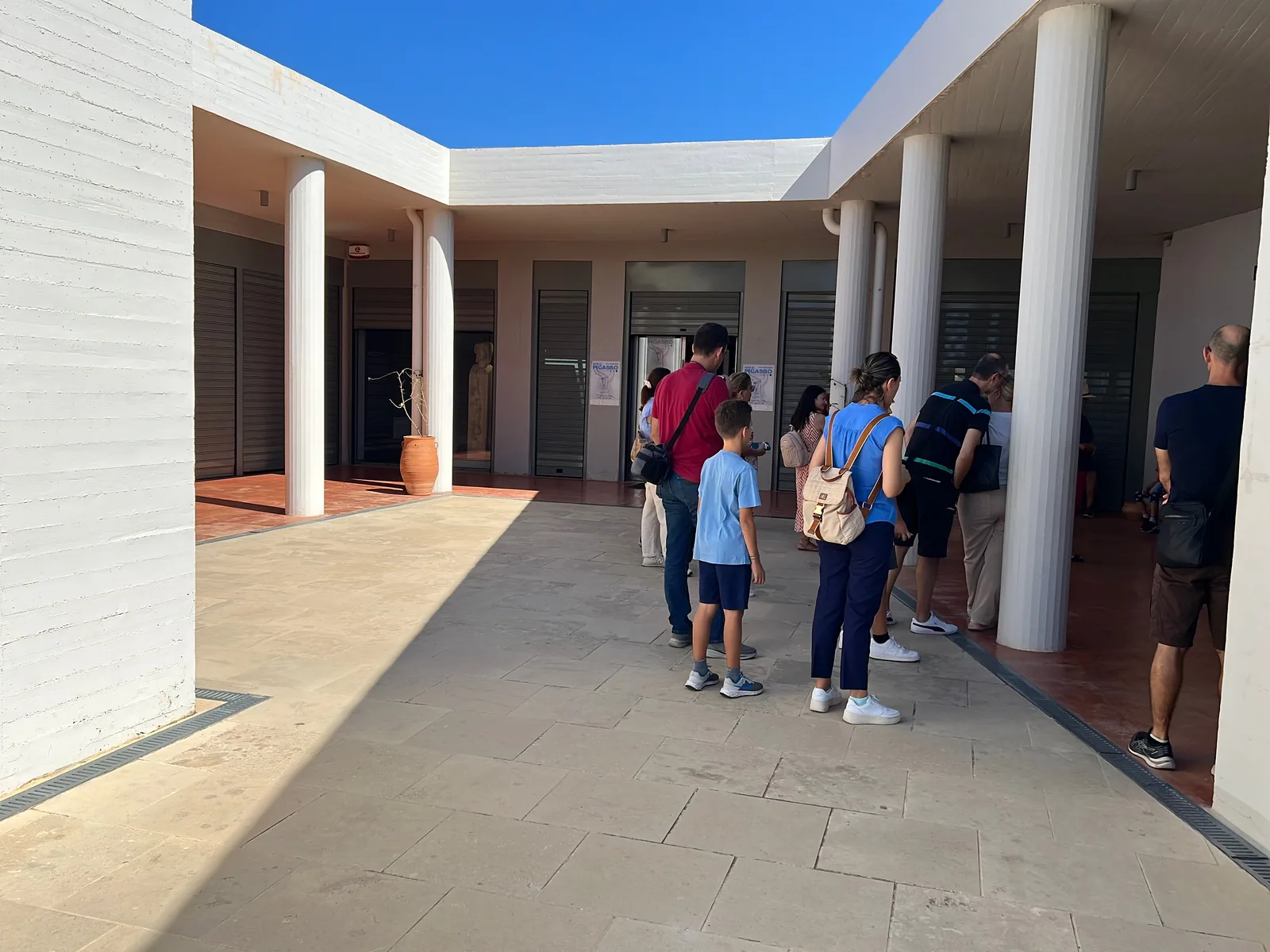
- The courtyard, 10 minutes. A pause outside before you decide whether to add the archaeological site.
With children: before you go in, give each child one thing to find, such as the dancing women, the shield or the gold, and let them lead the way to it. It works better than reading the labels together, and the museum is small enough that nobody gets lost.
Museum First, Landscape Second
For almost every visitor, the museum should be the fixed part of the day and the outdoor archaeological landscape the optional extension. The museum gives you what you need to read the stones outside. The other way round, the hillside is just a hillside with a roof over part of it.
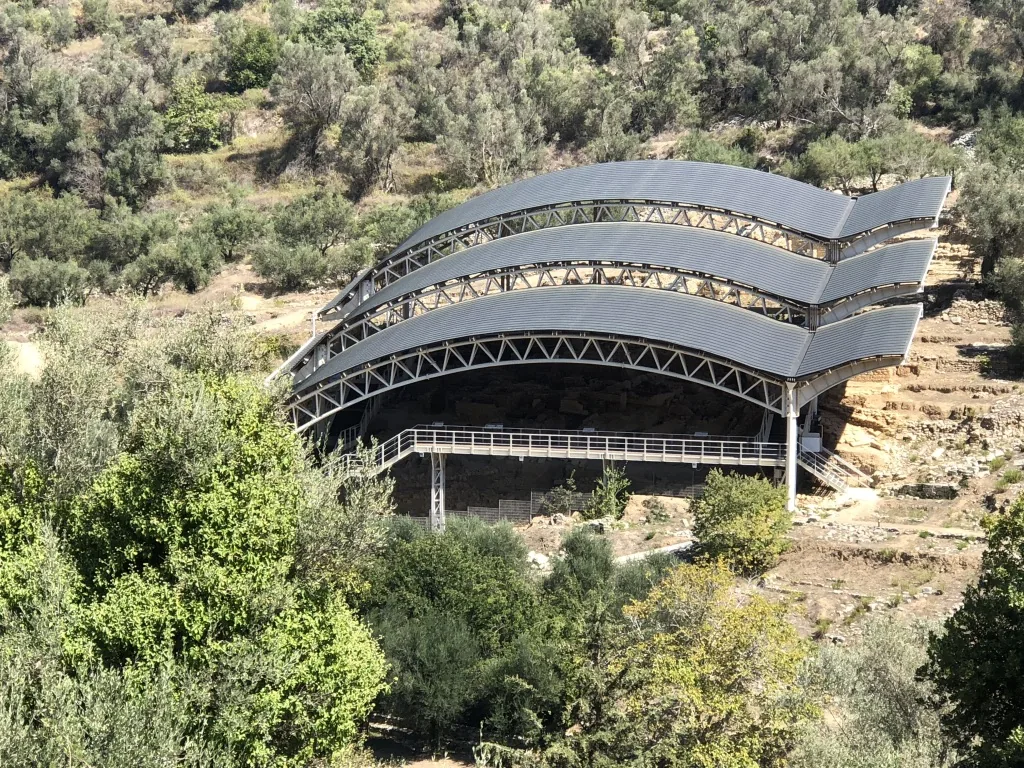
Published visitor information has not always described access to every outdoor sector consistently. Paths, open areas and the practical route can change with the excavation season and the weather. Confirm what is currently open before you drive out, and ask about the museum and the archaeological site separately — they have separate published admissions, and the museum being open does not tell you that every sector is.
If the day is hot, the ground is uncomfortable, or the group has already given the galleries a serious hour and a half, the museum on its own is a complete visit. Nobody has to walk the site to have seen Eleutherna.
Who It Suits
| Group | How Eleutherna usually works |
|---|---|
| History and archaeology | The reason to come, and the strongest single cultural visit in inland Rethymno after Arkadi. Allow more time than you think. |
| Families | Better than most museums for children who like mythology, burials and how people actually lived. Pick a few objects rather than reading every label. |
| Older guests | The museum is the comfortable part: indoors, air-conditioned, level inside, with seating. Decide about the outdoor site separately, on the day. |
| Guests who have done Knossos | This is the complement, not the repeat — different centuries, different story, a fraction of the crowd. |
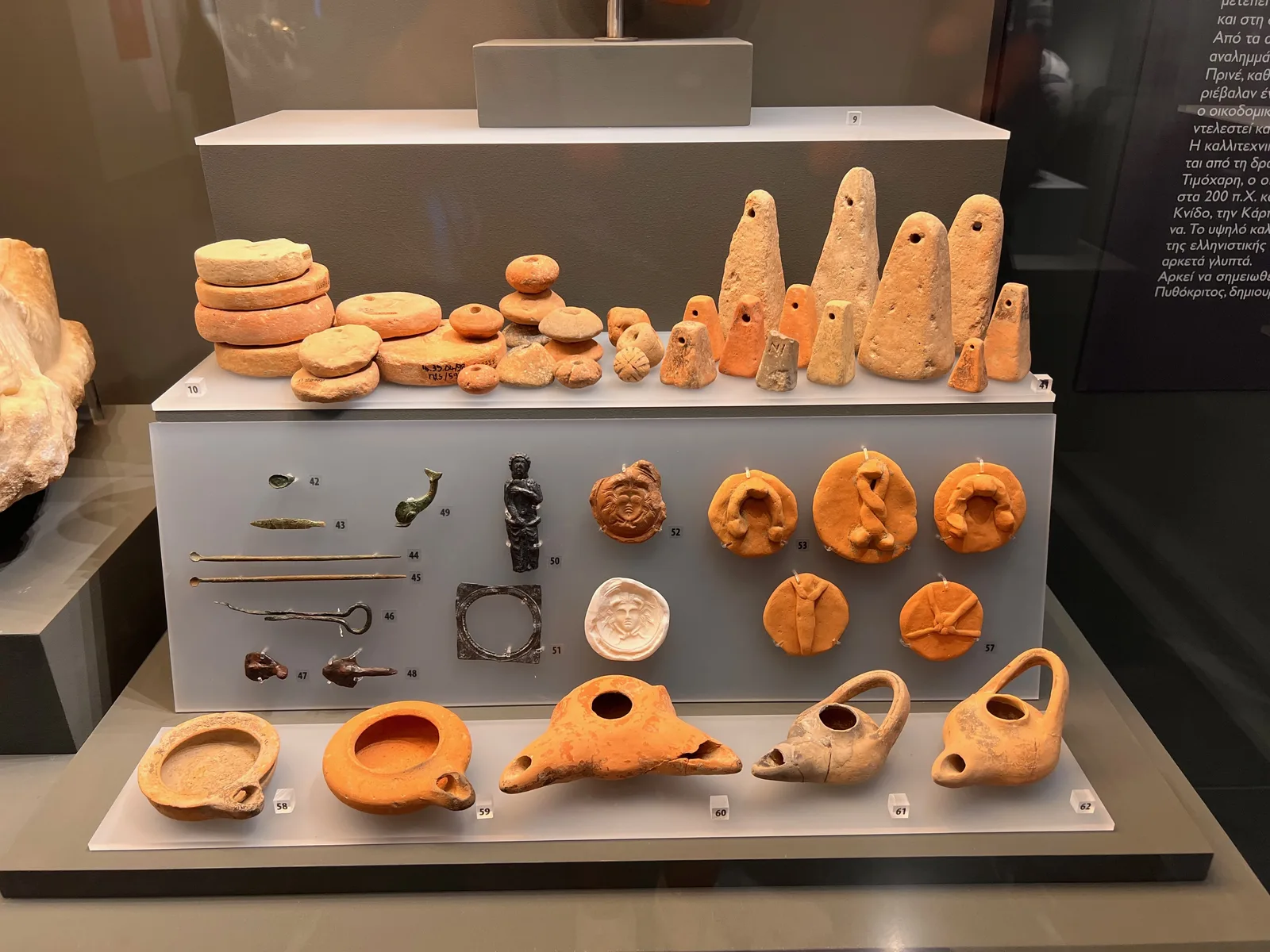
It suits less well a group that wants a short photogenic stop. There is no village square here and no long row of tavernas at the gate; the reward is inside the building and in the landscape around it.
Access and Honest Limitations
The museum publishes facilities including parking, a ramp, tactile materials and an accessible toilet. We state that with attribution because it comes from the museum, and we stop there. Those facilities do not mean the outdoor archaeological landscape is step-free. It is a hillside with cut terraces, gravel, slopes and a raised walkway, and it should not be promised to anyone with specific mobility needs without confirming the exact route first.
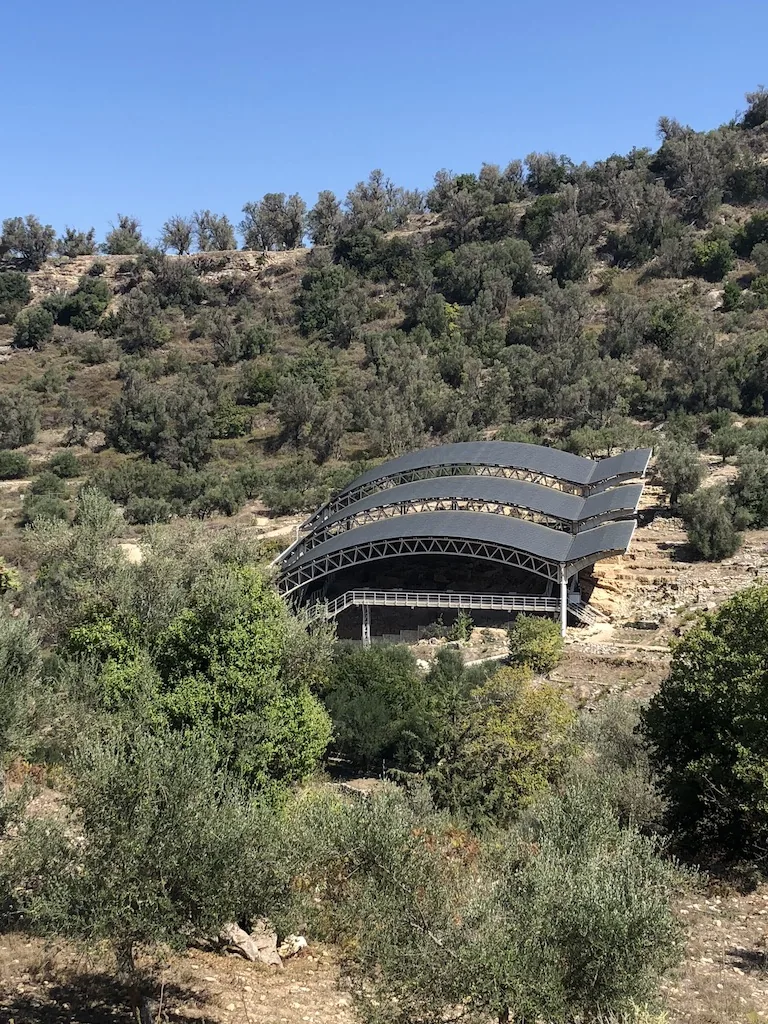
The same honesty applies to the site as a whole. Excavation is live, sectors open and close, and the published information has not always been consistent about which outdoor areas are currently walkable. Ask. It takes one call, and it is the difference between a good day and a wasted drive.
Start with the museum. It makes the stones and the hillside outside far easier to read. If the group is still curious afterwards, walk out into the archaeological setting; if not, drive slowly on to Margarites and let the day change from ancient history to living craft. Either version is a good day.
Argyris Skordilis · Owner and host, Amazing Villas in Crete · usually replies within 12 hours
