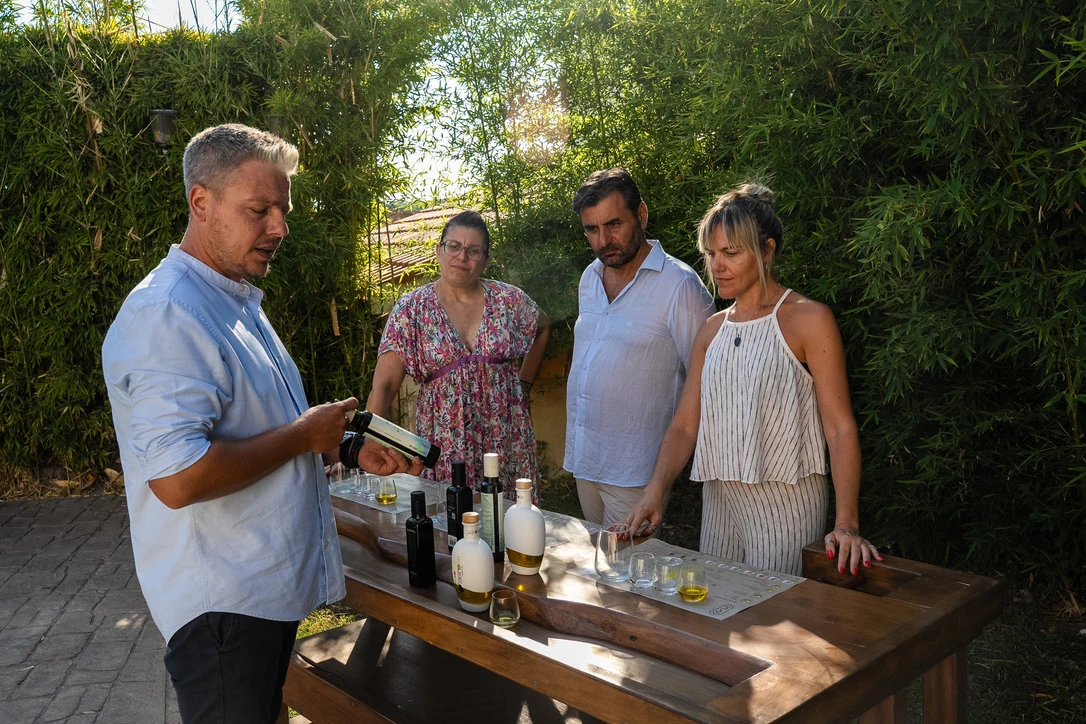
Olive Oil Tasting in the Garden
Nearly everyone arrives in Crete already using olive oil, and almost nobody has tasted two of them next to each other.
That is the whole idea. Not a lecture about polyphenols — three oils, in order, in the garden, and by the end you can tell them apart.
 By Argyris Skordilis, owner and host · Updated
What Actually Happens
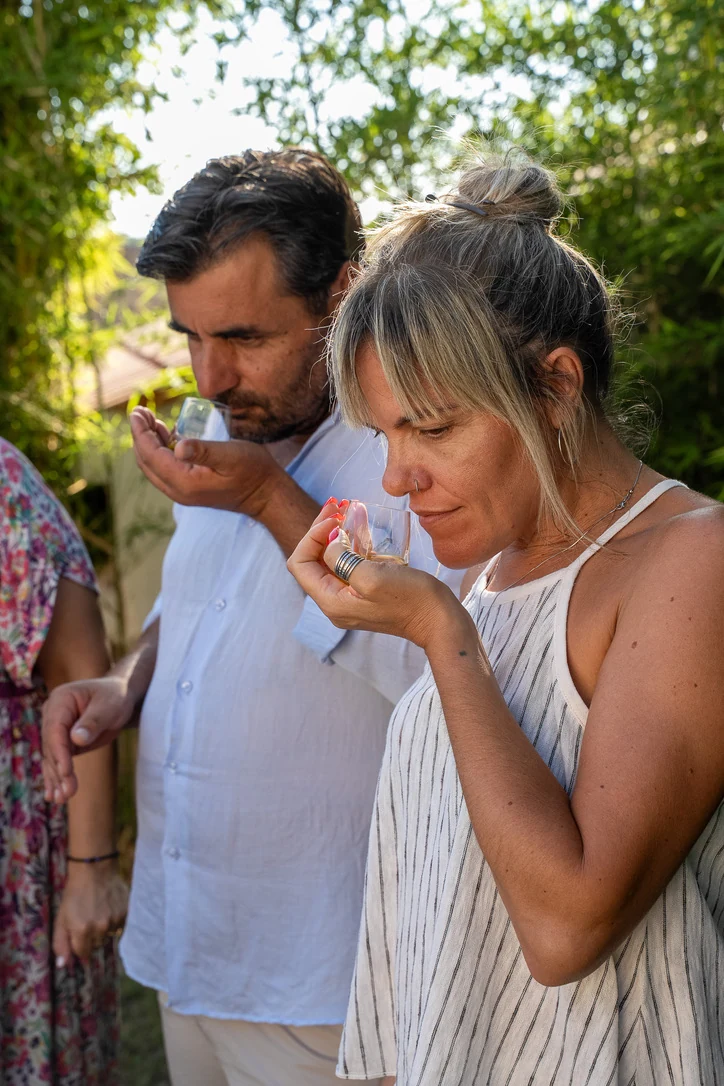
Three Cretan extra virgin oils are poured in turn, from the mild to the sharp, into small glasses. You taste them the way the people who make them do: the glass warmed in your hand first, then the smell, then a little in the mouth, drawn across the tongue, and then you notice the catch at the back of the throat. There is a tasting sheet on the table with an intensity scale and the aromas to look for, so you have words for what you are noticing.
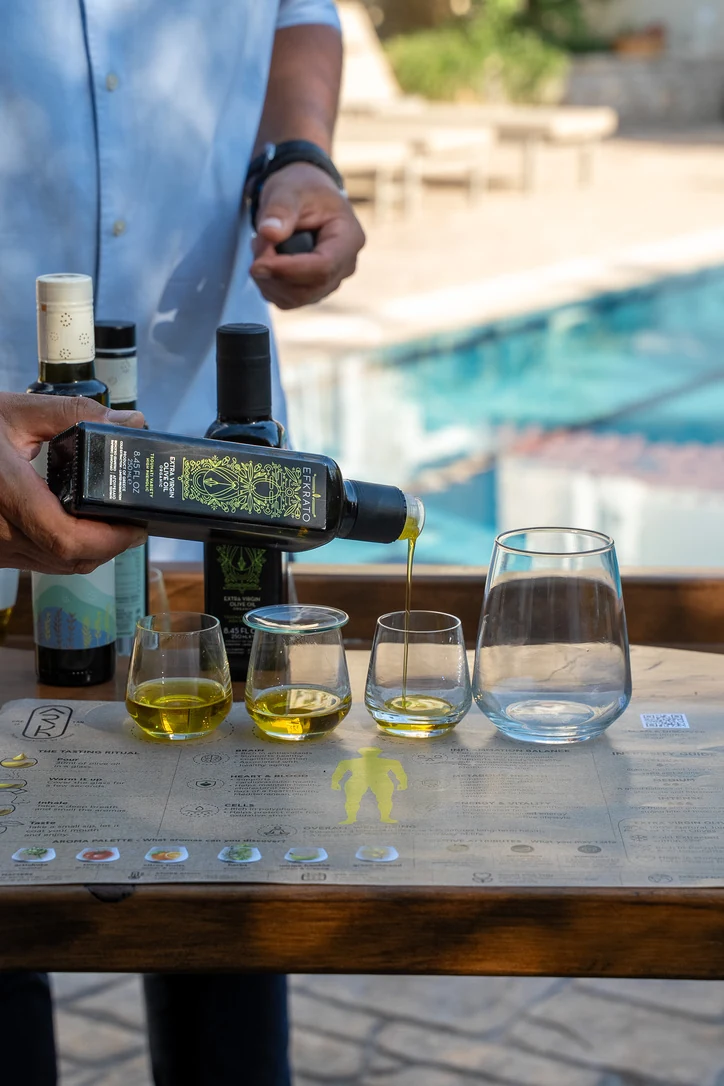
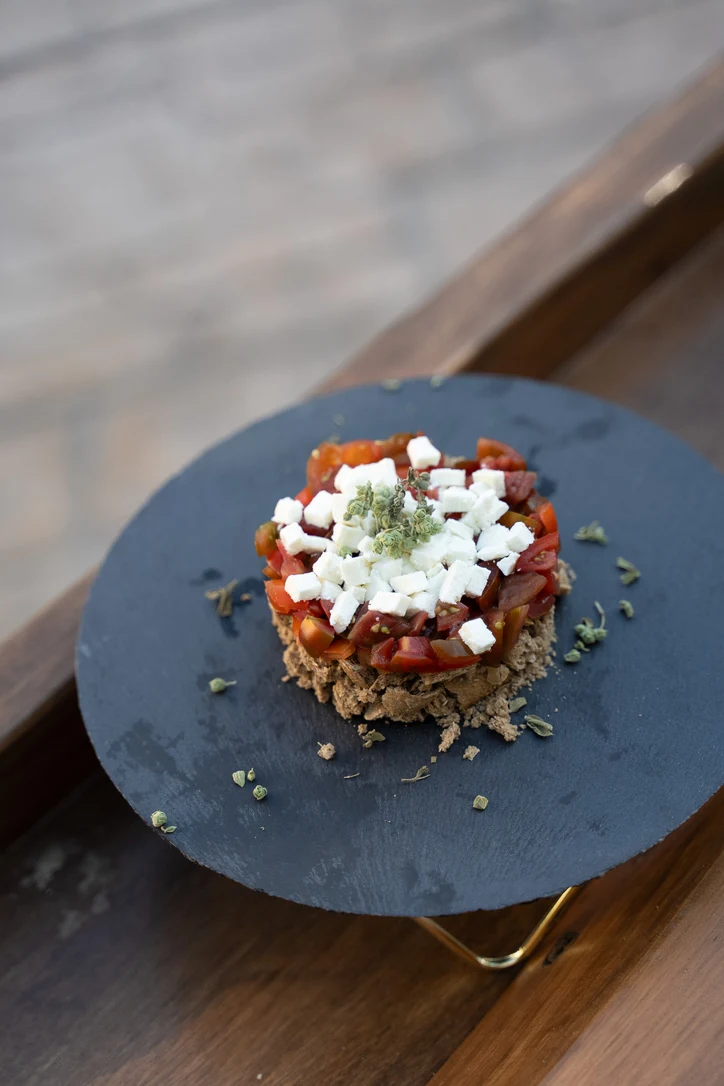
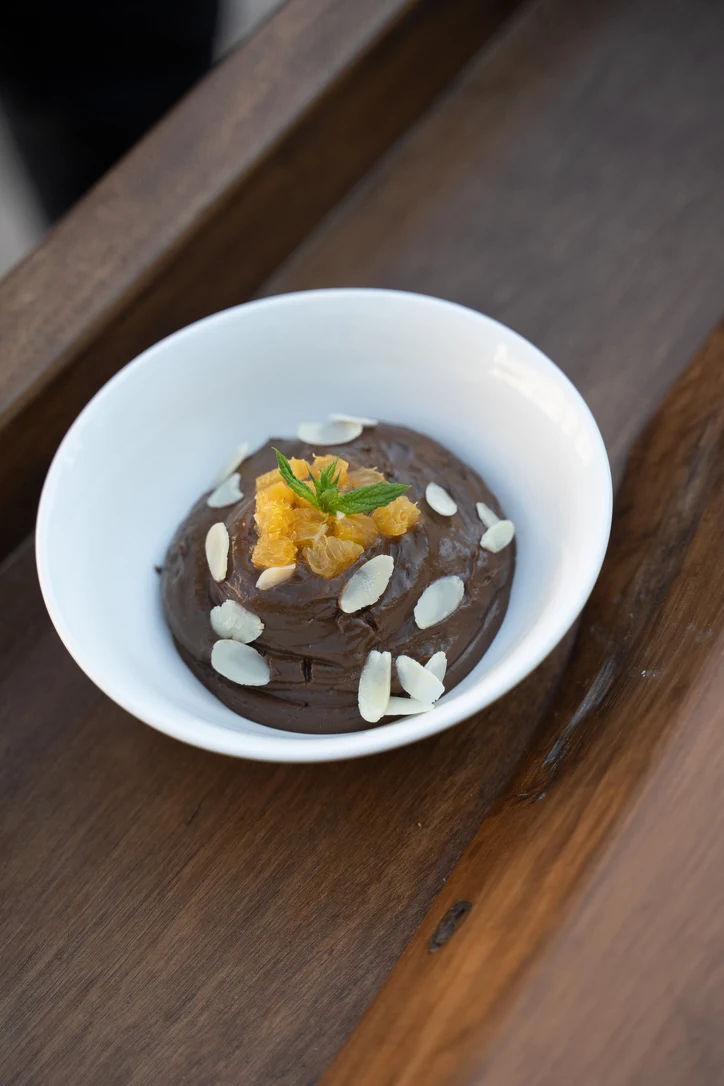
The oils are tasted on their own first, because bread hides everything. Then each one comes back with a dish cooked to go with it. At a recent tasting these were dakos with tomato, feta and oregano; carob bread with a cream of mizithra and bitter honey; and an avocado and chocolate mousse. Yours will depend on the season and the harvest. with flaked almond and orange, which nobody expects and everybody remembers.
It happens in the garden, at a table, in the part of the afternoon when the light is good and it is no longer too hot.
What Changes Afterwards
Three things, and guests mention them in that order.

The peppery catch is not a fault. Most visitors think an oil that stings at the back of the throat has gone wrong. It is the opposite: that sensation is what fresh, early-harvest oil does, and it fades as the oil ages.
The harvest date matters more than the words on the front. “Extra virgin” is the highest grade, but on its own it does not tell you how fresh an oil is. The date is the thing to look for, and once you have looked for it once you will look for it always.
Oils differ by village, not only by island. Two oils pressed forty minutes apart can taste nothing alike.
Children
Bring them. Children taste more directly than adults do, they are not trying to sound knowledgeable, and they are usually the first to say which oil they like. Tell Argyris how many are joining so the afternoon is set up for them too.
If You Would Rather Just Buy Some
You can, and you should. But a tasting first is what tells you which one to carry home, and the difference between the bottle you would have chosen on arrival and the one you choose afterwards is not small.
Every family here has an opinion about oil, and none of them agree. What I like about the tasting is that it gives you your own opinion instead of ours. Guests go home and buy differently for years afterwards, which says more than anything I could write here.
Argyris Skordilis · Owner and host, Amazing Villas in Crete
