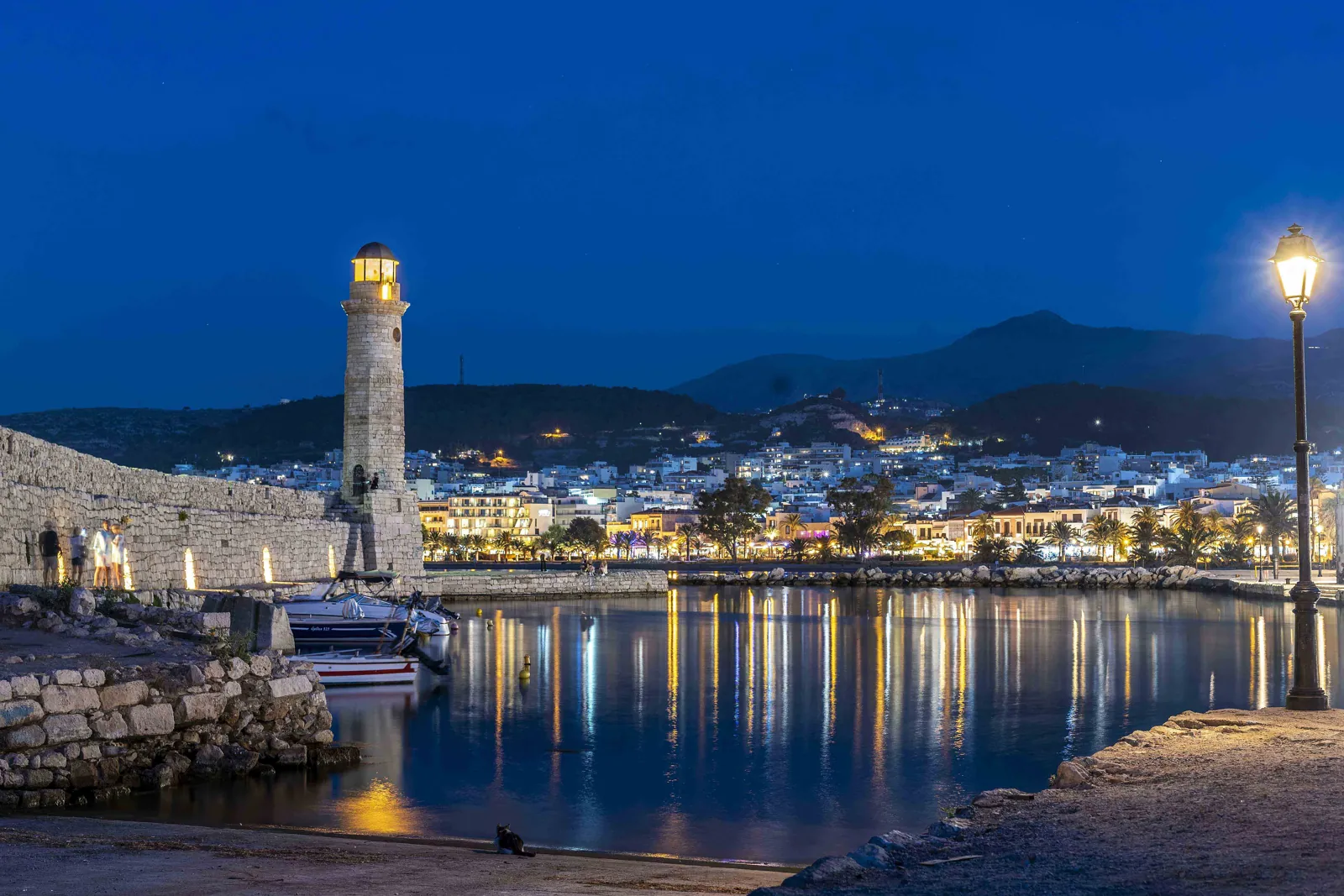
Rethymno’s Venetian harbour and the lighthouse at night.
Rethymno’s Venetian harbour and the lighthouse at night. Photo: Giorgos Katakis.
Explore Crete · Amazing Villas in Crete

Rethymno Old Town Guide from a Private Villa Base

Hidden corners, harbour light and a practical way to enjoy the Old Town without turning it into a checklist. This guide helps you plan one relaxed visit from your villa: when to go, where to leave the car, which route suits your group and how to get back.

Why the Old Town Fits a Villa Holiday

A private villa gives you quiet mornings, pool time and space to recover between outings. Rethymno Old Town adds a different rhythm: architecture, people, food, evening light and the feeling of walking through a living historic centre.

You enjoy the town for a few hours, then return to the privacy of the villa. It works best as one of several outings, not a full-day commitment. For the bigger picture, see Rethymno as a villa holiday base and the Rethymno City Guide.

From the Villas

DestinationFrom Asteri VillageFrom Stavromenos (Villa Argiris)
Rethymno Old Town (Rimondi Fountain)approx. 13 km · about 15–20 minapprox. 12 km · about 15–20 min
Fortezzaapprox. 12 km · about 15 minapprox. 11 km · about 15 min
Rethymno town beach (centre)approx. 12 km · about 15 minapprox. 11 km · about 15 min

Times are approximate, without stops; check the route on the day.

Main Reference Points, without Checklist Pressure

The landmarks help you understand the town, but the Old Town becomes memorable in the spaces between them: wooden balconies, old façades, shaded alleys and small squares.
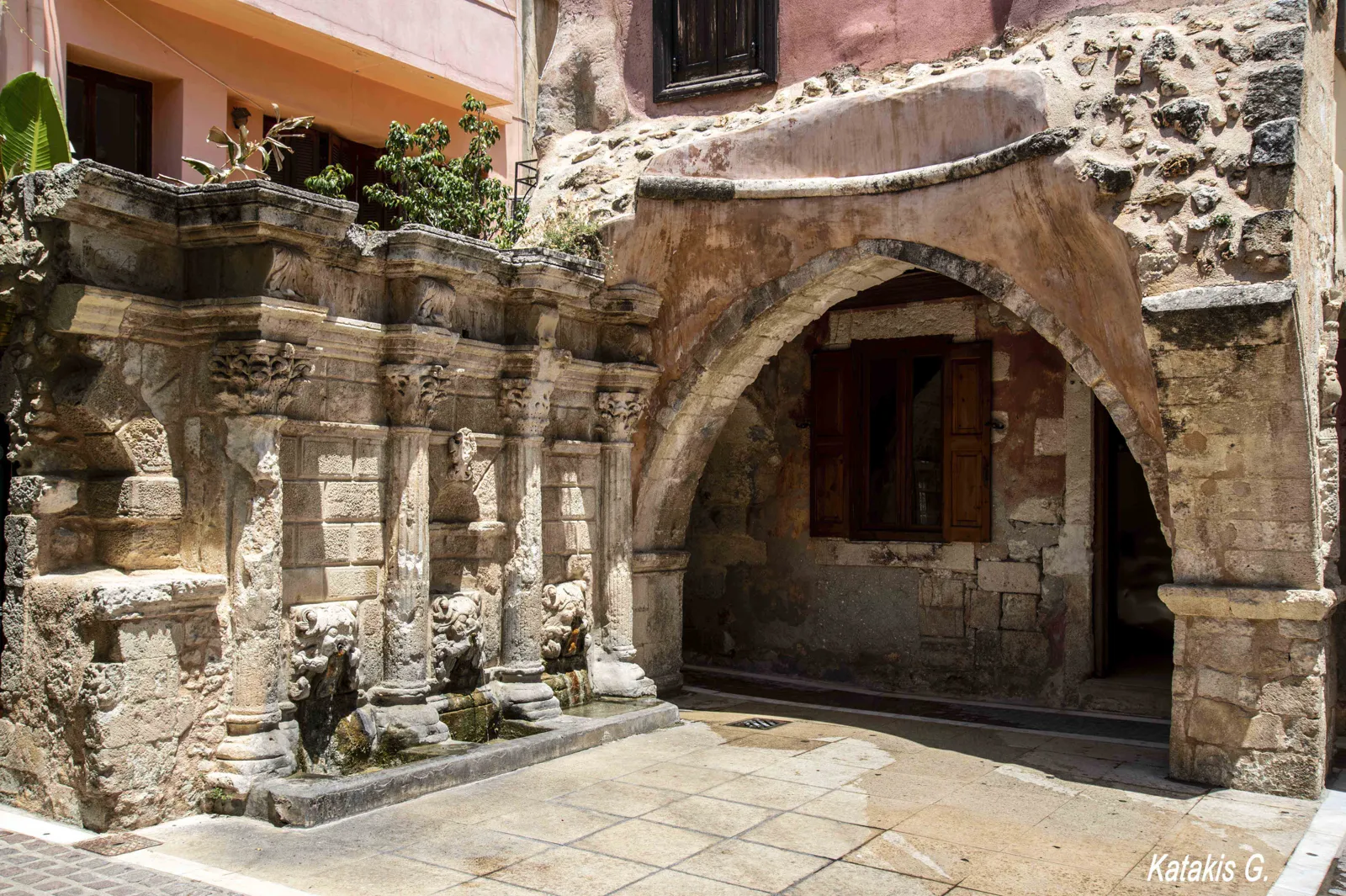
The Rimondi Fountain in Rethymno’s old town.
The Rimondi Fountain in Rethymno’s old town. Photo: Giorgos Katakis.
PlaceWhy it matters
Venetian HarbourA natural orientation point and one of the strongest evening atmospheres.
Egyptian-era lighthouse at the Venetian HarbourViews, atmosphere and a clear focal point for the harbour; best appreciated in cooler hours or at dusk.
FortezzaHistory and a clear sense of Rethymno’s strategic past; the approach involves slopes and uneven terrain.
Rimondi FountainA compact landmark that works well within a slow walk through the lanes.
Loggia, Guora Gate and Neratze areaUseful architectural and historical reference points without requiring a full museum-style day.
Mikrasiaton SquareAn open square in the Old Town, named after the refugees from Asia Minor who settled in Rethymno in the 1920s; an easy place to pause or regroup.
Municipal Garden or a quieter open squareA useful pause point for children or anyone who needs a break from the narrow lanes.

Walking through the Old Town is free. Some monuments, such as the Fortezza, charge an entrance fee: check the current price and opening hours on the official site before you go. The Fortezza also hosts events in summer; check the current programme for your dates.

A Short History in Two Eras

You do not need a history lesson to enjoy the lanes, but two eras explain most of what you see.
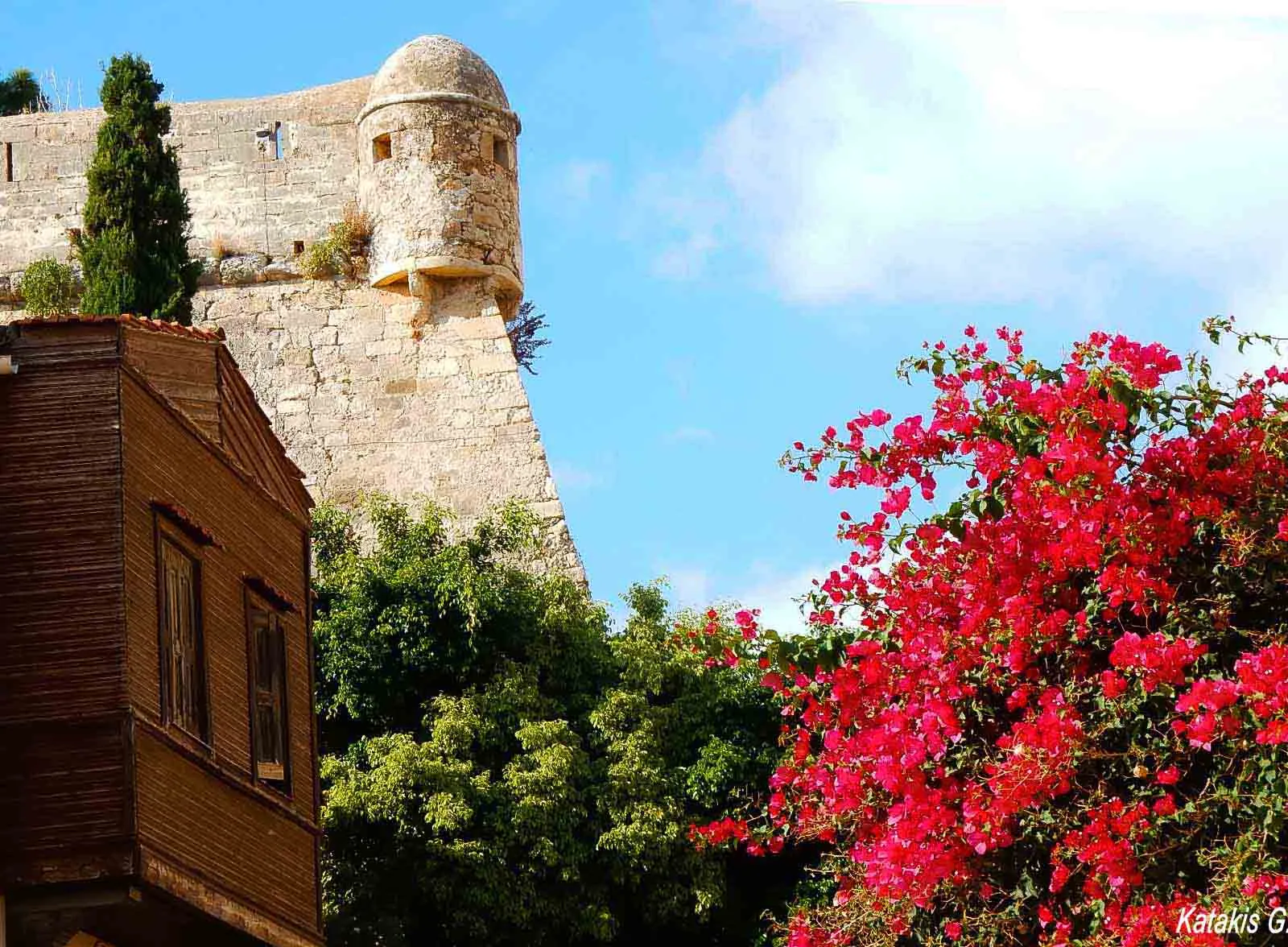
The walls of the Fortezza above the old town, with bougainvillea.
The walls of the Fortezza above the old town, with bougainvillea. Photo: Giorgos Katakis.
  • The Venetian period: Venice ruled Crete for more than four centuries. The Fortezza was built on the hill above the town in the late 16th century, and the small Venetian harbour, the Rimondi Fountain, the Loggia and the Guora Gate all date from this time.
  • The Ottoman period: the Ottomans took Rethymno in the mid-17th century. Several churches became mosques, and minarets still mark the skyline. The Neratze Mosque, a former Venetian church, is today the Odeion, a music school and concert hall. The domed Kara Musa Pasha Mosque is another reminder of this era.

The harbour lighthouse came later: it is the Egyptian-era lighthouse at Rethymno’s Venetian Harbour, built in the 19th century. The mix of Venetian stonework, Ottoman wooden balconies and later houses is what makes the lanes feel layered.

Choose the Route That Fits Your Group

RouteBest forSuggested rhythm
No-stress first visitFamilies, first-time visitors and mixed-age groupsHarbour, selected lanes, Rimondi Fountain and one food or coffee stop.
Culture-focused routeGuests interested in history and architectureFortezza area, key Venetian and Ottoman reference points, then a slower Old Town walk.
Harbour and evening routeCouples and adultsLate-afternoon lanes, Venetian harbour, views towards the lighthouse and dinner.
Hidden-corners routeRepeat visitors and photographersSmall lanes, doors, balconies, squares and quieter transitions away from the main flow.
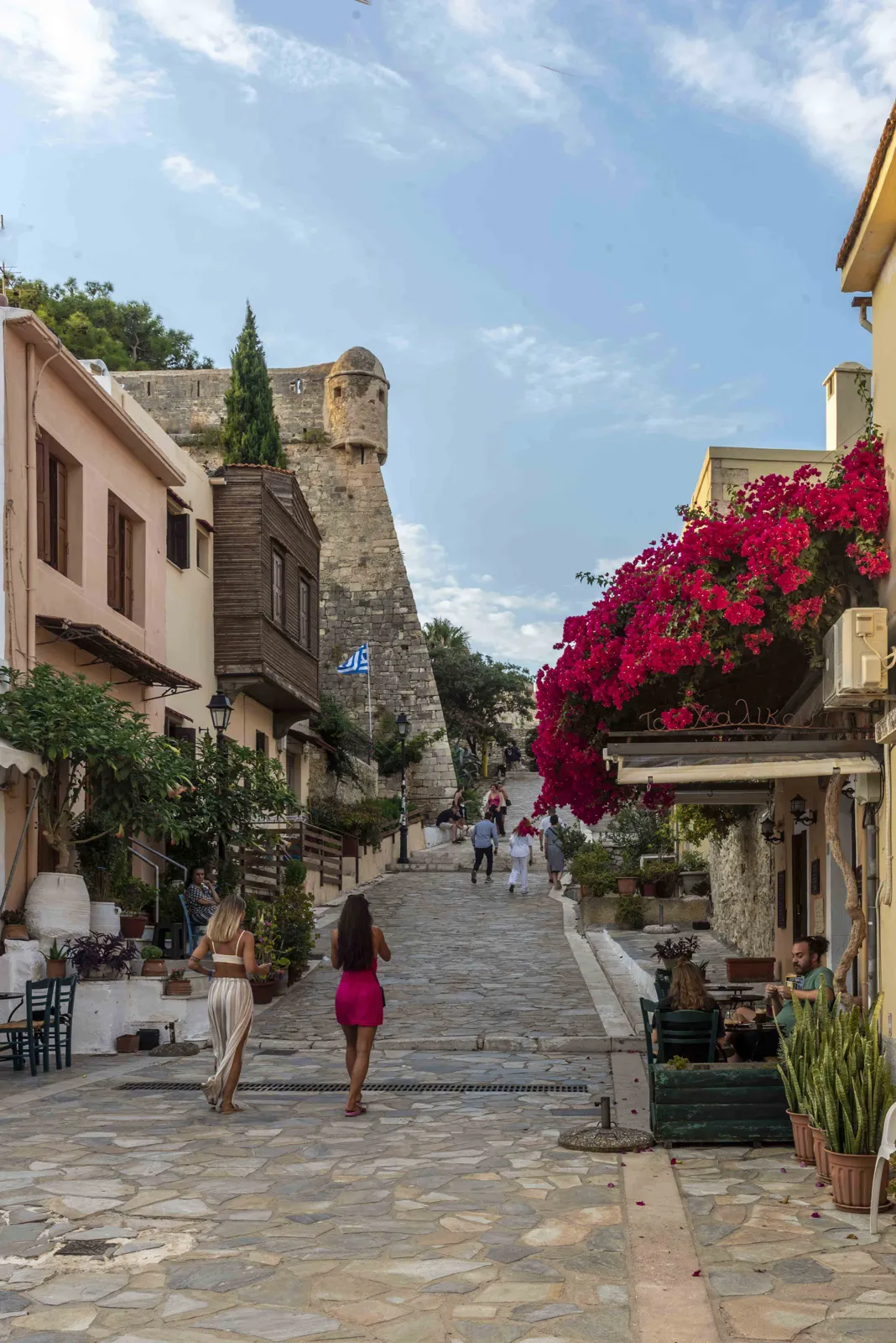
A lane in Rethymno’s old town, below the Fortezza.
A lane in Rethymno’s old town, below the Fortezza. Photo: Giorgos Katakis.

A short first visit: about 90 minutes

Enter on foot, choose a few lanes, pause at Rimondi Fountain and continue to the Venetian harbour for the atmosphere and views towards the lighthouse. Good for families, first-time visitors and anyone who does not want a long walk.

A relaxed half-day visit

Begin with the Fortezza area or a culture-focused walk past selected Venetian and Ottoman reference points. Continue through the smaller lanes, stop for coffee or food and finish near the harbour. Do not try to include every landmark, especially in warmer weather.

A late-afternoon and evening visit

Arrive before the busiest dinner period, walk the lanes as the light softens and continue towards the harbour. Allow time for dinner or drinks, and use the return plan you arranged before the evening began.

A Simple Half-Day Plan

  1. Leave the villa with enough time to park outside the historic core.
  2. Enter through the Old Town lanes and use Rimondi Fountain or another central point for orientation.
  3. Choose either the Fortezza area or a longer harbour walk, not both if the group tires easily.
  4. Pause for coffee, a sweet, food or wine rather than rushing between landmarks.
  5. Finish near the harbour or your chosen dinner area, then return using the transport plan made earlier.

Compare the villas to see which base makes Old Town visits easiest for your group.

Good Places and Moments for Photographs

The Old Town rewards slow photography more than rushed sightseeing. The Venetian Harbour and its lighthouse are especially atmospheric in late-afternoon and early-evening light, while Rimondi Fountain, the entrance to the Fortezza and the smaller lanes show a different side of the town’s architecture.
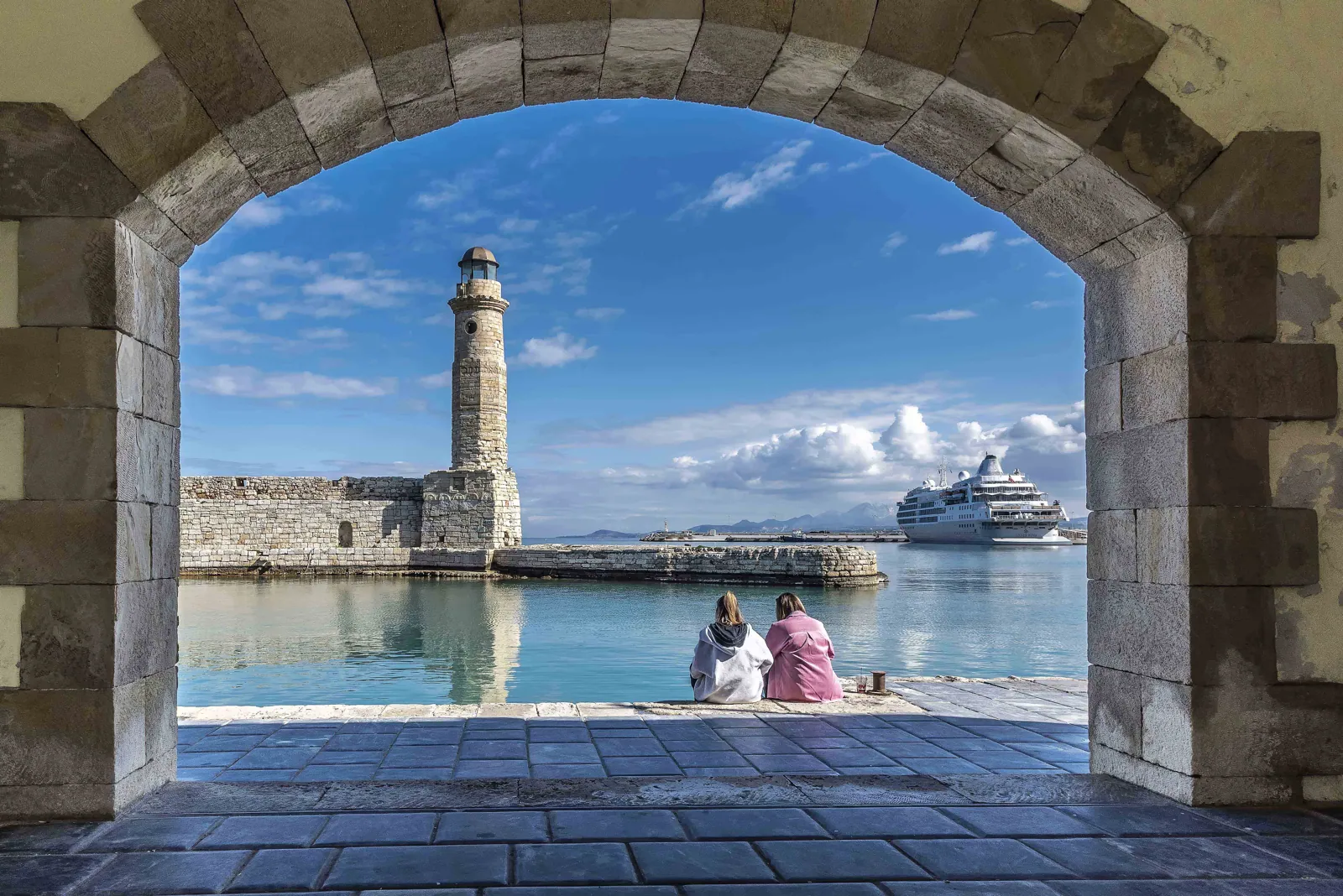
The Egyptian-era lighthouse, seen through a stone arch on the harbour.
The Egyptian-era lighthouse, seen through a stone arch on the harbour. Photo: Giorgos Katakis.
  • Harbour reflections and views towards the lighthouse.
  • Old façades, wooden balconies, doors and quieter details.
  • Harbour activity and visiting boats, although no particular vessel or scene should be expected.

In smaller lanes, respect private entrances, local residents and anyone who may not wish to be photographed.

Families, Older Guests and Groups

  • Shade and a pause: the Municipal Garden, by the Guora Gate, has shade and a playground, and Mikrasiaton Square is an easy place to regroup.
  • Toilets: there are few public ones in the lanes; most families use a café, which means buying a coffee, and that is normal here.
  • With children: choose one or two landmarks, include a snack or ice-cream stop and keep the walk shorter.
  • Older guests: a late-afternoon route with regular pauses usually suits best.
  • Larger groups: agree a meeting point and do not assume everyone wants the same walking pace or dinner time.

Walking conditions and mobility

Some Old Town streets have uneven stone paving, and conditions vary by route. Parts of the Fortezza approach and interior involve slopes and uneven terrain. Guests with reduced mobility or limited walking confidence should choose a shorter route, allow more time and check current access conditions for the places they plan to visit.

Ask Argyris before your visit if your group has specific mobility considerations. He can help you think through a practical route; access to individual monuments should always be confirmed with the relevant official source.

The Best Time to Visit

TimeBest forPlanning note
MorningQuieter streets, architecture and cultureUseful in warmer months, but check attraction opening information.
Late afternoonSofter light, a comfortable start and a gradual move towards dinnerOften the easiest all-round option for villa guests.
EveningHarbour atmosphere, food and a slower walkPlan parking, taxi or a designated driver before drinking alcohol.

What It Costs, and When Things Are Open

Walking the Old Town costs nothing. The monuments you can go inside have hours and tickets, and the one that matters most is the Fortezza (all checked 20 September 2026; confirm before you go, on 28310 28101).

PlaceOpenTicket
FortezzaJune–September 08:00–19:15; October–May 10:00–17:00€5, reduced €3, family €12
LoggiaDaily 08:00–16:00—
The lanes, the harbour, Rimondi Fountain, the Guora GateAlwaysFree

One thing to know before you plan a sunset: in summer the Fortezza closes at 19:15, well before the sun goes down. Walk the walls in the late afternoon, then watch the sunset from the harbour or the seafront instead. In summer the Fortezza also hosts performances in the evening as part of the Renaissance Festival, which is a different way in — check the programme for your dates.

Where to Leave the Car, and How to Walk In

You cannot drive into the Old Town in the main season, and you would not want to: the lanes are for walking and the one-way streets around them are slow. Park at the edge and go in on foot.

  • For the harbour and dinner: the paid car park by the Venetian harbour, on Emmanouil Kefalogianni.
  • For the lanes and the Fortezza: the municipal car park at Tessaron Martyron and Koundouriotou, beside the Municipal Garden and the Guora Gate — the old entrance to the walled town, and the natural way to walk in. On Thursday mornings the street market takes over this car park.
  • In high season, when both are full: the marina on Sofokli Venizelou, about ten minutes on foot along the sea.

Save the parking spot on your phone before you walk away — every lane looks like the last one on the way back. Wear flat shoes: the paving is stone and uneven in places. The Rethymno City Guide has the full parking picture, including the free areas and the evening pressure (checked 20 September 2026). Not sure whether you need a car at all? See Do You Need a Car in Crete?

Dinner, and Getting Home Afterwards

Decide first what the evening is: a walk, dinner, drinks or the Fortezza. That keeps the route coherent. Cretans eat late — tables fill from about nine — so in July and August book, and in the quiet months check that the place is open at all.

Then settle the drive home before the first glass. Either someone stays on water, or you book a taxi both ways and agree a pick-up point the car can reach: the Municipal Garden, the harbour car park or the seafront, never a lane inside the walls. The City Guide has the numbers and the detail.

Combining the Old Town with the sea? The town beach starts at the edge of the centre; Best Beaches near Rethymno compares it with the beaches closer to the villas.

Which Villa Makes This Easiest

All four are about 15 minutes away, so the difference is the evening rather than the distance. From Asteri Village you come home to a quiet village and three villas beside each other, which suits a group splitting into two dinners. From Villa Argiris in Stavromenos the drive back is along the coast, with sea views at the villa. Compare the villas if the choice is still open.

Before You Book

  • Distance: the Old Town is about 15 minutes by car from all four villas.
  • Car: a car is recommended for the stay; park outside the historic core and walk in.
  • Evenings out: plan a taxi or designated driver before any drinks.
  • Villas: Villa Asteri, Villa Kitron and Villa Myrrini in Asteri Village; Villa Argiris in Stavromenos.
  • Arrival: check-in 15:30, check-out 11:00.
Argyris Skordilis, owner and host of Amazing Villas in Crete
From Argyris

We suggest treating the Old Town as a few good hours, not a whole day. Decide before you leave the villa where you will park, where the group will meet and how you will get back after dinner, and the evening takes care of itself.

Argyris Skordilis · Owner and host, Amazing Villas in Crete · usually replies within 12 hours

Sources: Rethymno monuments: hours and tickets; Renaissance Festival of Rethymno. Figures are approximate. Distances and drive times were measured on a road-routing map in September 2026 and exclude stops. Fortezza and Loggia hours and tickets, car parks and telephone numbers were checked on 20 September 2026; hours, prices, festival programmes and traffic rules change through the year, so confirm them for your dates.

Facts checked against our four villa pages · Last reviewed by Argyris Skordilis, owner of Amazing Villas in Crete.

FAQ

Frequently asked questions

Planning the visit

How long do we need in Rethymno Old Town?

A focused visit can work in a few hours. A half-day or evening is usually enough for a relaxed walk, selected landmarks and food.

When is the best time to visit?

Morning is quieter, late afternoon offers softer light, and evening works well for the harbour and dinner.

Can we drive inside the Old Town?

The historic core is best explored on foot. Leave the car outside the narrow centre and follow current signs, maps and any temporary traffic restrictions.

Is the Old Town free to visit?

Yes, walking through the Old Town is free. Some monuments, such as the Fortezza, charge an entrance fee, so check the current price on the official site.

What does the Fortezza cost and when is it open?

€5 general admission, €3 reduced and €12 for a family ticket, open 08:00–19:15 from June to September and 10:00–17:00 from October to May (checked 20 September 2026; confirm on 28310 28101). Walking the Old Town lanes, the harbour and Rimondi Fountain costs nothing.

Can we watch the sunset from the Fortezza?

Not in summer: it closes at 19:15, before sunset. Walk the walls in the late afternoon and watch the sun go down from the harbour or the seafront instead. In summer the Fortezza opens again in the evening for Renaissance Festival performances — check the programme for your dates.

Families and groups

Is the Old Town suitable for children?

Yes, when the route is kept short and includes pauses. Avoid turning the visit into a long landmark checklist.

Is Rethymno Old Town suitable for older visitors?

Yes, when the route is adapted to the guest. Some streets have uneven paving and parts of the Fortezza involve slopes and uneven terrain, so a shorter route with regular pauses may suit better; check current access conditions for any specific landmark.

Can we combine the Old Town with the beach?

Yes. Rethymno town beach can work with an Old Town walk, but keep the day realistic for children and mixed-age groups.

From the villas

Rethymno or Chania old town?

Both are worth seeing. Rethymno’s Old Town is smaller and about 15 minutes from the villas, so it suits an easy half-day or evening; Chania’s old harbour is about 75 minutes away and works better as a full day out.

Can Argyris help us plan the visit?

Yes. Ask for practical guidance on timing, parking approach, group fit and the return to the villa.

Where do we park for the Old Town?

By the Venetian harbour on Emmanouil Kefalogianni for the harbour and dinner, or the municipal car park at Tessaron Martyron and Koundouriotou by the Municipal Garden and the Guora Gate for the lanes and the Fortezza; the marina on Sofokli Venizelou when both are full. Note that the street market takes over the Municipal Garden car park on Thursday mornings.

Explore Rethymno, Then Return to Your Villa

Explore Rethymno, then return to the space and quiet of your villa. Ask Argyris about timing, parking and the return for your group.

Ask Argyris