Cretan Breakfast: What It Is, and How to Make One
Search for a Cretan breakfast and you get photographs of a hotel table with twenty things on it. That is not wrong — the food is real and most of it is local — but it is not what anyone here eats on a Tuesday.
This is the other version: what the food actually is, what to buy for it, and eight breakfasts you can make in the villa kitchen, one of which takes two minutes.
 By Argyris Skordilis, owner and host · Updated
What a Cretan Breakfast Actually Is
It is savoury before it is sweet, and it is built from things that keep.
- Barley rusk or fresh bread. Paximadi if you want the traditional answer, a fresh loaf from the village bakery if you want the everyday one.
- A fresh cheese. Mizithra when it is young and mild, anthotyros, or xygalo Siteias from the east of the island, which is soft and slightly sour and goes on bread like a spread.
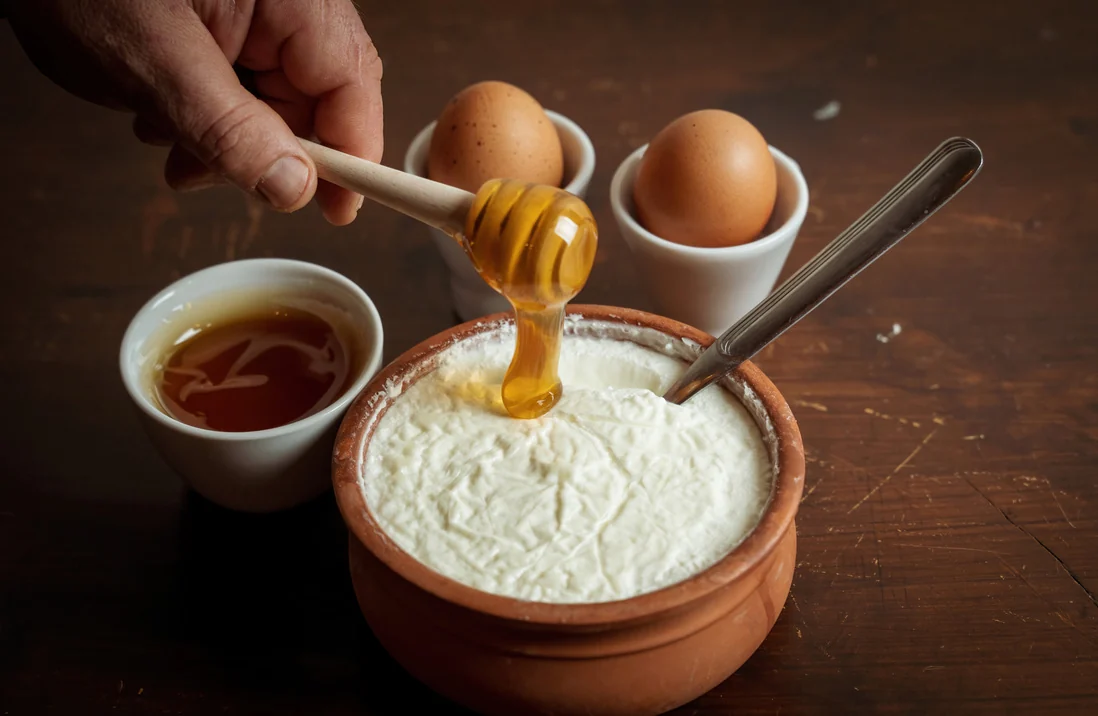
- Thyme honey. Over the yoghurt, over the cheese, over a pastry. Not jam — jam is a later, imported habit.
- Yoghurt. Sheep’s yoghurt, thick, sharper than what you are used to at home.
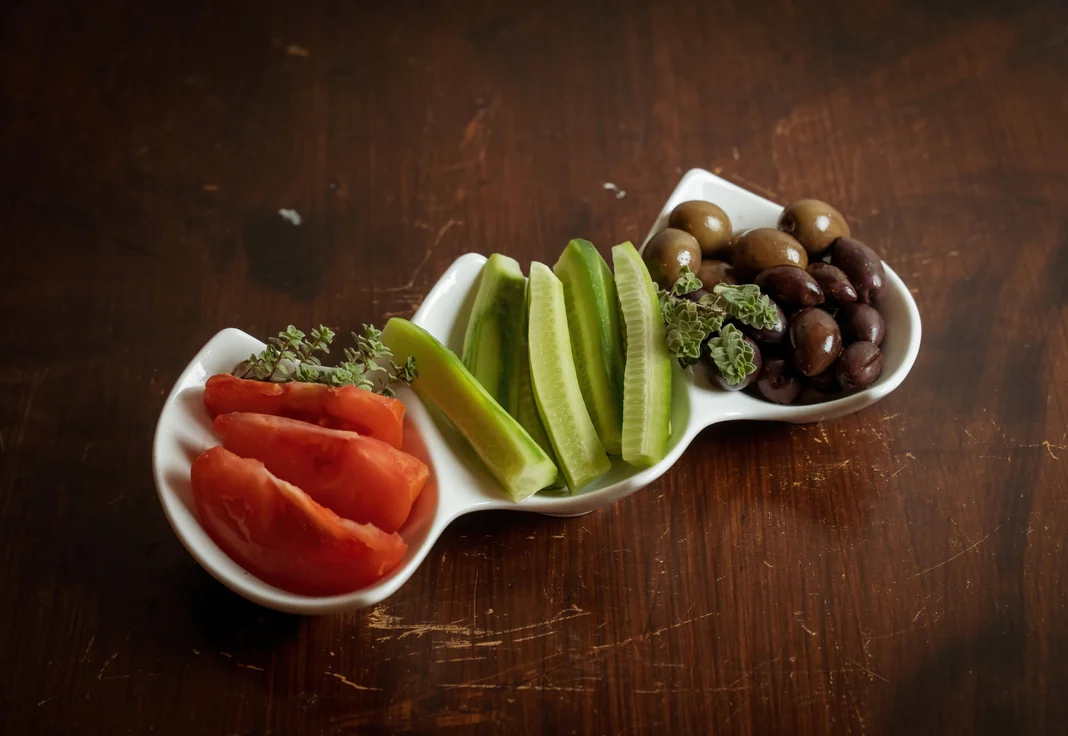
- Olives, tomato, cucumber. On the table with breakfast, not as a garnish.
- Eggs. Boiled, or fried in olive oil, or into the tomato.
- Fruit — whatever the month has. In autumn, grapes and figs. In winter, oranges off the trees.
- Olive oil over most of it, including the cheese and including the bread.
What is not on the table: cereal, pastry with icing, anything sweet as the main event. The sweetness in a Cretan breakfast comes from honey and from fruit, and it arrives beside the savoury rather than instead of it.
The Big Table and the Small One
There are two Cretan breakfasts and both are real. Knowing which one you want on a given morning is most of the skill.
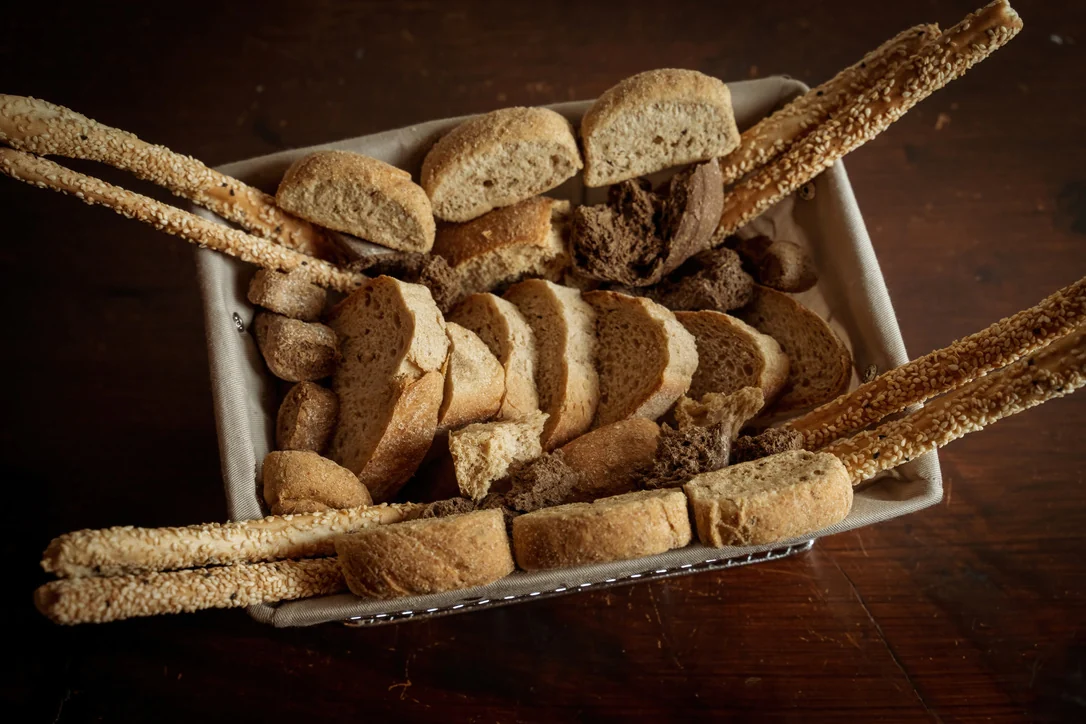
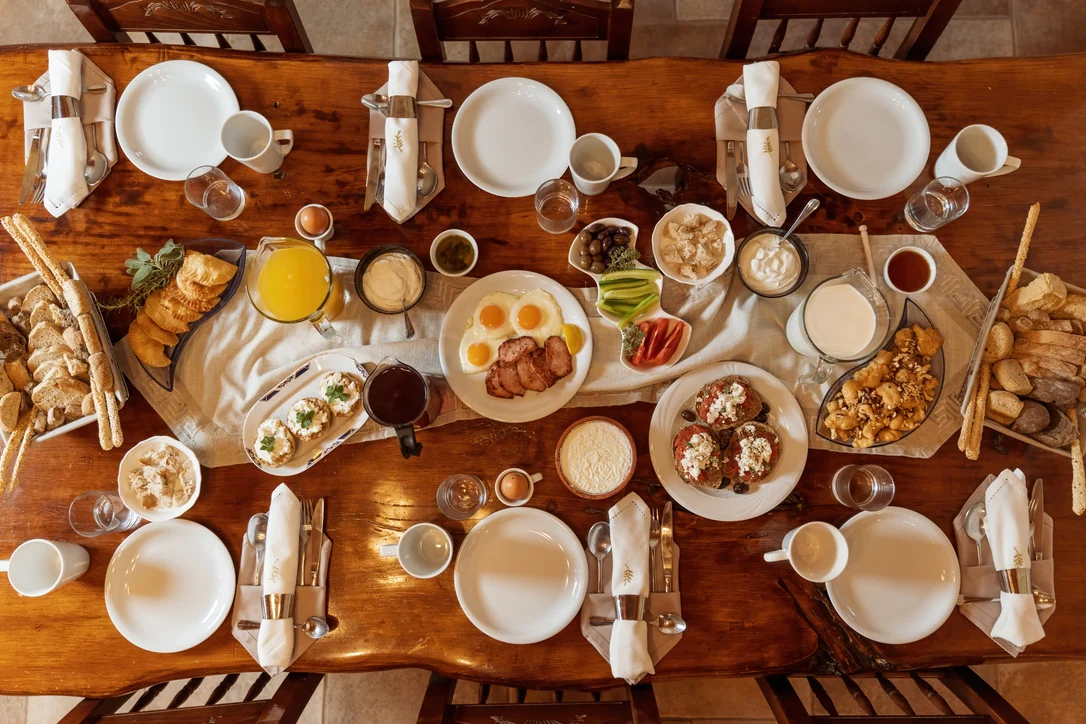
The big one is what you get when someone lays the table properly: dakos, fresh mizithra with honey over it, eggs with apaki, loukoumades, four or five breads, yoghurt, olives, tomato and cucumber, boiled eggs, juice, and coffee from the briki. It takes an hour to eat and you will not want lunch. Every part of it is bought within fifteen minutes of the villas, so you can lay this table yourself on a morning when nobody is in a hurry — or ask for a cook to come and do it. Either way it is worth having once in a week.
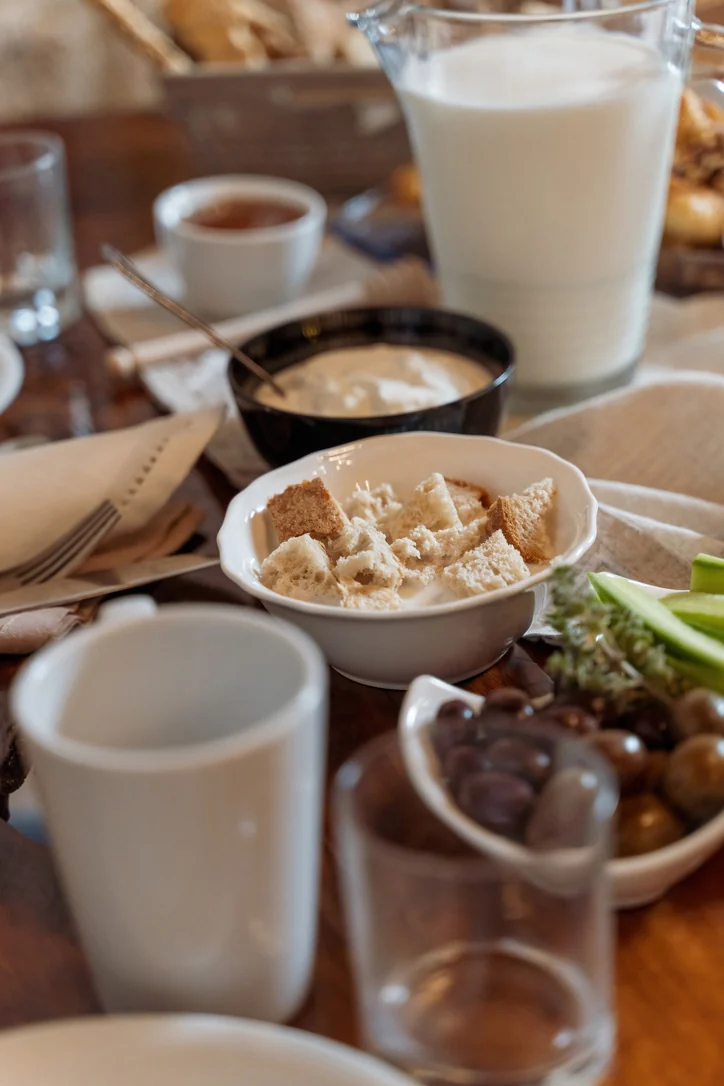
The small one is what most people here actually eat on a Tuesday. A coffee. A rusk with a piece of cheese and some oil. Yoghurt with honey. Or bread broken into a bowl of milk, warm or cold as each person prefers it — which is what a great many Cretans grew up on, is almost never written down anywhere, and takes thirty seconds. The appetite was saved for lunch, which was always the serious meal of the day and in many village kitchens still is.
And the bread in milk has a reason behind it. Village bread was made with prozymi — sourdough — which holds its softness far longer than bread raised with modern yeast, because the acids the starter produces slow the change in the starch that makes bread go hard. A loaf lasted. But the days went by, the bread was not always finished, and it began to harden.
And nobody threw bread away. It went into the milk, where it softened again and became a meal. That is the whole origin: not a recipe, a refusal to waste something. It is the same thinking that produced paximadi at the other end — if the bread is going to harden in the end, bake it hard on purpose and let it keep for months.
It survived because it is good, and because a bowl of it takes half a minute. That is worth knowing when you are standing in the kitchen on the fourth morning with the end of a loaf in your hand.
And there is a third, which is where the heavy version comes from. People who worked — shepherds, farmers, anyone out before light — ate properly in the morning because they would not eat again until afternoon. That is where staka with eggs belongs: a dish built for someone walking up a mountain, not for someone going back to a sunbed.
The Cretan Breakfast Basket
A Cretan Breakfast Basket is waiting at the villa when you arrive. It comes with every direct booking, at every villa, on every date — there is nothing to request, nothing to add at checkout and no minimum stay attached to it.
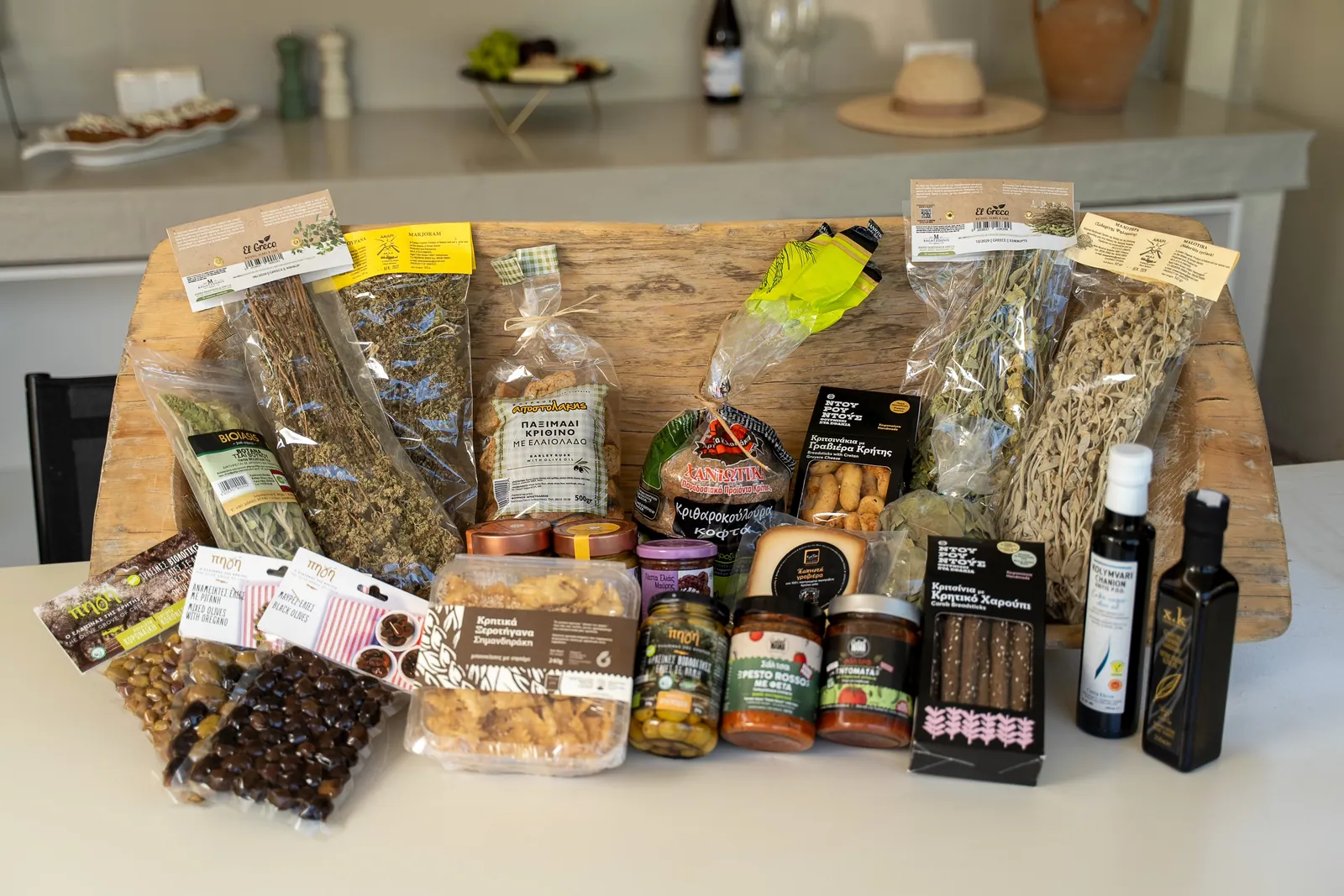
It is part of the official Greek Breakfast Basket scheme, which exists to put local products from small producers into the hands of guests who are self-catering rather than in a hotel dining room. What is in it follows what is actually available, so it moves with the season; it usually includes olive oil, cheese, bread, paximadi, jam and fruit.
What it is for is the first morning. You arrive in the evening, the shops are shut, and nobody wants to start a holiday by going out to find breakfast. The first 24 hours food checklist covers what to add to it for the rest of the week.
Five Breakfasts from a Villa Kitchen
In order of effort. The first one is the one you will actually make.
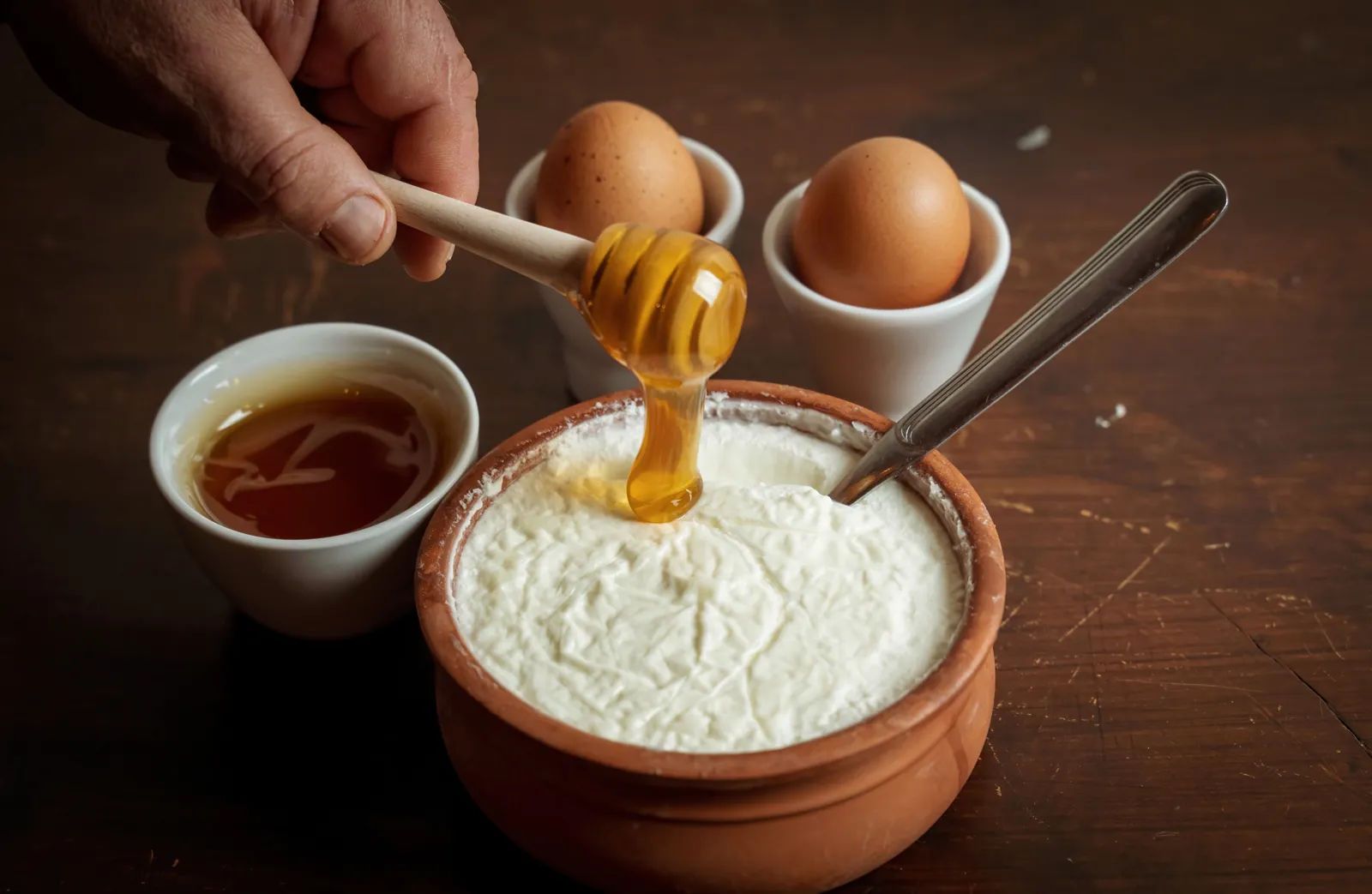
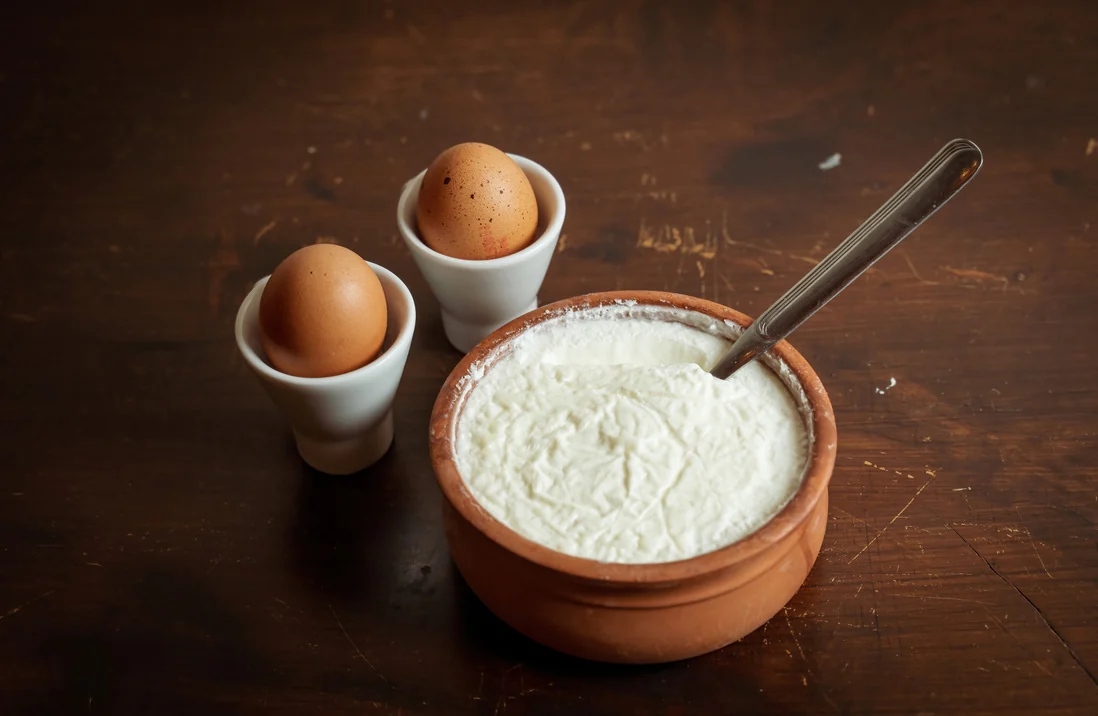
- Yoghurt, thyme honey, walnuts. Two minutes, three ingredients, and it is the best argument for buying a proper honey on the first day. Add fruit if the month has any.
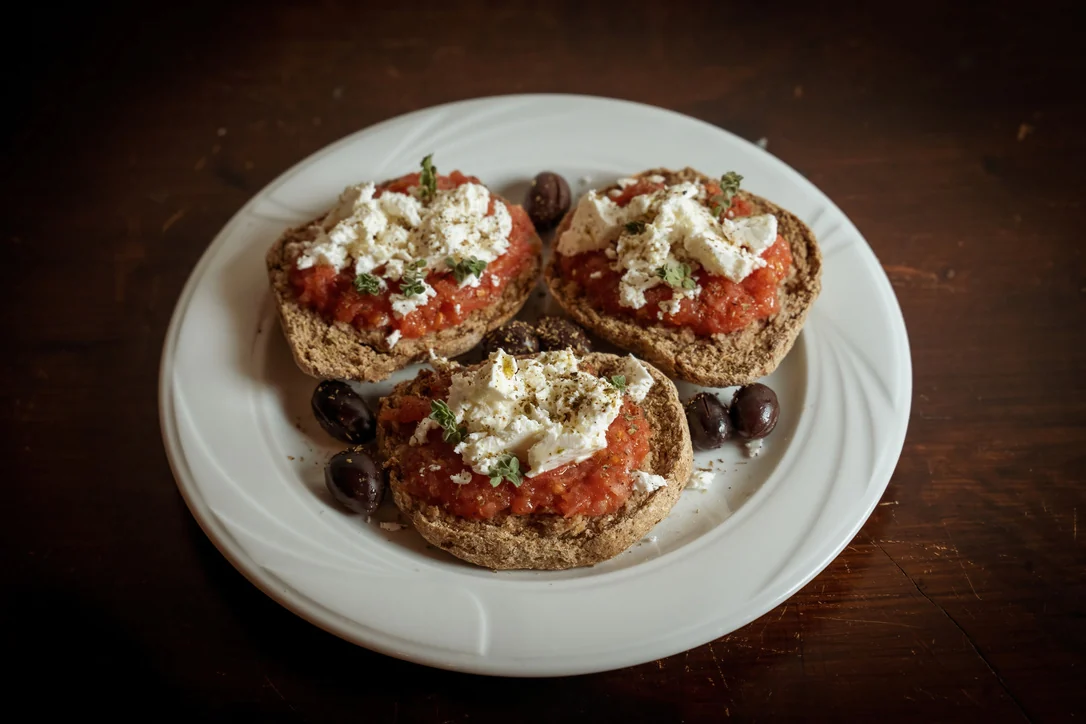
- Dakos, for breakfast. It is not only a lunch dish. Rusk, grated tomato, fresh mizithra, oregano, oil. Five minutes, and it is the reason to have tomatoes in the house.
- Bread, oil, salt, tomato. No cooking at all. A thick slice, good oil poured over it until the bread stops absorbing, salt, and a tomato cut straight onto it. This is breakfast for half the island.
- Strapatsada. Eggs scrambled slowly into grated tomato, with crumbled mizithra at the end. Ten minutes, one pan, and the answer to the August problem of too many tomatoes.
- Fresh mizithra with thyme honey. A soft white cheese in a bowl, honey poured over the top, bread or rusk beside it. Savoury and sweet in the same spoonful, and the thing on the table that visitors go back to most often.
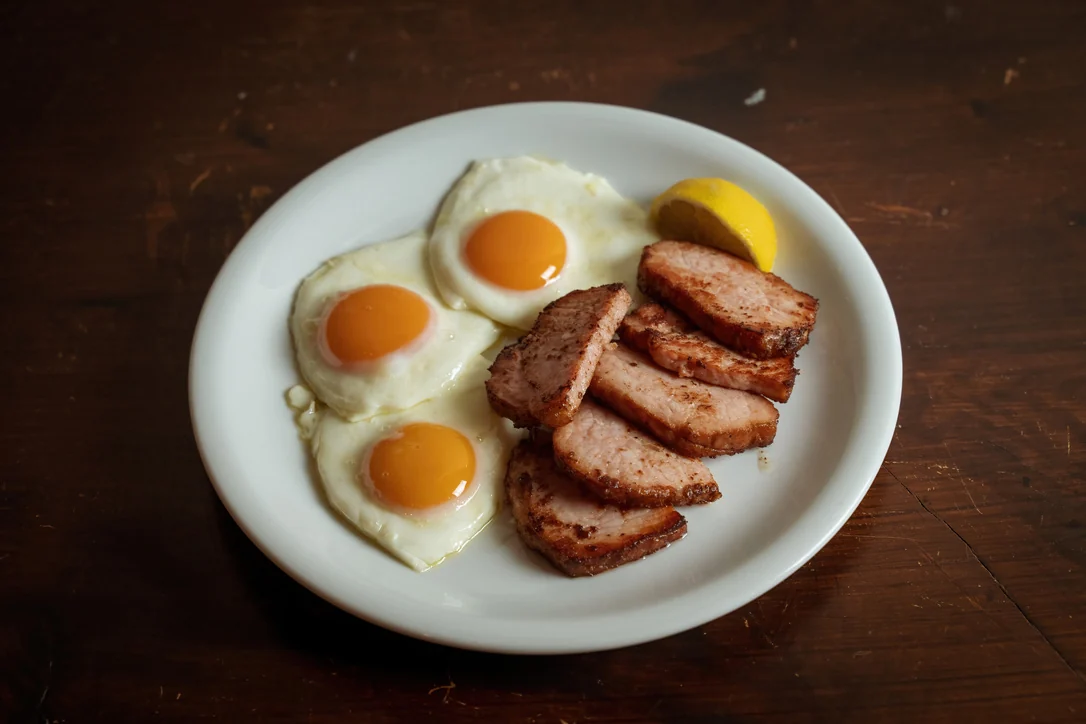
- Eggs with apaki. Apaki is pork cured in vinegar and smoked over aromatic branches; sliced thick and fried for a minute, it goes beside fried eggs with a wedge of lemon over both. Fifteen minutes, and it is the Cretan answer to a cooked breakfast.
- Staka with eggs. Staka is the fat skimmed from sheep’s milk and cooked with flour; the eggs are fried in it. It is rich in a way that is difficult to describe and it will hold you until three in the afternoon. Once a week, not every day.
- Bread in milk. Bread broken into a bowl of milk, eaten with a spoon — warm or cold, however you like it; there is no correct way and nobody here will tell you there is. It started as what you did with bread that had gone hard rather than throw it out, and it is still the best answer to the end of a loaf. Nobody writes it down, which is why you will not find it in any guide but this one.
Kalitsounia, and the Sweet Ones
Kalitsounia are small Cretan cheese pastries, and they are the breakfast you buy rather than make.
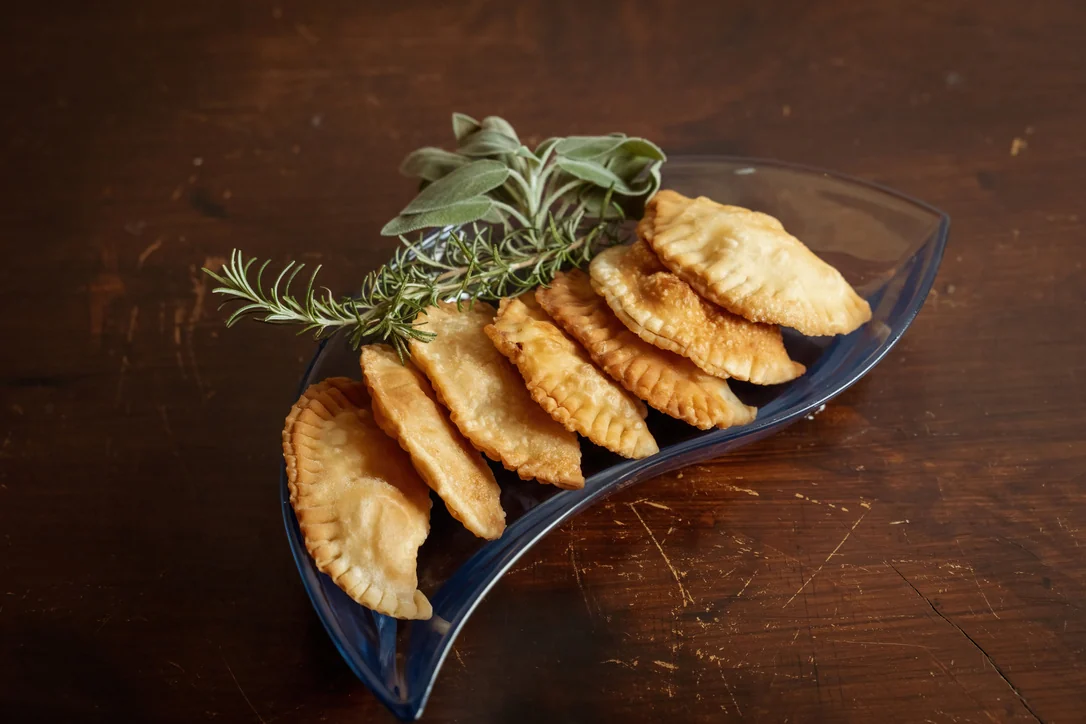
The savoury ones have mizithra and herbs in them and are usually baked. The sweet ones — often called lychnarakia, because they are shaped like little oil lamps — are open on top, filled with fresh mizithra, and eaten warm with honey poured over. Some are fried rather than baked, some have cinnamon, and every village will tell you its own version is the correct one.
They come out of the bakeries in the morning and the good ones do not last until lunchtime. This is the single best reason to walk to the bakery before anyone else is awake.
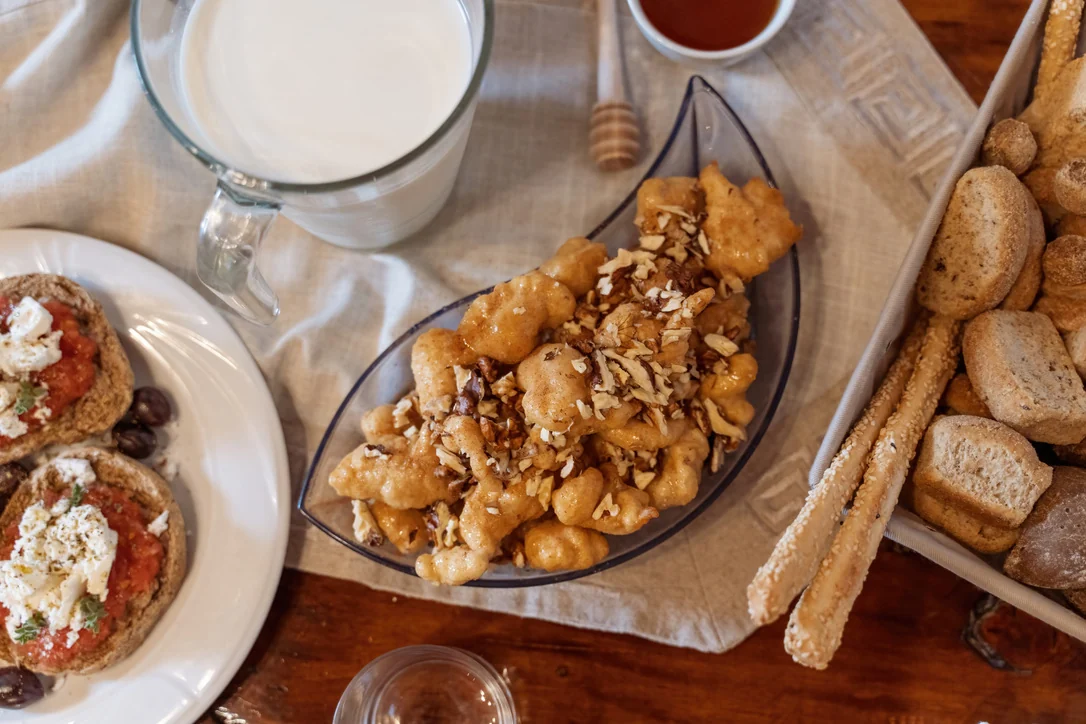
And loukoumades, which are not only Cretan but belong on this table anyway: small fried dough puffs, soaked in honey and covered in chopped walnuts. They are breakfast, they are dessert, and if there are children in the house they are the first thing to go.
The Coffee
Three things to know and you will order correctly anywhere on the island.
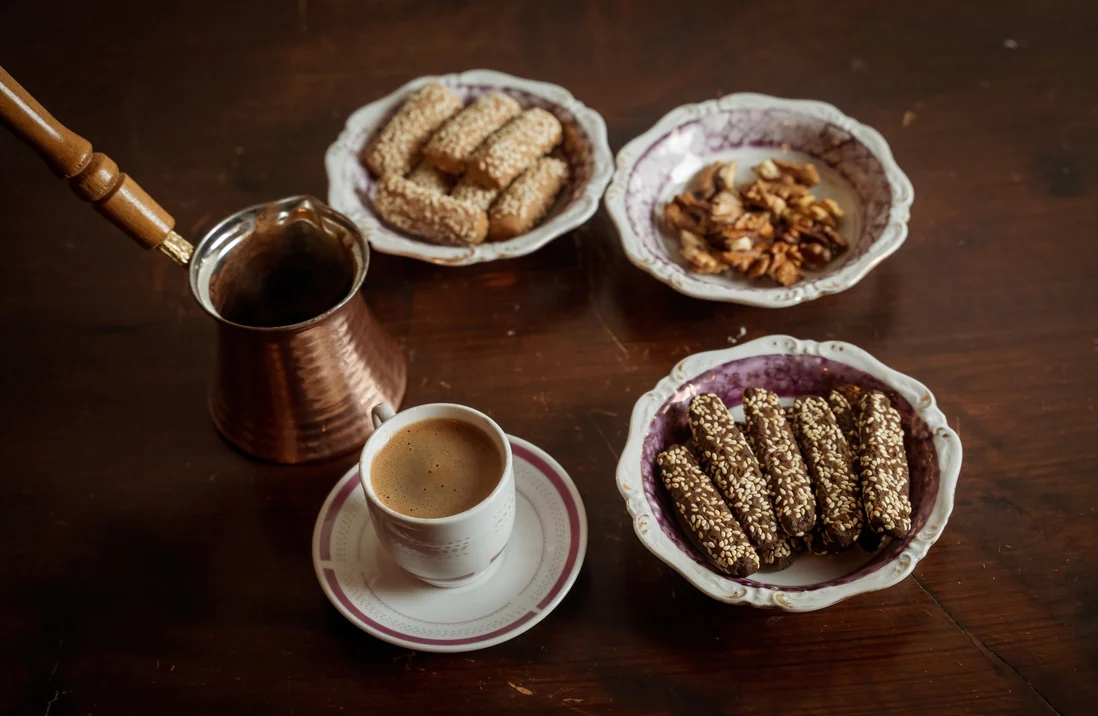
- Greek coffee is ordered by its sweetness, not its size: sketos is without sugar, metrios is medium, glykos is sweet. It is made in a briki, the small long-handled pot — and there is one in every villa kitchen, so this is the coffee you can make on your first morning without buying anything. It is poured straight into the cup with the foam on top. There are grounds at the bottom, which you do not drink. It is meant to take twenty minutes, and it is usually served with something small beside it — sesame biscuits, a few walnuts, a spoon of something sweet.
- Freddo espresso and freddo cappuccino are what people here actually drink from May to October — cold, shaken, over ice. Order one and you will be asked about sugar; if you say nothing, a freddo cappuccino usually arrives sweetened.
- Filter coffee is the rare one here. If it is what your morning depends on, buy it in Rethymno on the first day rather than hoping the village shop has it — but the briki is already in the kitchen, and it is worth a week of trying the other thing.
Where to Buy It, and When
We do not name shops for the same reason we do not name tavernas, but the pattern is the same everywhere and you can use it.
- Bakeries open early and the pastries go early. Before nine is a different selection from after eleven.
- Yoghurt, cheese and honey are better from the small shops and the dairy counter than from the supermarket shelf. Ask for mizithra and you will be asked fresh or aged — for breakfast, fresh.
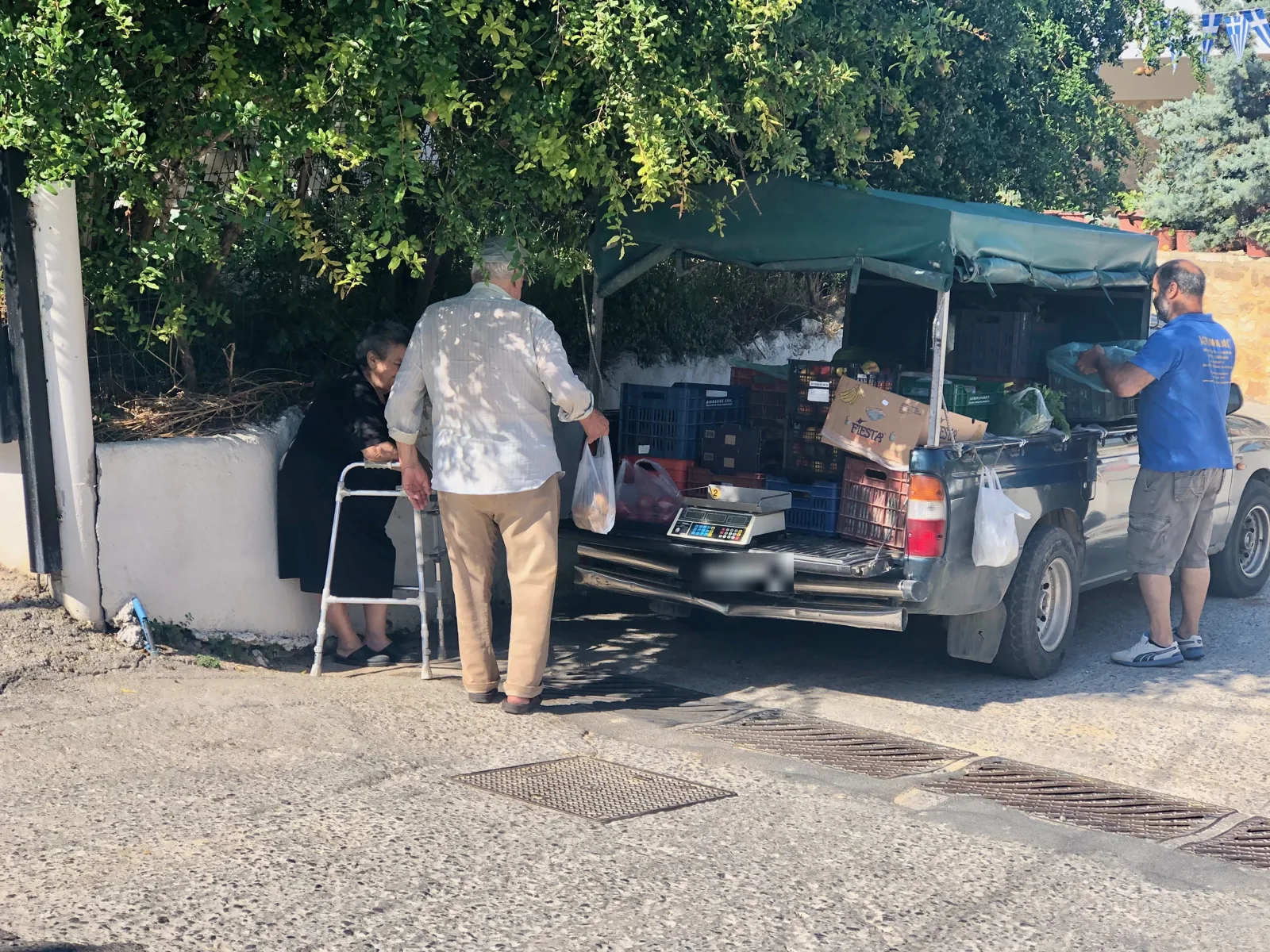
- The greengrocer’s van comes along the village road on set days. Ask Argyris which days, because it is the best fruit you will get all week and it does not keep hours you can guess.
- Sunday is quieter everywhere. Buy Saturday if your Sunday morning matters to you.
- Rethymno is about fifteen minutes away and has everything the villages do not, including the filter coffee.
My own breakfast is a coffee and, if I am hungry, a rusk with cheese. But when guests ask me what a Cretan breakfast is, I do not send them to a hotel to find out — I tell them to buy yoghurt, thyme honey and a fresh mizithra on the first day. Three things, one minute in the morning, and it is better than the table with twenty.
Argyris Skordilis · Owner and host, Amazing Villas in Crete
