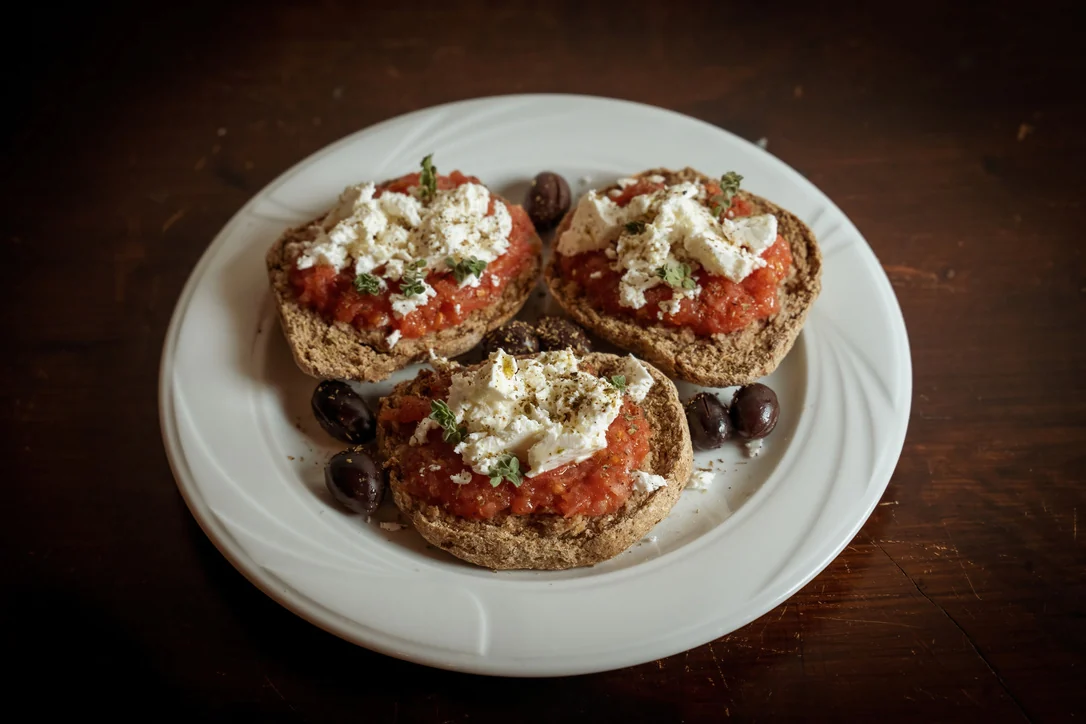
Dakos: The Cretan Rusk, and How to Make It at Your Villa
A hard barley rusk, a ripe tomato, fresh white cheese and good olive oil. Dakos is the simplest dish in Crete and one of the best: breakfast, lunch or a meze with raki, and the first thing many guests make in the villa kitchen.
 By Argyris Skordilis, owner and host · Last checked November 2026 · Updated
What Dakos Is
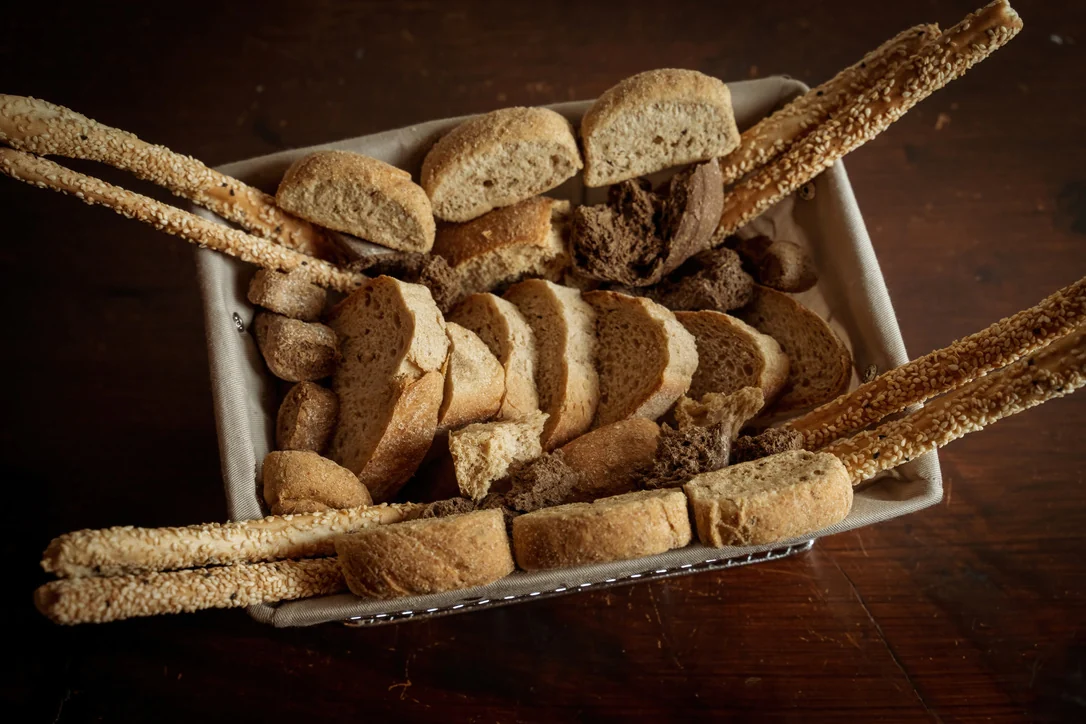
In Crete, dakos is first the rusk itself: barley bread, sliced and baked a second time until it is completely dry. For centuries it was how a household kept bread for weeks, and shepherds carried it up to the summer pastures with cheese and oil. Twice-baked bread is old on the island; the ancient Greeks called it dipyritis artos, bread baked twice, and the Cretan rusk today has a protected geographical indication.
The dish takes the rusk’s name. You soften it, then cover it with what the summer garden gives: grated tomato, a soft white cheese, a little salt, oregano and plenty of olive oil. Around Rethymno it is also called koukouvagia, the owl. The usual story places the name in a taverna on the edge of Rethymno in the years after the war; others say it is simply the round rusk looking back at you like an owl’s face.
How to Make Dakos at the Villa
For 4 as a starter
- 4 round barley rusks (or 8 small ones)
- 3–4 ripe tomatoes
- 200 g fresh mizithra or xinomizithra
- Extra virgin olive oil, plenty
- Dried oregano and sea salt
- Optional: a few olives, capers or a little chopped onion
Method
- Hold each rusk briefly under the cold tap, or sprinkle it with water, and leave it on the plate for a few minutes. It should soften on top but keep its crunch inside.
- Cut the tomatoes in half and grate them on a box grater into a bowl, leaving the skins behind. Add a pinch of salt.
- Spoon the tomato and its juice over the rusks so they drink it in.
- Crumble the cheese on top, sprinkle with oregano and pour over a generous line of olive oil.
- Add olives or capers if you like, and eat within half an hour, before the rusk goes soft.
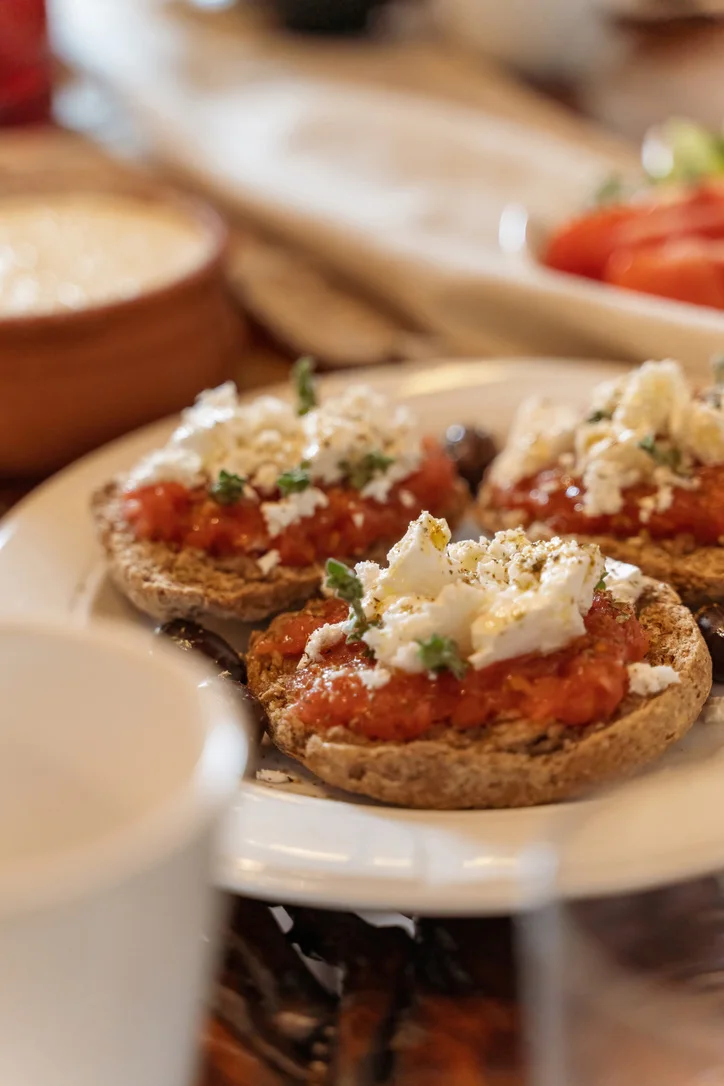
The secret is in three things: a really ripe tomato, good Cretan olive oil, and not soaking the rusk too long. Some cooks wet it with a little sea water for extra flavour.
Which Cheese, and Which Rusk
Mizithra
Soft, fresh white whey cheese, slightly sweet. The everyday choice in Rethymno, and the one in our breakfast basket.
Xinomizithra
The sour, spreadable version, with a light tang. Many Cretans say this is the real dakos cheese.
Feta
Fine at home abroad, but in Crete look for mizithra or xinomizithra first.
The rusk
Choose dark barley rusks; for a softer bite, mixed barley and wheat. Large round ones are cut in half across, small ones are eaten whole.
Dakos at Breakfast, Lunch and with Raki
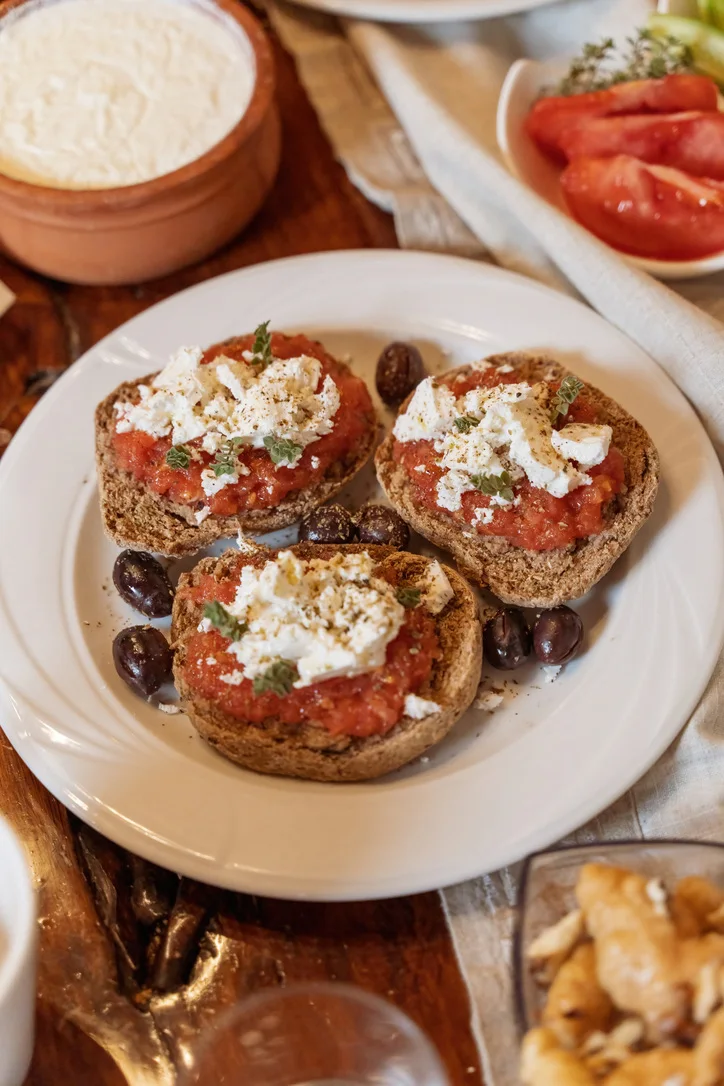
Cretans eat dakos at any time of day: at breakfast with eggs and mizithra, at lunch with a salad and a glass of wine, or late in the evening as a meze next to the raki. It is also the easiest welcome dish after a day at the beach, with nothing to cook. For the full Cretan morning table see our Cretan breakfast guide, and for the other dishes you will meet, our Cretan food guide.
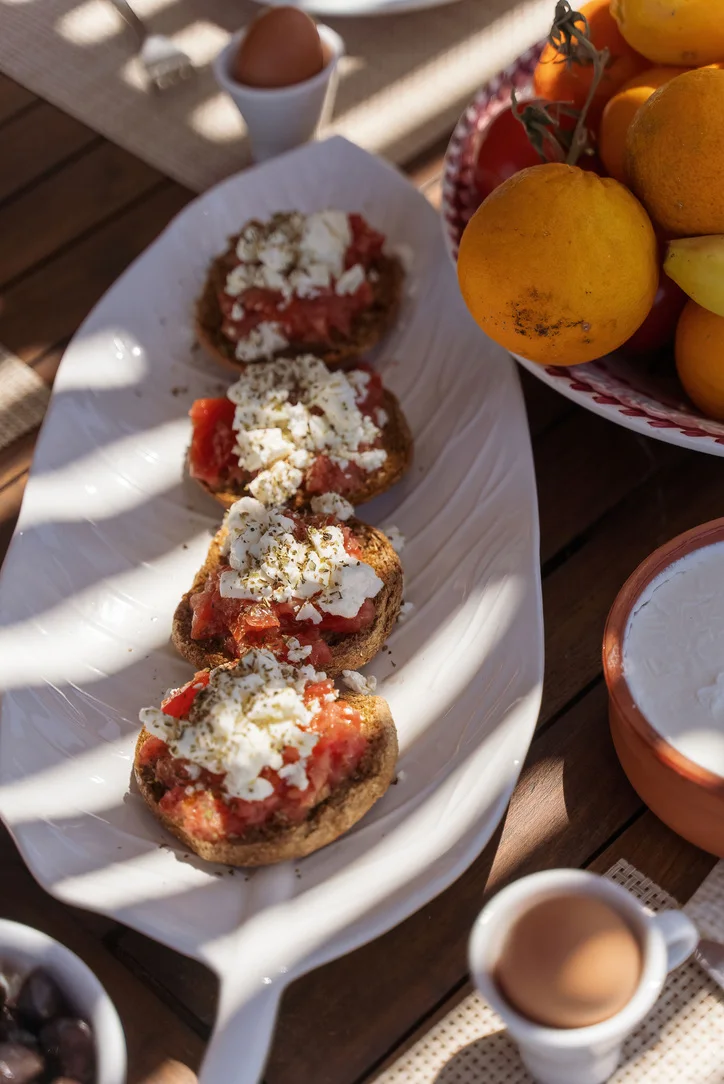
Dakos is how we eat in summer: a rusk, a tomato from the garden, mizithra and our own olive oil. Do not drown the rusk, and do not be shy with the oil.
Argyris Skordilis · Owner and host, Amazing Villas in Crete · usually replies within 12 hours
